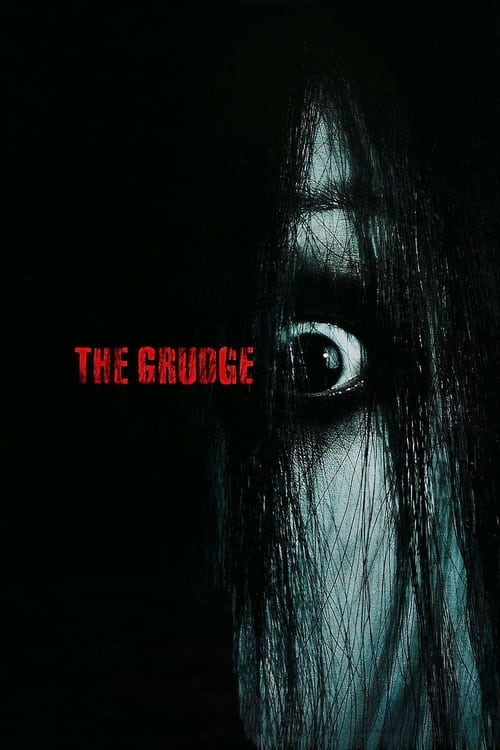
The Grudge (2004)
Directed by Takashi Shimizu
No — The Grudge is not woke, scoring 6 out of 100 on our wokeness meter.
The Grudge arrives from 2004, a moment when Hollywood had discovered that Japanese horror could be repackaged for American multiplexes with minimal logistical fuss.
Consciousness Markers
The cast mixes American leads with Japanese actors (Takako Fuji, Yuya Ozeki) reprising their original roles, but this reflects the Tokyo setting and source material rather than any deliberate diversity agenda.
Sarah Michelle Gellar headlines as a resourceful female survivor, but this is standard horror-protagonist casting with no feminist messaging.
The film touches on an American family's culture shock in Japan, but treats it as atmospheric texture rather than a racial-justice statement.
No LGBTQ+ characters, themes, or subtext of any kind.
No environmental or climate themes whatsoever.
No economic critique or class commentary; the threat is purely supernatural.
No body-positivity themes; the film trades in conventional horror imagery of the grotesque.
A character has dementia, but it is used as a horror device (sensing the curse) rather than any neurodivergence-affirming representation.
No historical revisionism; the film is a contemporary supernatural ghost story.
The film makes no attempt to preach or deliver social messaging; it is purely a scare-driven horror exercise.
Why it received this score
The Grudge arrives from 2004, a moment when Hollywood had discovered that Japanese horror could be repackaged for American multiplexes with minimal logistical fuss. Takashi Shimizu directs a remake of his own Ju-On, which is either a mark of authorship or a convenient way to reuse the sets. Sarah Michelle Gellar wanders through Tokyo as a care worker, encountering a house, a curse, and a great deal of hair. The film is competent, atmospheric in stretches, and ultimately more interested in the physics of its own haunting than in anything resembling a thesis.
The cultural accounting here is modest. The cast places American leads beside Japanese performers reprising their original roles, a gesture that reflects the Tokyo setting instead of any coordinated inclusion effort. Gellar anchors the proceedings as a capable woman who survives, which is standard horror housekeeping and not a manifesto. The Williams family's disorientation in Japan registers as texture, an ambient discomfort that never hardens into argument. A character with dementia is present, and the film uses her condition to sense supernatural presence, a long way from affirming anything. No romantic subtext beyond the heterosexual, no environmental anxiety, no class critique, no celebration of the body, no reworking of history, no sermon.
What remains is a scare delivery system with a decent first weekend behind it and a mixed critical reception to match. The film does not lecture. It has no message to impart, unless the message is that angry ghosts are persistent and houses are difficult to burn. The whole affair sits low on the scale, a product of its era that found a trend and rode it. We note its restraint. We also note that restraint and ambition are different things. This is a haunted house with good posture and nothing on its mind, which in the current climate almost reads as a relief.
Analysis generated by our Consciousness Algorithm


Synopsis
An American nurse living and working in Tokyo is exposed to a mysterious supernatural curse, one that locks a person in a powerful rage before claiming their life and spreading to another victim.
Questions about The Grudge
Is The Grudge woke?
No — The Grudge is not woke, scoring 6 out of 100 on our wokeness meter. That earns it a verdict of Ultra Based.
Does The Grudge have any woke elements?
Very few. None of the 10 markers reaches 30, the level where a marker counts as present; the highest is Representation Casting at 15.
How does The Grudge compare to other 2004 movies?
It ranks #104 of the 178 films from 2004 we've scored; their average is 12. The wokest is Tropical Malady (62).
Is The Grudge the most woke The Grudge movie?
Yes. It scores highest of the 3 The Grudge films we've scored.