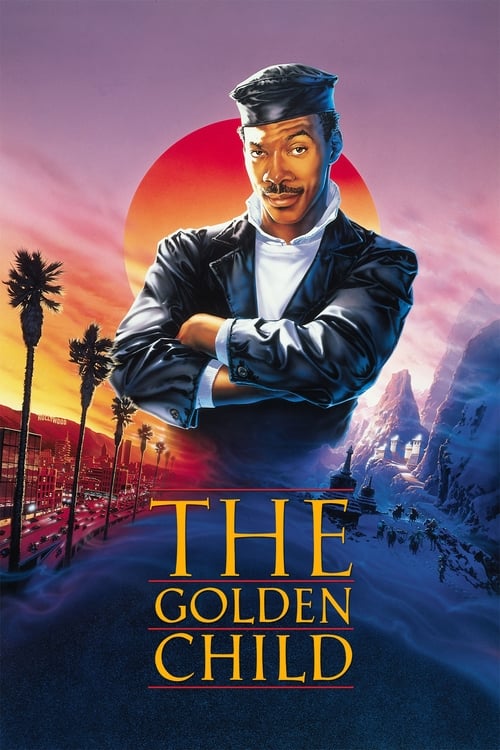
The Golden Child (1986)
Directed by Michael Ritchie
No — The Golden Child is not woke, scoring 11 out of 100 on our wokeness meter.
The Golden Child arrives from 1986, a year when a Tibetan monastery, a Los Angeles social worker, and a winged demon could share a single screenplay without anyone requesting a meeting.
Consciousness Markers
A Black star headlines and the cast includes several Asian actors (Victor Wong, James Hong) plus mixed-heritage Charlotte Lewis, but this is standard Eddie Murphy-era commercial casting rather than a deliberate diversity initiative.
The film dabbles in Tibetan mysticism and features Asian-American gang and restaurant settings, but treats them as exotic set-dressing rather than engaging any racial consciousness or commentary.
Kee Nang is a competent warrior-priestess, but she exists largely as the love interest who literally dies and is resurrected to complete the male hero's journey. No feminist framework is present.
A light action-comedy that never pauses to deliver moral instruction; the closest it comes is bland 'believe in yourself' Chosen One boilerplate.
No LGBTQ+ characters, subtext, or themes of any kind appear in the film.
No environmental themes or climate messaging whatsoever.
No economic critique or anti-wealth themes; the villain is a demonic sorcerer, not a capitalist.
No body positivity themes present.
No neurodivergent characters or themes are represented.
The Tibetan/Buddhist mythology is invented fantasy rather than a revisionist reframing of any historical record.
Why it received this score
The Golden Child arrives from 1986, a year when a Tibetan monastery, a Los Angeles social worker, and a winged demon could share a single screenplay without anyone requesting a meeting. Michael Ritchie directs Eddie Murphy as Chandler Jarrell, a finder of missing children drafted into a cosmic errand by Kee Nang, a warrior-priestess played by Charlotte Lewis. The picture was a hit, grossing nearly eighty million dollars domestic, which history records without affection. Leonard Maltin called it a bomb. Eddie Murphy was no kinder.
The casting rewards a moment of sommelier-grade attention. A Black leading man headlines. Victor Wong and James Hong occupy the mystic-expert and villainous-restaurateur slots. Charlotte Lewis, mixed-heritage and an ex-model, carries the female lead, and the titular child was played by a six-year-old girl named Jasmine Lauren Reate, a detail the production kept quiet. None of this constitutes a deliberate program. It is 1986 commercial arithmetic. The Tibetan material functions as decor: chanting, amulets, a bottomless cavern, a dagger, and Asian-American gang members drifting through the frame as texture. Nothing is examined. Nothing is remarked upon.
Kee Nang fights competently, then dies in the hero's arms so his journey may conclude, which is a familiar arrangement and not a feminist argument. The film has no interest in economics, climate, body image, neurodivergence, or the interior lives of anyone outside the Murphy persona. It lectures no one. The theology is invented wholesale, so no historical record gets revised, and there is no minority to speak for beyond the requirements of the plot. What remains is a light action comedy about believing in yourself, delivered with the confidence of a man who read the script and decided to enjoy himself regardless. This classifies as a curiosity, not a sermon.
Analysis generated by our Consciousness Algorithm
Part of


Synopsis
After a Tibetan boy, the mystical Golden Child, is kidnapped by the evil Sardo Numspa, humankind's fate hangs in the balance. On the other side of the world in Los Angeles, the priestess Kee Nang seeks the Chosen One, who will save the boy from death. When Nang sees social worker Chandler Jarrell on television discussing his ability to find missing children, she solicits his expertise, despite his skepticism over being "chosen."
Questions about The Golden Child
Is The Golden Child woke?
No — The Golden Child is not woke, scoring 11 out of 100 on our wokeness meter. That earns it a verdict of Ultra Based.
Does The Golden Child have any woke elements?
Very few. None of the 10 markers reaches 30, the level where a marker counts as present; the highest is Representation Casting at 28.
How does The Golden Child compare to other 1986 movies?
It ranks #14 of the 62 films from 1986 we've scored; their average is 7. The wokest is Star Trek IV: The Voyage Home (42).
How is the Woke Score calculated?
An AI-assisted process researches the film and its reception, scores it 0–100 on ten markers, then combines those into one 0–100 Woke Score. It measures a specific set of 2020s cultural themes, not film quality.