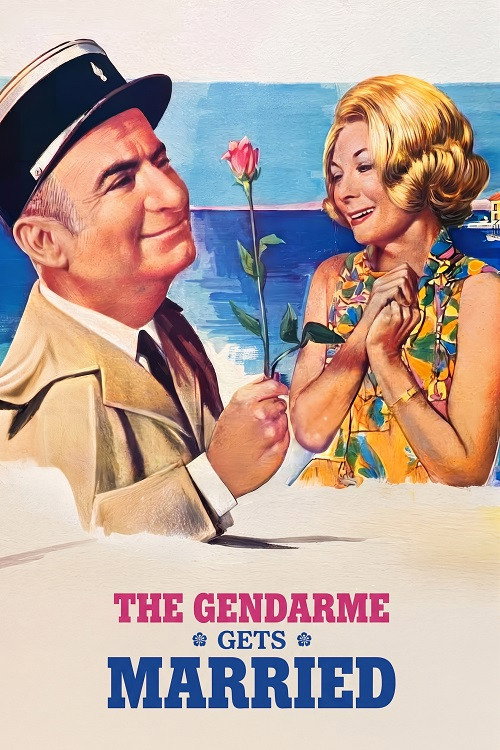
The Gendarme Gets Married (1968)
Directed by Jean Girault
No — The Gendarme Gets Married is not woke, scoring 0 out of 100 on our wokeness meter.
The third descent into the sunburned absurdity of Saint-Tropez, released in 1968, finds Louis de Funes back in the kepi of Ludovic Cruchot for another round of vehicular vendetta and domestic scheming.
Consciousness Markers
A 1968 French comedy with an entirely white, homogeneous cast; no casting choices made with representation in mind.
No LGBTQ+ characters, themes, or subtext of any kind.
The plot centers on a widowed woman and a daughter scheming to block a wedding; women are framed as obstacles and romantic prizes, with no feminist critique.
No engagement with race, racism, or racial identity whatsoever.
No environmental or climate themes; the only 'offensive' is against bad drivers.
No economic critique; the film is a light farce about gendarmes, romance, and professional jealousy.
No body-positivity themes; physical comedy relies on conventional slapstick rather than body acceptance messaging.
No neurodivergent characters or themes present.
A contemporary-set comedy with no historical revisionism or re-framing of past events.
Pure escapist slapstick comedy with no didactic or preachy messaging.
Why it received this score
The third descent into the sunburned absurdity of Saint-Tropez, released in 1968, finds Louis de Funes back in the kepi of Ludovic Cruchot for another round of vehicular vendetta and domestic scheming. The premise is disarmingly thin. Cruchot wages war on bad drivers, falls for the widow of a decorated colonel, and sets in motion a courtship that his daughter regards as an act of war. What follows is a farce of misunderstandings, professional jealousy, and a double wedding arranged with the precision of a military exercise.
Viewers arriving with contemporary expectations will find the cupboard bare. The cast is a uniform assembly of French character actors, chosen for comic timing and nothing besides. The women in the story exist to be widowed, wooed, or thwarted, and the screenplay grants them no interiority beyond these functions. Questions of race, sexuality, class, and environment never surface, mostly because the film has no interest in raising them. Its central conflict is a man's promotion and another man's envy, conducted entirely in the register of slapstick.
There is no sermon here, no lesson smuggled into the laughter. Cruchot chases cars, dodges his prospective mother-in-law, and survives an exam for which he is unprepared, all for the sake of a punchline. The film is a product of its moment, content to entertain and nothing more. In our taxonomy it registers as an empty vessel, a comedy that asks nothing of its audience except that they laugh at a man in uniform falling over. We score it accordingly, which is to say we find nothing to score. It is a relic, and a harmless one.
thematic_tags: ["sequel"]
Analysis generated by our Consciousness Algorithm
Part of


Synopsis
The Saint-Tropez police launch a major offensive against dangerous drivers. Marechal Cruchot (Louis de Funès) relishes the assignment, which he pursues with a manic zeal. Cruchot is after an offending driver, who turns out to be Josépha (Claude Gensac), the widow of a highly regarded police colonel. When they meet, Cruchot falls instantly in love....
Questions about The Gendarme Gets Married
Is The Gendarme Gets Married woke?
No — The Gendarme Gets Married is not woke, scoring 0 out of 100 on our wokeness meter. That earns it a verdict of Ultra Based.
Does The Gendarme Gets Married have any woke elements?
No. All 10 markers score zero.
How does The Gendarme Gets Married compare to other 1968 movies?
It ranks #19 of the 23 films from 1968 we've scored; their average is 7. The wokest is Night of the Living Dead (27).
Is The Gendarme Gets Married the most woke Le Gendarme de Saint-Tropez movie?
No. It ranks #3 of the 6 Le Gendarme de Saint-Tropez films we've scored; the wokest is The Gendarme and the Gendarmettes (7).