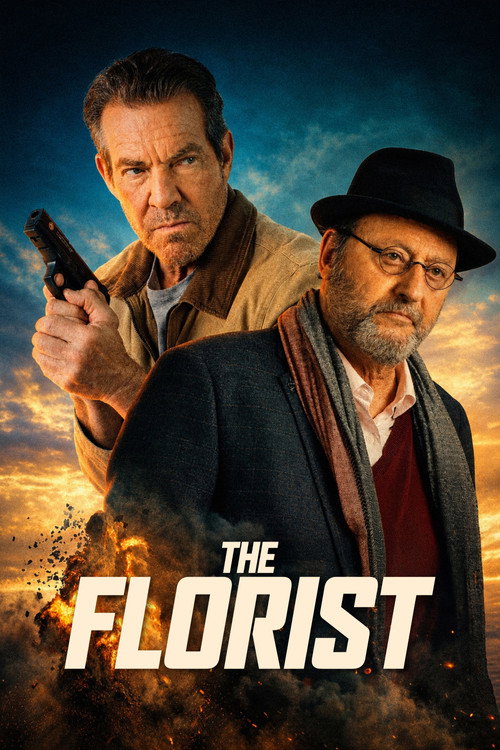
The Florist (2026)
Directed by Babak Najafi
No — The Florist is not woke, scoring 4 out of 100 on our wokeness meter.
The Florist arrives in the grand tradition of films where a man with a very specific set of skills tends to something gentle by day and dispenses violence by night.
Consciousness Markers
Sky Katz, a young Black actress, plays the witness Layla, a role that functions as the classic 'person in need of protection' archetype without any apparent commentary on her identity. The casting is modestly diverse but the film shows no evidence of engineered demographic checkboxes beyond the standard ensemble.
The police corruption premise carries a faint ambient suggestion of institutional distrust, but no reviewer has described the film as sermonizing or heavy-handed on any social theme. The score reflects the premise's theoretical capacity for a speech, not any evidence that the speech was delivered.
No LGBTQ+ themes, characters, or subtext have been identified in any critical coverage or audience commentary. The film appears to exist in a space of complete heteronormative indifference.
The central dynamic places a young woman in the role of protected witness to an older male assassin, a structure that is the precise opposite of feminist reframing. No evidence of feminist themes has surfaced.
The police corruption plot does not appear to be framed through a racial lens in any reviewed material. The film's engagement with institutional wrongdoing reads as genre-standard thriller mechanics, not racial consciousness.
Horticulture as a cover identity is, regrettably, the film's only brush with plant life. No climate themes, environmental messaging, or ecological anxiety has been detected anywhere in the film's DNA.
A hitman-for-hire operating within a corrupt system is a premise with latent anti-capitalist potential that this film shows no interest in exploring. No class critique or wealth-targeting rhetoric has been identified.
No evidence of body positivity themes, messaging, or casting choices oriented around this marker. The film is silent on the matter entirely.
No neurodivergent characters, framing, or themes have been identified. The assassin's quiet, methodical nature is a genre convention, not a clinical portrait.
The film is an original action thriller set in the present day. There is no historical period, no real events, and therefore nothing to revise.
Why it received this score
The Florist arrives in the grand tradition of films where a man with a very specific set of skills tends to something gentle by day and dispenses violence by night. It is a tradition that requires no updating, no interrogation, and no accompanying TED Talk, and director Babak Najafi appears to have understood this assignment completely. Dennis Quaid plays Carl Rikker, a horticulturalist-assassin whose flower arrangements presumably do not comment on systemic inequality. Jean Reno, in a casting decision that the phrase "self-aware" was invented to describe, plays a figure in the same lethal trade, reuniting him with the exact dramatic geometry of Léon: The Professional some three decades later. The film is either a bold act of nostalgia or a complete coincidence. Critics have not agreed on which.
The presence of Sky Katz as Layla, the young witness whose knowledge of police corruption sets the plot in motion, represents the film's most notable gesture toward contemporary casting, though the role itself is the oldest in the thriller genre: the person who knows too much and cannot be allowed to say it. The police corruption backdrop offers the film a theoretical opening to engage with institutional critique, racial consciousness, or any number of urgent modern anxieties. It declines all of them. This is not a flaw. It is a choice, and in the current landscape, a choice so unfashionable it reads almost as transgressive.
What the film ultimately offers is a delivery mechanism for action sequences wrapped in a premise thin enough to see through in direct sunlight. It commits no ideological crimes. It delivers no manifestos. Dennis Quaid, whose off-screen political commentary has generated considerably more controversy than anything in the film itself, appears to have kept his views between himself and his Fox News interlocutors and out of the screenplay entirely. The Florist is, in the taxonomy of this office, a near-perfect specimen of the null result: a film that set out to do nothing culturally significant and succeeded without apparent effort.
Analysis generated by our Consciousness Algorithm
Synopsis
A quiet horticulturalist harboring a secret life as a lethal assassin finds his true identity jeopardized when he forms an unlikely friendship with a witnesses to police corruption.
Questions about The Florist
Is The Florist woke?
No — The Florist is not woke, scoring 4 out of 100 on our wokeness meter. That earns it a verdict of Ultra Based.
Does The Florist have any woke elements?
Very few. None of the 10 markers reaches 30, the level where a marker counts as present; the highest is Representation Casting at 10.
How does The Florist compare to other 2026 movies?
It ranks #542 of the 800 films from 2026 we've scored; their average is 23. The wokest is Between Us (89).
How is the Woke Score calculated?
An AI-assisted process researches the film and its reception, scores it 0–100 on ten markers, then combines those into one 0–100 Woke Score. It measures a specific set of 2020s cultural themes, not film quality.