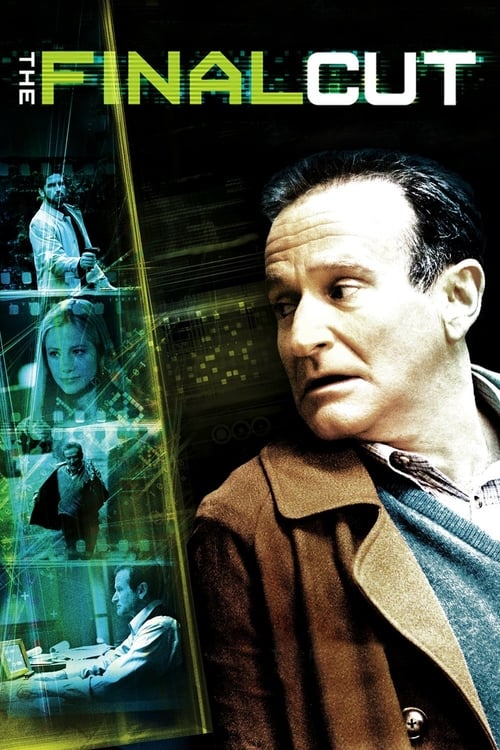
The Final Cut (2004)
Directed by Omar Naim
No — The Final Cut is not woke, scoring 15 out of 100 on our wokeness meter.
The Final Cut (2004) presents Robin Williams as Alan Hakman, a cutter who edits the recorded memories of the dead into flattering funeral reels.
Consciousness Markers
The central conflict involves challenging the power of the corporate entity EYE Tech and the wealthy elite, which provides a moderate critique of capitalism.
The film features a predominantly white cast and does not utilize representation as a thematic driver.
While a romantic relationship exists, there is no explicit focus on LGBTQ+ themes or identity within the narrative.
The female characters serve primarily as plot devices or emotional foils rather than driving a feminist agenda.
There is no discernible focus on racial issues or systemic racism in the provided summary.
The futuristic setting focuses on technological and ethical dilemmas, not environmental crises.
The film does not address body image, physical appearance, or body acceptance.
The plot deals with memory and psychology, but does not specifically address neurodivergent conditions.
The film challenges personal and recorded truths, but does not engage in revising established historical facts.
The film presents ethical dilemmas through action and character conflict, rather than didactic social commentary.
Why it received this score
The Final Cut (2004) presents Robin Williams as Alan Hakman, a cutter who edits the recorded memories of the dead into flattering funeral reels. The premise is elegant and grim. A man who removes inconvenient truths from other people's lives discovers an inconvenient truth in his own. Omar Naim directs with a somber, rain-slicked seriousness that suggests everyone involved believed they were making a film about the human soul. They were. They were also making a film that has almost no interest in the cultural battles that would come to define the following two decades.
There is no representation casting to speak of. The cast is white and the film does not pause to comment on this. No LGBTQ+ thread emerges. Mira Sorvino's Delila exists to be alarmed and to destroy a memory viewer. Feminist concerns are not on the agenda. Racial consciousness is absent. Climate anxiety does not intrude on this future of brain implants and corporate intrigue. Body positivity and neurodivergence are not addressed. The film treats memory as a psychological puzzle, not a diagnosis. Revisionist history? The film asks whether recorded memory can be trusted, but it does not rewrite established historical facts. It is a personal mystery, not a historiographical argument.
The closest the film comes to a social thesis is its mild suspicion of EYE Tech, the corporation that manufactures the implants, and of Fletcher, the former cutter who wants to use a dead man's secrets to bring the company down. This is a critique of corporate power, but it is delivered through plot mechanics, not sermons. The film has no lecture energy. It presents ethical dilemmas through action and character conflict. Hakman's shakedown of a criminal for a pistol is more persuasive than any speech. The result is a relic of a time when a science fiction thriller could pose moral questions without also serving as a public service announcement. We are left with a moody, flawed, occasionally affecting film about guilt and memory. It earns a modest nod for its corporate skepticism and nothing else on the contemporary scorecard.
Analysis generated by our Consciousness Algorithm
Part of


Synopsis
Set in a world with memory implants, Alan Hakman is a 'cutter'—someone with the power of final edit over people's recorded histories—but his latest assignment puts him in great danger.
Questions about The Final Cut
Is The Final Cut woke?
No — The Final Cut is not woke, scoring 15 out of 100 on our wokeness meter. That earns it a verdict of Ultra Based.
Does The Final Cut have any woke elements?
Very few. None of the 10 markers reaches 30, the level where a marker counts as present; the highest is Eat the Rich at 25.
How does The Final Cut compare to other 2004 movies?
It ranks #42 of the 178 films from 2004 we've scored; their average is 12. The wokest is Tropical Malady (62).
How is the Woke Score calculated?
An AI-assisted process researches the film and its reception, scores it 0–100 on ten markers, then combines those into one 0–100 Woke Score. It measures a specific set of 2020s cultural themes, not film quality.