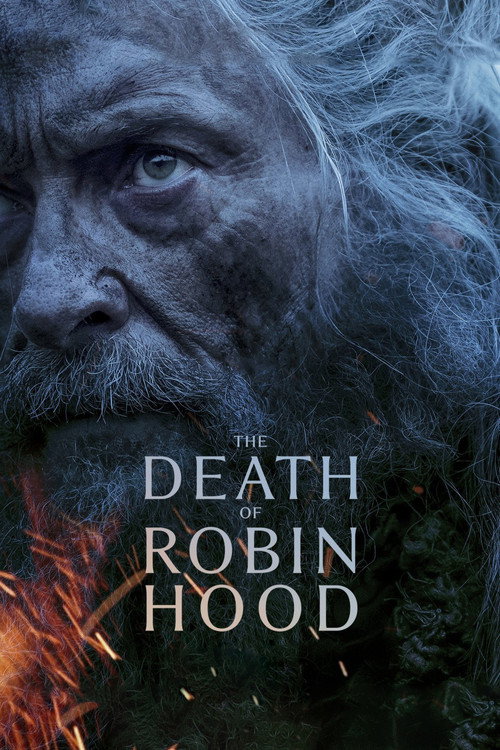
The Death of Robin Hood (2026)
Directed by Michael Sarnoski
No — The Death of Robin Hood is not woke, scoring 16 out of 100 on our wokeness meter.
A somber A24 deconstruction of English folklore, shot on 35mm and set in 1247.
Consciousness Markers
Sister Brigid, Wainwright, and young Margaret are given substantial agency, moral complexity, and their own arcs, though none is framed as a message about gender.
The film darkly reimagines the Robin Hood legend by turning the folk hero into a guilt-ridden murderer, but this is a gritty deconstruction rather than a progressive reframing of history.
A landed family dispossessing a farmer and the outlaws' raids carry a faint rich-versus-poor class frisson, but it is inherited Robin Hood folklore rather than a modern anti-capitalist thesis.
The film meditates on guilt, violence, and salvation through brooding atmosphere rather than explicit social preaching; reviewers noted excessive brooding, not soapboxing.
The cast is overwhelmingly white British and Irish performers in a 1247 England setting, with no diverse-casting push; a single minor character (Moshe) is the only ethnic outlier.
No LGBTQ+ characters, relationships, or themes appear in the narrative.
The film is set in medieval England and engages no racial themes whatsoever.
There is no environmental or climate content.
No body-positivity themes; the leper is a plot device for guilt and recognition, not a celebration of bodily difference.
No neurodivergent characters or themes are present.
Why it received this score
A somber A24 deconstruction of English folklore, shot on 35mm and set in 1247. Sarnoski draws his cast almost entirely from white British and Irish performers. A single supporting figure named Moshe drifts through the margins and is not asked to do much. The picture feels no obligation to correct this arrangement. Medieval Nottinghamshire is not a casting brief that lends itself to demographic accounting, and the filmmakers evidently saw no reason to pretend otherwise.
Where the film does extend itself, it does so quietly. Sister Brigid runs a priory, tends wounds, and keeps her own moral ledger. Wainwright arrives with a knife and a grievance. Young Margaret learns to hunt and learns to keep a secret. Three women with interior lives, and not a syllable of thesis attached to any of them. The class friction is older than cinema itself: a landed family dispossesses a farmer, outlaws raid the pantry. That is folklore's inheritance, not a modern grievance. The leper exists to deliver a recognition and then die, which is not a statement about bodies. Nobody is queer. Nobody is neurodivergent. Nobody is thinking about the weather.
Guilt is the only thing on offer, delivered in long takes and low light. Critics found the brooding excessive, and they are not wrong. The film mistakes duration for depth and lets Jackman stare at horizons until the point has been made twice. It never climbs a pulpit, though. The reimagining of the legend is dark, not progressive: Robin as murderer, John as thief, the ballad's ending staged as an assisted death by bloodletting. That is a deconstruction of a folk hero, not a reframing of history. The result is a serious, handsome, faintly tedious film that has almost nothing to say about the present moment, and says it at length.
Analysis generated by our Consciousness Algorithm


Synopsis
Grappling with his past after a life of crime and murder, Robin Hood finds himself gravely injured after a battle he thought would be his last. In the hands of a mysterious woman, he is offered a chance at salvation.
Questions about The Death of Robin Hood
Is The Death of Robin Hood woke?
No — The Death of Robin Hood is not woke, scoring 16 out of 100 on our wokeness meter. That earns it a verdict of Ultra Based.
Does The Death of Robin Hood have any woke elements?
Very few. None of the 10 markers reaches 30, the level where a marker counts as present; the highest is Feminist Agenda at 28.
How does The Death of Robin Hood compare to other 2026 movies?
It ranks #397 of the 800 films from 2026 we've scored; their average is 23. The wokest is Between Us (89).
How is the Woke Score calculated?
An AI-assisted process researches the film and its reception, scores it 0–100 on ten markers, then combines those into one 0–100 Woke Score. It measures a specific set of 2020s cultural themes, not film quality.