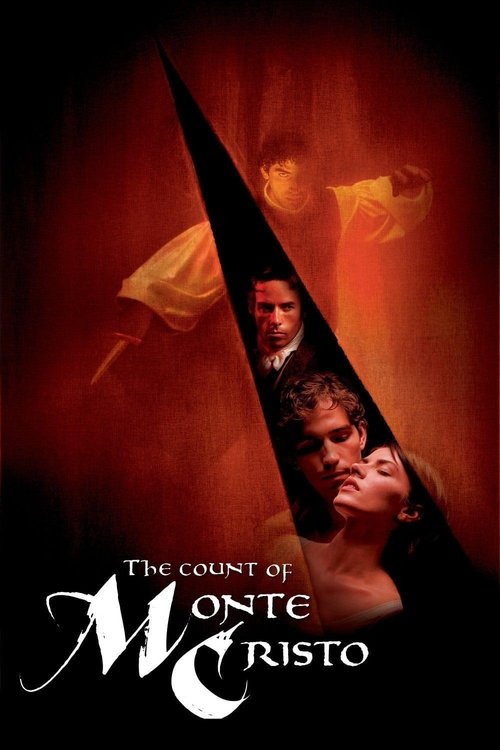
The Count of Monte Cristo (2002)
Directed by Kevin Reynolds
No — The Count of Monte Cristo is not woke, scoring 2 out of 100 on our wokeness meter.
The film opens with a young sailor, a jealous friend, a letter from a deposed emperor, and a cell in the Château d'If.
Consciousness Markers
The cast is overwhelmingly white and the few non-white supporting roles are not framed as deliberate representation. No modern diversity-casting agenda is evident.
There are no LGBTQ+ characters, themes, or subtext in the film.
Mercédès has some agency in the plot, but the film does not advance a feminist agenda or explicitly challenge gender norms.
The film is a traditional 19th-century revenge adventure and does not engage modern racial consciousness or systemic-race commentary.
Climate change and environmental themes are entirely absent from this period swashbuckler.
Wealth is a tool for revenge and social access, not a subject of modern anti-capitalist critique.
There is no body-positivity theme or commentary on body image.
No neurodivergence is depicted or discussed as a thematic element.
The film adapts and alters a classic novel, but it does not engage in modern revisionist-history messaging.
The story is delivered as an old-fashioned adventure and revenge tale rather than a modern moral lecture.
Why it received this score
The film opens with a young sailor, a jealous friend, a letter from a deposed emperor, and a cell in the Château d'If. Kevin Reynolds assembles the machinery of the nineteenth-century serial with workmanlike affection and no visible anxiety about how it will age. Napoleon is a plot device here, not a thesis. It is an adventure picture of the kind the studios churned out before marketing departments learned to grade virtue, and it never apologizes for its pleasures. Seen now, it plays like a relic from a simpler commercial age, which is precisely its charm.
The cast is white, the villains are French aristocrats, and the hero is a wronged man with a fortune and a grudge. Jim Caviezel broods handsomely in a part that asks for little else. Guy Pearce chews scenery with visible delight. Mercédès has agency of her own, yet the screenplay never stops to instruct us on the subject of gender. Luis Guzmán turns up as Jacopo and is permitted to be a person instead of a demographic gesture. The film treats its supporting players as inhabitants of a story, not as representatives of anything. Refreshing, in its way.
Wealth here is a means, not a message. The treasure funds revenge and buys entry into Parisian drawing rooms; it is never held up for indictment. No sermon on the changing climate arrives. No character pauses to explain the correct politics of 1815 to an audience presumed to need the help. The film trusts its own story to carry the weight, and the story does. The ending gathers a family together and leaves the Château d'If standing, a monument to an old man's instruction to use fortune for good. Old-fashioned, and entirely at ease with the fact.
Analysis generated by our Consciousness Algorithm


Synopsis
Young sailor Edmond Dantès is wrongfully imprisoned, escapes, finds treasure, and reinvents himself as the wealthy Count of Monte Cristo to exact revenge on those who betrayed him.
Questions about The Count of Monte Cristo
Is The Count of Monte Cristo woke?
No — The Count of Monte Cristo is not woke, scoring 2 out of 100 on our wokeness meter. That earns it a verdict of Ultra Based.
Does The Count of Monte Cristo have any woke elements?
No. All 10 markers score zero.
How does The Count of Monte Cristo compare to other 2002 movies?
It ranks #125 of the 150 films from 2002 we've scored; their average is 12. The wokest is Far from Heaven (78).
How is the Woke Score calculated?
An AI-assisted process researches the film and its reception, scores it 0–100 on ten markers, then combines those into one 0–100 Woke Score. It measures a specific set of 2020s cultural themes, not film quality.