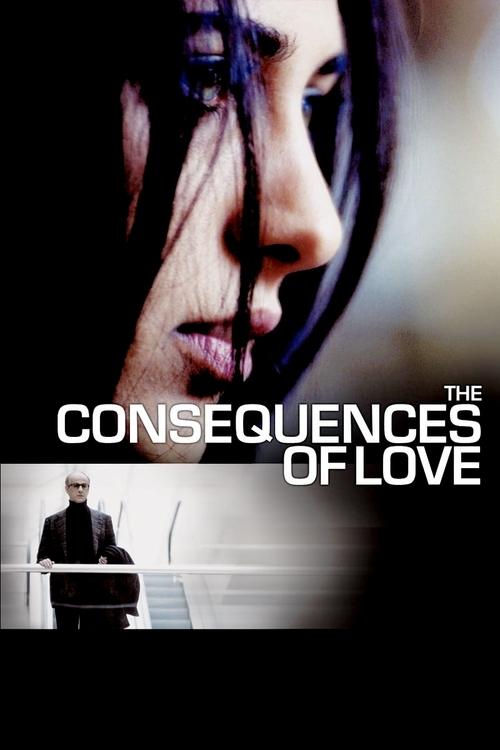
The Consequences of Love (2004)
Directed by Paolo Sorrentino
No — The Consequences of Love is not woke, scoring 0 out of 100 on our wokeness meter.
Paolo Sorrentino's The Consequences of Love arrives from 2004, a psychological thriller about a man in a suit who lives in a Swiss hotel and delivers suitcases of money for the Cosa Nostra.
Consciousness Markers
The cast is entirely Italian and reflects the film's specific cultural setting without any deliberate diversity or representation agenda.
There are no LGBTQ+ themes, characters, or subtext in the film.
Sofia functions as a romantic interest and emotional catalyst, but the film does not advance a feminist agenda or critique patriarchal structures.
Race and racial identity are not addressed or thematized in the film.
There is no environmental or climate-related content in the film.
The film involves financial crime and mafia punishment, but it does not present an anti-capitalist or eat-the-rich ideological critique.
The film does not engage with body positivity, body image, or related themes.
Titta's isolation and heroin use are portrayed as personal and criminal circumstances, not as neurodivergence or a neurodiversity narrative.
The film is a fictional psychological thriller and does not revise or reinterpret historical events.
The film is atmospheric and character-driven, with no didactic or preachy messaging.
Why it received this score
Paolo Sorrentino's The Consequences of Love arrives from 2004, a psychological thriller about a man in a suit who lives in a Swiss hotel and delivers suitcases of money for the Cosa Nostra. It is a film of cold corridors and colder accounting. Titta Di Girolamo, played by Toni Servillo with the expression of a man who has just been told the restaurant is closed, spends eight years in a modest room doing nothing at all, and the camera watches him do it with tremendous style.
For those of us who catalogue the cultural temperature of a picture, the film offers a clean slate. The cast is Italian because the film is Italian, and nobody pauses to explain that fact. Sofia, the barmaid, exists as a romantic and emotional catalyst, and the film has no interest in interrogating the arrangements of the hotel bar. Titta's heroin habit is rendered as private ruin, not as a condition to be diagnosed or destigmatized. Race, climate, body image, the redistribution of wealth: none of it appears. The mafia, it turns out, is a criminal enterprise here, not a metaphor for late capitalism. Money is lost and people are punished, and the film draws no lesson about markets.
What remains is atmosphere. Sorrentino shoots Lugano as a purgatory of polished surfaces, and the soundtrack (Mogwai, Boards of Canada) hums beneath the silence. When Titta finally speaks, he speaks to one woman, and then he is lowered into concrete while thinking of an electrician in the Alps. It is elegant, mournful, and entirely unconcerned with instructing us. A rarer vintage than the current market supplies.
Analysis generated by our Consciousness Algorithm

Synopsis
Lugano, Switzerland. Titta Di Girolamo is a discreet and sullen man who has been living for almost a decade in a modest hotel room, a prisoner of an atrocious routine, apparently without purpose. His past is a mystery, nobody knows what he does for a living, he answers indiscreet questions evasively. What secrets does this enigmatic man hide?
Questions about The Consequences of Love
Is The Consequences of Love woke?
No — The Consequences of Love is not woke, scoring 0 out of 100 on our wokeness meter. That earns it a verdict of Ultra Based.
Does The Consequences of Love have any woke elements?
No. All 10 markers score zero.
How does The Consequences of Love compare to other 2004 movies?
It ranks #151 of the 178 films from 2004 we've scored; their average is 12. The wokest is Tropical Malady (62).
How is the Woke Score calculated?
An AI-assisted process researches the film and its reception, scores it 0–100 on ten markers, then combines those into one 0–100 Woke Score. It measures a specific set of 2020s cultural themes, not film quality.