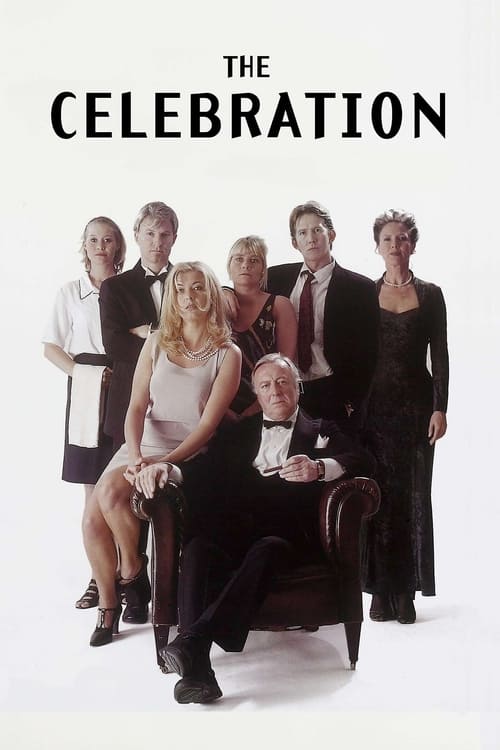
The Celebration (1998)
Directed by Thomas Vinterberg
No — The Celebration is not woke, scoring 11 out of 100 on our wokeness meter.
The Celebration arrives from 1998 as the inaugural Dogme 95 production, shot on a handheld camcorder under a manifesto that banned artificial sound and other comforts of the well-funded.
Consciousness Markers
Racism is explicitly depicted when the bigoted Michael leads the guests in a racist song to humiliate Helene's Black boyfriend, but the film observes racism rather than advancing a racial-justice program.
A predominantly white Danish ensemble; the one Black character (Gbatokai) functions as a plot device to expose the family's racism rather than as deliberate inclusive casting.
The film critiques a patriarchal abuser and a complicit mother, but frames this as psychological drama about trauma and denial rather than a feminist thesis.
The toasts and accusations carry moral weight, but the film's Dogme 95 approach favors raw confrontation over preachy sermonizing.
The patriarch is a wealthy, respected businessman whose respectability masks abuse, offering a mild critique of bourgeois hypocrisy, but economics is not the film's target.
No LGBTQ+ characters or themes appear anywhere in the narrative.
No environmental or climate themes are present.
No body-positivity themes or messaging appear.
Trauma, depression, and suicide are central, but they are not framed through a neurodivergence lens.
The film is a contemporary family drama with no historical revisionism.
Why it received this score
The Celebration arrives from 1998 as the inaugural Dogme 95 production, shot on a handheld camcorder under a manifesto that banned artificial sound and other comforts of the well-funded. Thomas Vinterberg turns a sixtieth birthday party at a country hotel into a slow-motion detonation. Christian rises to toast his father and accuses him of decades of sexual abuse. The guests absorb the charge, then return to the herring. The film's cruelty lives in that rhythm, the way respectability simply outlasts testimony.
Judged by the standards of contemporary social consciousness, the film is a modest artifact. It observes racism without organizing against it: Michael, the boorish younger son, leads the assembled guests in a racist song meant to humiliate his sister's Black boyfriend, and the camera holds on the ugliness without commentary. The patriarch is a wealthy businessman whose standing shields his crimes, a glancing swipe at bourgeois hypocrisy where the target is the man and not the economic order that produced him. The mother's complicity and the dead sister's suffering carry real weight, but the frame is trauma and denial, not a thesis about patriarchy. There is no environmental concern, no body politics, no vocabulary of neurodivergence, no historical revisionism. The abuse is the subject, not a platform.
The film's moral force comes from what it declines to do. No sermon. No tidy reckoning. Helge confesses, the family eats breakfast, and the camera keeps rolling. That restraint is why the film still lands, and why it scans as a document of 1998 instead of a dispatch from the present. A sober vintage, low in additives, recommended for those who prefer their confrontations served cold.
Analysis generated by our Consciousness Algorithm

Synopsis
The family of a wealthy businessman gather to celebrate his 60th birthday. During the course of the party, his eldest son presents a speech that reveals a devastating secret that turns the night into a battle of truth and denial.
Questions about The Celebration
Is The Celebration woke?
No — The Celebration is not woke, scoring 11 out of 100 on our wokeness meter. That earns it a verdict of Ultra Based.
Does The Celebration have any woke elements?
Very few. None of the 10 markers reaches 30, the level where a marker counts as present; the highest is Racial Consciousness at 25.
How does The Celebration compare to other 1998 movies?
It ranks #43 of the 118 films from 1998 we've scored; their average is 12. The wokest is Show Me Love (60).
How is the Woke Score calculated?
An AI-assisted process researches the film and its reception, scores it 0–100 on ten markers, then combines those into one 0–100 Woke Score. It measures a specific set of 2020s cultural themes, not film quality.