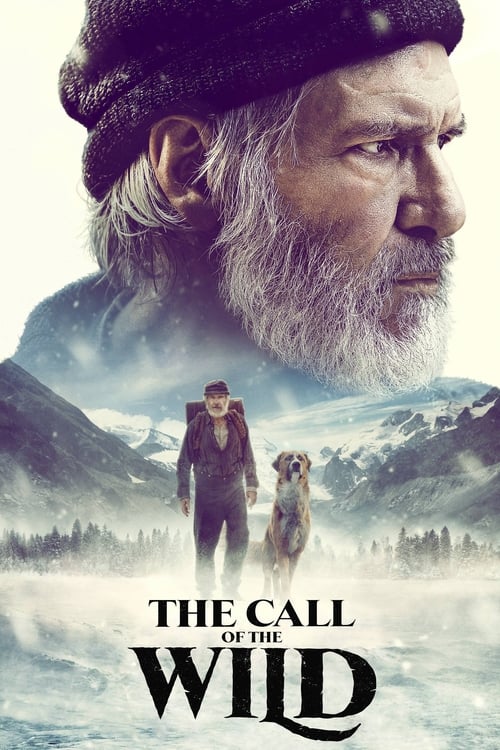
The Call of the Wild (2020)
Directed by Chris Sanders
No — The Call of the Wild is not woke, scoring 6 out of 100 on our wokeness meter.
Buck, a Saint Bernard and Scotch Shepherd cross of immense good cheer, is yanked from a Santa Clara estate and deposited into the Klondike, where he learns the sled, the club, and the satisfactions of the trail.
Consciousness Markers
The cast includes Omar Sy, Cara Gee, and Michael Horse in supporting roles, but these are period-appropriate figures (a French-Canadian mail runner, a First Nations runner, a Native American friend) rather than modern representation casting with commentary.
There is a mild anti-greed thread inherited from the 1903 novel — Thornton discards the gold and the villain Hal is a grasping prospector — but this is classic frontier moralism, not modern eat-the-rich rhetoric.
The film is a warm family adventure with a gentle 'find your true self' message; it preaches nothing and lectures no one.
No LGBTQ+ characters, themes, or subtext appear anywhere in the film.
The female characters (Mercedes as a spoiled sister, Françoise as a capable runner) exist within the adventure narrative without any feminist framing or gender-role critique.
Indigenous and Black characters are present in the Yukon setting but the film offers no racial commentary, systemic critique, or consciousness-raising.
No environmental or climate themes; the wilderness is a setting for adventure, not a cause.
No body positivity themes; Buck's physical strength is framed as heroic capability, not a body-image statement.
No neurodivergent characters or themes are present.
The film is a straightforward period adventure set during the Klondike Gold Rush with no historical revisionism.
Why it received this score
Buck, a Saint Bernard and Scotch Shepherd cross of immense good cheer, is yanked from a Santa Clara estate and deposited into the Klondike, where he learns the sled, the club, and the satisfactions of the trail. Chris Sanders directs with the thorough professionalism of a man who has spent a career animating creatures and knows exactly where to place the camera when a digital dog is meant to feel sad. The animals are rendered at a fidelity that hovers just outside the uncanny, which is its own kind of achievement. Harrison Ford narrates in a gravelly murmur and appears on screen as John Thornton, a grieving frontiersman who wants nothing to do with gold and everything to do with a harmonica and a dead son he cannot stop mourning.
Omar Sy and Cara Gee play the mail runners Perrault and Francoise with competence and warmth. Michael Horse turns up as a friend of Thornton. These figures exist in the 1890s Yukon as the 1890s Yukon contained them, and the film asks us to notice nothing further about their presence. No thesis is advanced. Karen Gillan's Mercedes is a spoiled sister, which the screenplay treats as a character flaw rather than an occasion for gender critique. The women exist inside the adventure, not in argument with it. Buck's strength is heroic capability, plainly displayed and never interrogated as a statement about bodies of any kind.
Hal the grasping prospector gets his comeuppance, and Thornton pitches the gold into the river, keeping only grocery money. This is frontier moralism of the 1903 vintage, an inherited suspicion of avarice that predates any current enthusiasm for taxing billionaires. The film's only sermon is a soft one: find your true self, run with the wolves, come home to something freer. It preaches gently and to nobody in particular. The result is a warm, old-fashioned family picture, handsomely mounted, culturally becalmed, and content to let a CGI dog carry the argument.
Analysis generated by our Consciousness Algorithm
Part of


Synopsis
Buck is a big-hearted dog whose blissful domestic life is turned upside down when he is suddenly uprooted from his California home and transplanted to the exotic wilds of the Yukon during the Gold Rush of the 1890s. As the newest rookie on a mail delivery dog sled team—and later its leader—Buck experiences the adventure of a lifetime, ultimately finding his true place in the world and becoming his own master.
Questions about The Call of the Wild
Is The Call of the Wild woke?
No — The Call of the Wild is not woke, scoring 6 out of 100 on our wokeness meter. That earns it a verdict of Ultra Based.
Does The Call of the Wild have any woke elements?
Very few. None of the 10 markers reaches 30, the level where a marker counts as present; the highest is Representation Casting at 15.
How does The Call of the Wild compare to other 2020 movies?
It ranks #177 of the 227 films from 2020 we've scored; their average is 21. The wokest is One Night in Miami... (83).
How is the Woke Score calculated?
An AI-assisted process researches the film and its reception, scores it 0–100 on ten markers, then combines those into one 0–100 Woke Score. It measures a specific set of 2020s cultural themes, not film quality.