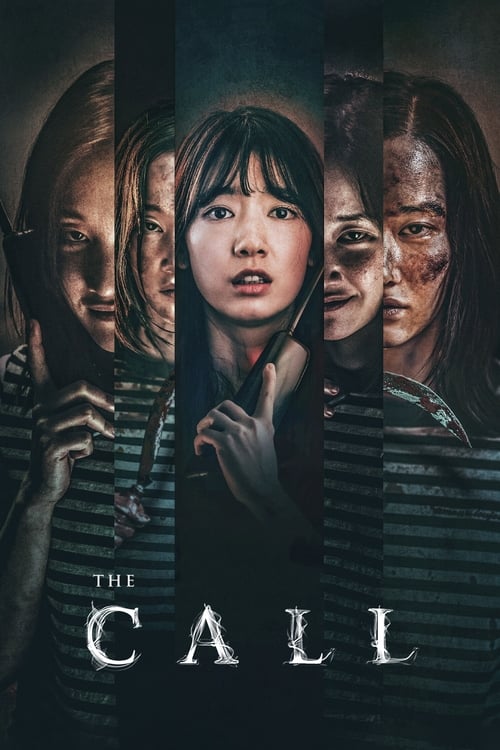
The Call (2020)
Directed by Lee Chung-hyun
No — The Call is not woke, scoring 17 out of 100 on our wokeness meter.
The Call arrives from South Korea with a cordless phone, a time paradox, and the quiet confidence of a film that knows exactly what it is.
Consciousness Markers
The narrative heavily focuses on two women navigating abusive and controlling maternal figures, giving them agency through extreme measures, which aligns with certain feminist critiques of domestic oppression.
The film features a diverse cast of Korean actors, which is a baseline form of representation, but the narrative does not center on systemic issues related to race or ethnicity.
There is no evidence of LGBTQ+ themes, characters, or subtext within the provided plot summary or metadata.
The film does not address systemic racism or racial injustice in any discernible way.
There is no environmental messaging or 'Climate Crusade' present in the film's plot or themes.
The conflict is rooted in personal trauma and time paradoxes, not in critiques of economic systems or corporate greed.
The film does not engage with body image, diverse body types, or body positivity movements.
While the keywords mention 'psychopath' and 'borderline personality disorder,' the film does not explore these concepts through a progressive or diagnostic lens.
The film manipulates personal history and fate, but it does not challenge established historical facts or major societal narratives.
The film is a psychological thriller driven by mystery and action, lacking the didactic, lecture-heavy social commentary often associated with high 'wokeness' scores.
Why it received this score
The Call arrives from South Korea with a cordless phone, a time paradox, and the quiet confidence of a film that knows exactly what it is. Two women, Seo-yeon in 2019 and Young-sook in 1999, share a house and a telephone line across twenty years. What follows is a psychological thriller of escalating cruelty, in which every act of mercy ripples backward into fresh catastrophe. The premise is elegant. The execution is merciless. We are watching a story about the impossibility of saving anyone, including yourself.
There is, to be fair, a genuine current of social critique running beneath the horror. The film concerns itself almost entirely with women trapped by domineering and abusive mothers, and it grants both leads the agency to resist, to scheme, and to destroy. That is a recognizable feminist preoccupation with domestic power and inherited trauma, and it earns the film a measure of cultural seriousness. The film declines, however, to build a sermon on that foundation. It is interested in the knife, not the thesis.
Elsewhere the ledger is bare. The cast is Korean, which is a baseline of visibility and little more, since the story has no interest in ethnicity as a subject. There is no queer subtext, no climate anxiety, no assault on capital, no meditation on body image. The keywords gesture at psychopathy and borderline personality disorder, but the film treats these as plot mechanics, not as an invitation to educate anyone. Nobody stands before the camera to explain the audience to itself. What we get instead is a thriller that trusts its own dread, and we are left to file it away, as we file away everything, with a certain professional weariness.
Analysis generated by our Consciousness Algorithm


Synopsis
Connected by phone in the same home but 20 years apart, a caller puts a woman’s past — and life — on the line to change her own fate.
Questions about The Call
Is The Call woke?
No — The Call is not woke, scoring 17 out of 100 on our wokeness meter. That earns it a verdict of Ultra Based.
Does The Call have any woke elements?
1 of the 10 markers register at 30 or above, led by Feminist Agenda (45). On Feminist Agenda: The narrative heavily focuses on two women navigating abusive and controlling maternal figures, giving them agency through extreme measures, which aligns with certain feminist critiques of domestic oppression.
How does The Call compare to other 2020 movies?
It ranks #94 of the 227 films from 2020 we've scored; their average is 21. The wokest is One Night in Miami... (83).
How is the Woke Score calculated?
An AI-assisted process researches the film and its reception, scores it 0–100 on ten markers, then combines those into one 0–100 Woke Score. It measures a specific set of 2020s cultural themes, not film quality.