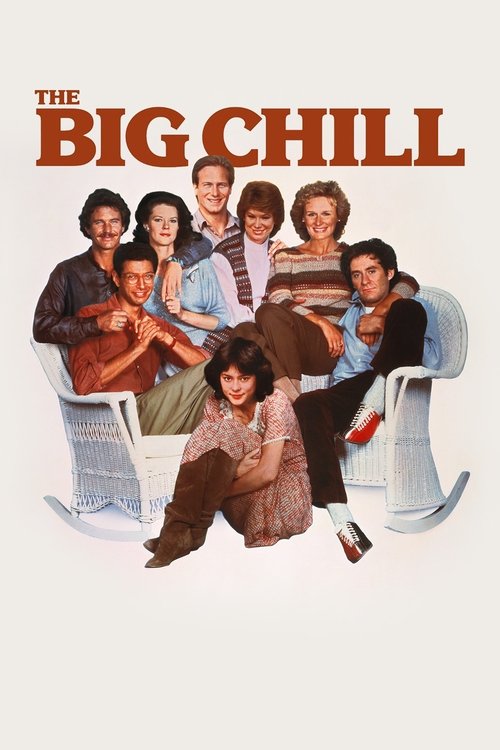
The Big Chill (1983)
Directed by Lawrence Kasdan
No — The Big Chill is not woke, scoring 10 out of 100 on our wokeness meter.
The Big Chill arrives from 1983 with a coffin, a soundtrack, and seven University of Michigan graduates who have spent twelve years discovering that the revolution did not hold.
Consciousness Markers
The film gestures at the sellout theme — Harold's insider tip, Richard the conservative ad executive, the loss of '60s idealism — but it is ambivalent nostalgia rather than an eat-the-rich polemic.
Sarah's tearful dinner reflection on whether their '60s idealism was 'just fashion' carries some thematic sermonizing, but the film stays reflective and character-driven rather than preachy.
Meg's decision to have a child on her own and Karen's marital discontent give women some interiority, but the film treats these as personal melodrama rather than a feminist thesis.
The ensemble is entirely white, drawn from a University of Michigan alumni circle, with no meaningful minority casting or commentary on representation.
There are no LGBTQ+ characters, themes, or subtext anywhere in the film's romantic and sexual entanglements.
Race is entirely absent from the film's concerns; the characters' nostalgia and disillusionment are framed purely through a white boomer experience.
No environmental or climate themes appear in the film.
No body-positivity themes or messaging are present.
Nick's addiction and bitterness are framed as Vietnam-era damage and cynicism, not as neurodivergence or neurodiversity advocacy.
The film is a semi-autobiographical character study, not a revisionist reframing of historical events.
Why it received this score
The Big Chill arrives from 1983 with a coffin, a soundtrack, and seven University of Michigan graduates who have spent twelve years discovering that the revolution did not hold. Lawrence Kasdan's ensemble gathers at a South Carolina plantation house to mourn a friend who killed himself and to inventory their own disappointments. It is a well-made picture, preserved in the National Film Registry, and it is also a document of a very specific demographic examining its own navel with tremendous sincerity. Every face at the table is white. The film does not consider this a subject.
The faint progressive traces here are faint indeed. Meg announces she will have a child alone, an act with some autonomy in it, though the film frames the decision as romantic desperation and resolves it by lending her a married friend for an evening. Karen admits her marriage is hollow. These are gestures toward female interiority, delivered as personal melodrama instead of argument. The film also worries, gently, about selling out: Harold's insider stock tip, Richard the advertising man, the suspicion that youthful idealism was a phase. That worry never sharpens into a critique of the system that rewarded them. Sarah's tearful dinner speech about whether the sixties were merely fashion is the closest the film comes to a sermon, and it is a mild one.
The rest of the ledger is bare. The film has no interest in the climate, in bodies, in the politics of race, or in any romantic configuration beyond the heterosexual. Nick's bitterness and his pills read as Vietnam damage and personal dissolution, not as an invitation to reconsider how we sort minds. Nothing here revises the historical record, and the arrangements of capital draw nothing worse than a rueful shrug. What remains is nostalgia, well-acted and beautifully scored, for a cohort that believed its own youth was the central event of the American century. As a specimen of social consciousness, this is a vintage with almost no alcohol in it. As a portrait of privileged regret, it is impeccable.
Analysis generated by our Consciousness Algorithm


Synopsis
Seven old college friends gather for a weekend reunion after the funeral of one of their own.
Questions about The Big Chill
Is The Big Chill woke?
No — The Big Chill is not woke, scoring 10 out of 100 on our wokeness meter. That earns it a verdict of Ultra Based.
Does The Big Chill have any woke elements?
Very few. None of the 10 markers reaches 30, the level where a marker counts as present; the highest is Eat the Rich at 15.
How does The Big Chill compare to other 1983 movies?
It ranks #13 of the 38 films from 1983 we've scored; their average is 10. The wokest is Sans Soleil (68).
How is the Woke Score calculated?
An AI-assisted process researches the film and its reception, scores it 0–100 on ten markers, then combines those into one 0–100 Woke Score. It measures a specific set of 2020s cultural themes, not film quality.