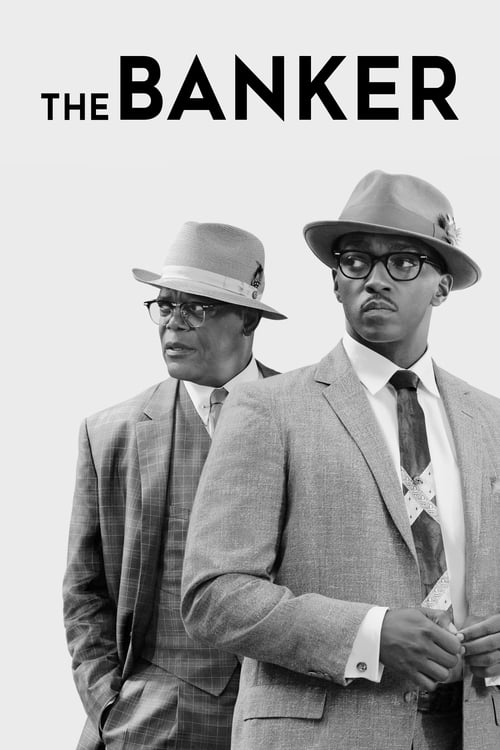
The Banker (2020)
Directed by George Nolfi
Partly — The Banker is somewhat woke, scoring 46 out of 100 on our wokeness meter.
George Nolfi's The Banker arrives as a period drama about two of the first African-American bankers in the United States, which is to say it is a film about paperwork, property, and the peculiar American conviction that a good loan can undo a bad century.
Consciousness Markers
Systemic racism in banking, housing segregation, and loan discrimination are the film's explicit subject, with Bernard's courtroom testimony framing equal access as the moral core.
The film is led by Black actors (Mackie, Jackson, Long) in a story that structurally requires Black principals, so casting is organic rather than performative; still, it presents a notably Black-led mainstream studio drama.
Bernard's climactic courtroom speech about giving Black Americans the same opportunity for upward mobility delivers a direct moral lesson, though the film mostly lets events carry the message.
The film recovers a largely forgotten true story of early African-American bankers, but it dramatizes rather than ideologically rewrites the historical record.
Nia Long's Eunice is a supportive spouse with limited agency; the film is a male-centered business drama with no feminist framework.
The film is fundamentally a celebration of Black entrepreneurship and access to the American Dream through banking and real estate; it critiques racist exclusion from capitalism, not capitalism itself.
No LGBTQ+ characters or themes appear anywhere in the narrative.
No environmental or climate content whatsoever.
No body-positive themes or messaging present.
No neurodivergent characters or themes.
Why it received this score
George Nolfi's The Banker arrives as a period drama about two of the first African-American bankers in the United States, which is to say it is a film about paperwork, property, and the peculiar American conviction that a good loan can undo a bad century. Anthony Mackie's Bernard Garrett and Samuel L. Jackson's Joe Morris build an empire of Los Angeles real estate by installing a white face, Nicholas Hoult's Matt Steiner, at the front of the operation. The film's real subject is not money but access, and it treats housing segregation and loan discrimination as the machinery of the plot. The result is a movie with genuine social consciousness, though it wears that consciousness like a well-pressed suit.
The casting is Black-led and organic to the story, which is a polite way of saying the film could not function otherwise. Nia Long's Eunice exists mostly to hand Bernard his coat and his moral bearings, a spouse with limited agency in a male-centered business drama. For all its anger at racist exclusion, the movie is a love letter to entrepreneurship and the American Dream, which places it at some distance from any serious critique of capital. It wants Black families inside the bank, not the bank dismantled.
Where the film raises its voice, briefly, is Bernard's courtroom testimony about equal opportunity, a moment of direct moral instruction in an otherwise event-driven narrative. It recovers a forgotten true story without rewriting the historical record to flatter the present. There is no romance beyond the heterosexual frame, no environmental sermon, no meditation on bodies or brains. The remainder is a competent, earnest, faintly airless drama that believes in institutions even as it documents their cruelty. A respectable vintage. Nothing to make the sommelier sit up.
Analysis generated by our Consciousness Algorithm


Synopsis
In the 1960s, two entrepreneurs hatch an ingenious business plan to fight for housing integration—and equal access to the American Dream.
Questions about The Banker
Is The Banker woke?
Partly — The Banker is somewhat woke, scoring 46 out of 100 on our wokeness meter. That earns it a verdict of Woke-Adjacent.
What makes The Banker woke?
4 of the 10 markers register at 30 or above, led by Racial Consciousness (72), Representation Casting (60) and Lecture Energy (40). On Racial Consciousness: Systemic racism in banking, housing segregation, and loan discrimination are the film's explicit subject, with Bernard's courtroom testimony framing equal access as the moral core.
How does The Banker compare to other 2020 movies?
It ranks #31 of the 227 films from 2020 we've scored; their average is 21. The wokest is One Night in Miami... (83).
How is the Woke Score calculated?
An AI-assisted process researches the film and its reception, scores it 0–100 on ten markers, then combines those into one 0–100 Woke Score. It measures a specific set of 2020s cultural themes, not film quality.