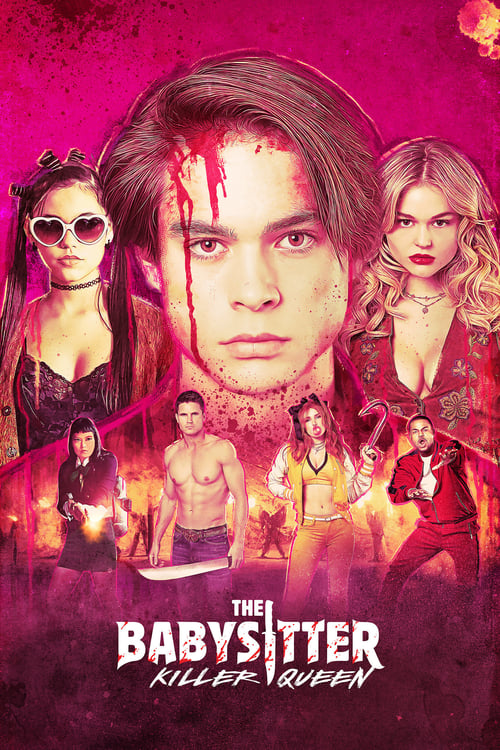
The Babysitter: Killer Queen (2020)
Directed by McG
No — The Babysitter: Killer Queen is not woke, scoring 8 out of 100 on our wokeness meter.
The Babysitter: Killer Queen is the second entry in a franchise that arrived, was mildly noticed, and now returns on Netflix with the weary obligation of a sequel nobody requested.
Consciousness Markers
The cast includes Latina, Asian, and Black actors in prominent roles, but the film does not foreground or comment on this diversity as a deliberate representational statement.
No LGBTQ+ characters, themes, or subtext are present.
Female characters are central to the plot, but the film does not advance a feminist agenda or critique patriarchal structures.
Race is not a thematic concern, and no racial consciousness or commentary is present.
There is no environmental or climate-related messaging.
The film contains no critique of capitalism, wealth inequality, or class structures.
No body positivity themes or messaging are present.
Cole is briefly thought to have had a psychotic break, but this is a plot device rather than a neurodivergence-focused theme.
The film does not engage with or revise historical narratives.
The film is a horror-comedy sequel with no preachy or lecture-like messaging.
Why it received this score
The Babysitter: Killer Queen is the second entry in a franchise that arrived, was mildly noticed, and now returns on Netflix with the weary obligation of a sequel nobody requested. McG directs again, and most of the cast is resurrected alongside the cult that killed them the first time. The story follows Cole, now a high school junior, through a lake party, a satanic ritual, and a great deal of arterial spray. The director has described the film as Faust with Mel Brooks jokes. Faust survives the comparison better.
On the matter of social consciousness, the film is a desert. The cast includes Latina, Asian, and Black performers in prominent roles, and the film makes no comment on this whatsoever, which is either a refreshing absence of self-congratulation or simply the baseline of a modern ensemble. Race is not a theme. Neither is class, climate, gender politics, or the body. The female characters do the killing and the scheming with real vigor, but the film has no interest in patriarchy as a concept. Cole is briefly believed to have suffered a psychotic break, a detail deployed for plot convenience and then dropped. There is no sermon here, no lesson, no moment where a character turns to the camera and explains how we should all be living.
This is, in its narrow way, honest. The film wants gore, jokes, and a body count, and it pursues those wants without apology. That it pursues them badly is a separate matter, a question of craft and not of ideology. The result is a horror comedy that offends nobody and enlightens nobody, a thoroughly neutral object. Classification is complete. The ledger is nearly blank, and the film seems content to keep it that way.
Analysis generated by our Consciousness Algorithm


Synopsis
Two years after defeating a satanic cult led by his babysitter Bee, Cole's trying to forget his past and focus on surviving high school. But when old enemies unexpectedly return, Cole will once again have to outsmart the forces of evil.
Questions about The Babysitter: Killer Queen
Is The Babysitter: Killer Queen woke?
No — The Babysitter: Killer Queen is not woke, scoring 8 out of 100 on our wokeness meter. That earns it a verdict of Ultra Based.
Does The Babysitter: Killer Queen have any woke elements?
Very few. None of the 10 markers reaches 30, the level where a marker counts as present; the highest is Representation Casting at 20.
How does The Babysitter: Killer Queen compare to other 2020 movies?
It ranks #160 of the 227 films from 2020 we've scored; their average is 21. The wokest is One Night in Miami... (83).
How is the Woke Score calculated?
An AI-assisted process researches the film and its reception, scores it 0–100 on ten markers, then combines those into one 0–100 Woke Score. It measures a specific set of 2020s cultural themes, not film quality.