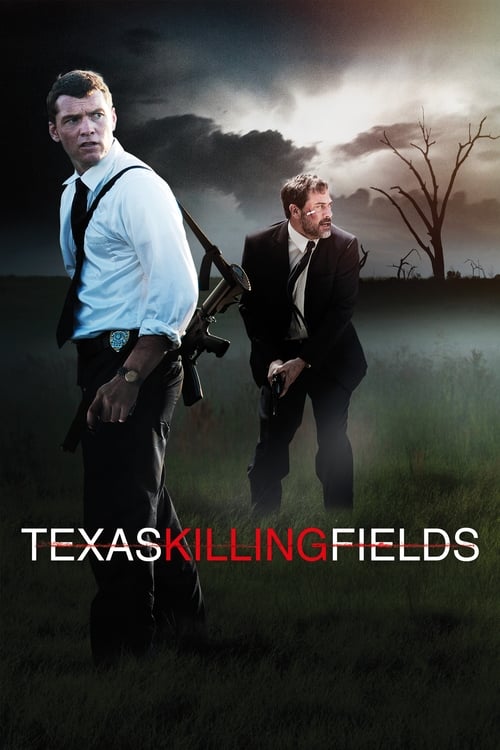
Texas Killing Fields (2011)
Directed by Ami Canaan Mann
No — Texas Killing Fields is not woke, scoring 3 out of 100 on our wokeness meter.
Texas Killing Fields is a 2011 crime film about bayou murders.
Consciousness Markers
A female director and a female detective character are present, but the film does not advance a feminist agenda or critique gender dynamics.
The cast is overwhelmingly white and the film makes no effort at diverse or representative casting.
No LGBTQ+ characters, themes, or subtext are present.
The film does not engage with race, racism, or racial identity.
No environmental or climate themes appear.
There is no critique of capitalism, wealth, or class power.
No body-positivity themes or messaging are present.
No neurodivergent characters or themes are depicted.
The film is loosely inspired by real unsolved murders but does not revise or reinterpret history in a woke manner.
The film is a straightforward crime thriller and does not lecture the audience on social issues.
Why it received this score
Texas Killing Fields is a 2011 crime film about bayou murders. It is competently grim and entirely uninterested in modern cultural instruction. It wants mutilated bodies, jurisdictional squabbles, and men staring into wetlands. The social ledger is blank. The cast is white, and the film treats that as a fact of East Texas, not a problem to solve. There is no identity politics, no ecological sermon, no economic critique, no body-image commentary, no neurological advocacy.
There is a female director, Ami Canaan Mann, and Jessica Chastain as a detective. This is the only faint flicker. The film does not organize itself around gender grievance or feminist critique. Chastain's character is capable, but her capability is procedural furniture. The film has no lecture energy. It does not pause to explain patriarchy or privilege. It lets the killer be sadistic and the cops be tired. The victims are women, but the film uses that as genre fuel, not as argument. That distinction matters for classification. A body in a marsh is not a thesis.
Loosely inspired by real unsolved murders along I-45, the film does not revise history into a parable. It name-checks true crime without interrogating the systems that might have failed. There is no racial consciousness, no anti-capitalist anger, no environmental crusade. The result is a boilerplate thriller with a low cultural temperature. It is not offensive to modern sensibilities. It is simply indifferent to them. In the ledger of social consciousness, this is a near-empty page. A few cast members and a woman behind the camera, then silence. The film asks nothing of us except to watch the swamp. That is its entire moral program.
Analysis generated by our Consciousness Algorithm


Synopsis
In the Texas bayous, a local homicide detective teams up with a cop from New York City to investigate a series of unsolved murders.
Questions about Texas Killing Fields
Is Texas Killing Fields woke?
No — Texas Killing Fields is not woke, scoring 3 out of 100 on our wokeness meter. That earns it a verdict of Ultra Based.
Does Texas Killing Fields have any woke elements?
Very few. None of the 10 markers reaches 30, the level where a marker counts as present; the highest is Feminist Agenda at 5.
How does Texas Killing Fields compare to other 2011 movies?
It ranks #195 of the 245 films from 2011 we've scored; their average is 11. The wokest is Paul (68).
How is the Woke Score calculated?
An AI-assisted process researches the film and its reception, scores it 0–100 on ten markers, then combines those into one 0–100 Woke Score. It measures a specific set of 2020s cultural themes, not film quality.