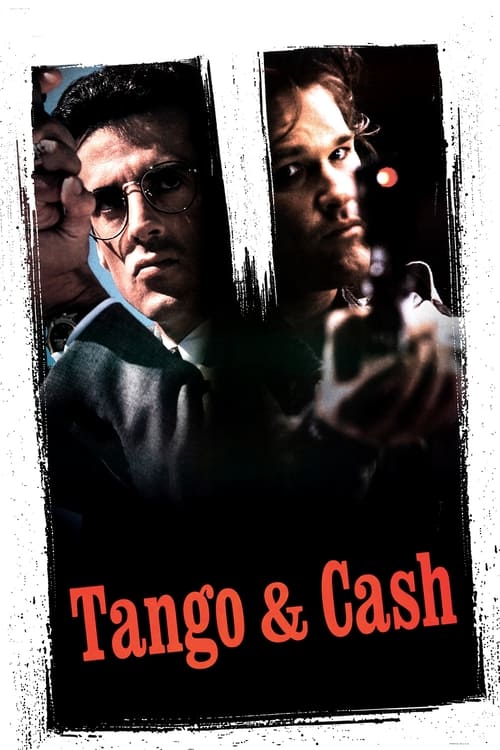
Tango & Cash (1989)
Directed by Andrei Konchalovsky
No — Tango & Cash is not woke, scoring 0 out of 100 on our wokeness meter.
Tango & Cash arrived in December of 1989, a buddy cop picture assembled by committee and salvaged in the editing room after its director was dismissed mid-production for wanting a serious film when the producer wanted a spoof.
Consciousness Markers
No deliberate inclusive casting pattern; the film is led by two white male stars, with minority actors largely cast as villains.
A brief cross-dressing disguise is played as a comic escape gag, not as LGBTQ+ representation or theme.
Teri Hatcher's character is primarily a dancer, sister, and kidnapping plot device, with no feminist argument or agency-centered framing.
The multiethnic crime syndicate and drug-war backdrop provide no racial commentary or consciousness.
There is no environmental theme or climate messaging in the film.
The film's stock-trading cop and crime-lord revenge plot contain no critique of capitalism or wealth structures.
No body-positivity themes or messaging are present.
A mentally ill inmate is used for broad comic effect, not as positive neurodivergence representation.
The film is a contemporary buddy-cop action comedy with no historical revisionism or reinterpretation.
The film is a wisecracking action comedy with no preachy social lecture or moralizing monologue.
Why it received this score
Tango & Cash arrived in December of 1989, a buddy cop picture assembled by committee and salvaged in the editing room after its director was dismissed mid-production for wanting a serious film when the producer wanted a spoof. The finished product, a Stallone and Russell vehicle about two rival Los Angeles narcotics detectives framed for murder by a crime lord named Yves Perret, carries the fingerprints of everyone who touched it and the convictions of no one. It exists to deliver quips and explosions, and it does so with a shrug.
Social questions do not appear in this film, and neither do answers to them. Teri Hatcher appears as a club dancer, a sister, and eventually a hostage, and the screenplay never once suggests she should be anything else. A chase sequence requires Kurt Russell to flee a nightclub in a dress, which the movie regards as a joke about humiliation and nothing more. A mentally ill inmate, played by Clint Howard, is wheeled out for comic relief. The villains are a Cockney, a Triad boss, and a Mexican cartel figure, a demographic spread assembled for menace, not for meaning. Stallone's character trades stocks between shootouts, and the film has no opinion about that either.
The ledger comes up empty across every column. No casting pattern announces a thesis. No romance is reframed, no history is rewritten, no monologue explains the audience to itself. This is not a failure of nerve. It is simply a film from a period when the action comedy had no homework to do. We score it accordingly, at zero, and we do so without malice. It is a relic, and relics are not asked to argue.
Analysis generated by our Consciousness Algorithm
Part of


Synopsis
Ray Tango and Gabriel Cash are two successful narcotics detectives who can't stand each other. Crime lord Yves Perret, furious at the loss of income they have caused him, plots an elaborate revenge against them.
Questions about Tango & Cash
Is Tango & Cash woke?
No — Tango & Cash is not woke, scoring 0 out of 100 on our wokeness meter. That earns it a verdict of Ultra Based.
Does Tango & Cash have any woke elements?
No. All 10 markers score zero.
How does Tango & Cash compare to other 1989 movies?
It ranks #62 of the 68 films from 1989 we've scored; their average is 10. The wokest is Do the Right Thing (72).
How is the Woke Score calculated?
An AI-assisted process researches the film and its reception, scores it 0–100 on ten markers, then combines those into one 0–100 Woke Score. It measures a specific set of 2020s cultural themes, not film quality.