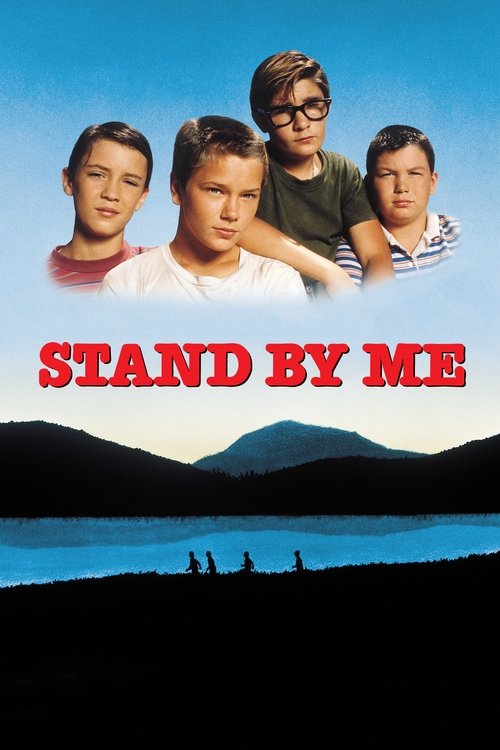
Stand by Me (1986)
Directed by Rob Reiner
No — Stand by Me is not woke, scoring 0 out of 100 on our wokeness meter.
Stand by Me is a lean coming-of-age trek through 1959 Oregon, four boys on a railroad line in search of a dead body.
Consciousness Markers
The cast is entirely white and male, reflecting the 1959 Oregon setting; there is no deliberate race- or gender-blind casting or diversity initiative.
No LGBTQ+ characters, themes, or subtext.
Female characters are peripheral and the story is a male coming-of-age narrative without feminist critique or agenda.
Race is not a theme; the film depicts a racially homogeneous small town without commentary on racial injustice.
No environmental or climate themes.
No critique of capitalism or wealth inequality; the story is personal and nostalgic.
The 'Lard-Ass' campfire story uses an obese boy for gross-out revenge humor, which is the opposite of body positivity.
Teddy's father is described as mentally ill, but the film does not explore neurodivergence as a positive identity or social issue.
The film is a nostalgic period piece set in 1959, not a revisionist or counter-narrative history.
The film is a character-driven adventure with no preachy or didactic messaging.
Why it received this score
Stand by Me is a lean coming-of-age trek through 1959 Oregon, four boys on a railroad line in search of a dead body. The cast is white and male because the setting and the source novella's milieu are white and male, and the film does not strain to retrofit a diversity initiative onto the proceedings. Female characters hover at the edges as mothers and background figures. Race does not enter the frame as a subject, and the town is treated as a homogeneous place without commentary. There is no same-sex undercurrent, no queer subtext to decode, and no invitation to read the bond between the boys as anything other than friendship. This is not a failure of nerve; it is a film with other business on its mind.
That business is grief, friendship, and the terror of growing up with a father who cannot see you. The film lets those themes breathe without converting them into a platform. The campfire story of Lard-Ass Hogan, in which an obese boy takes castor oil before a pie-eating contest, is a gross-out revenge fable that would now demand a sensitivity coordinator and a public apology. It is not body positivity. Teddy's father, a mentally ill veteran, is a source of shame and local insult, not a lesson in neurodivergent identity. The marsh offers leeches and a fainting spell, not a climate parable. Milo Pressman is a mean junk man with a dog, not a symbol of economic injustice.
The 1959 setting is filtered through oldies on the soundtrack and the warm haze of memory, not revised to settle modern scores. The film has no sermon to deliver about recycling, wealth, or the correct way to cast a period piece. It tells a story about a boy who becomes a writer because his friends believe in him, and it trusts that story to carry its own weight. As a cultural artifact, it sits quietly in the pre-2010 tradition of humanist storytelling, guilty of sentiment and nostalgia but not of lecturing. A sommelier would call it a clean vintage, with no added fortification.
Analysis generated by our Consciousness Algorithm


Synopsis
After learning that a boy their age has been accidentally killed near their rural homes, four boys decide to go see the body. Gordie, Vern, Chris, and Teddy encounter a mean junk man and a marsh full of leeches, but they also learn more about one another and their very different home lives. Just a lark at first, the boys' adventure evolves into a defining event in their lives.
Questions about Stand by Me
Is Stand by Me woke?
No — Stand by Me is not woke, scoring 0 out of 100 on our wokeness meter. That earns it a verdict of Ultra Based.
Does Stand by Me have any woke elements?
No. All 10 markers score zero.
How does Stand by Me compare to other 1986 movies?
It ranks #47 of the 62 films from 1986 we've scored; their average is 7. The wokest is Star Trek IV: The Voyage Home (42).
How is the Woke Score calculated?
An AI-assisted process researches the film and its reception, scores it 0–100 on ten markers, then combines those into one 0–100 Woke Score. It measures a specific set of 2020s cultural themes, not film quality.