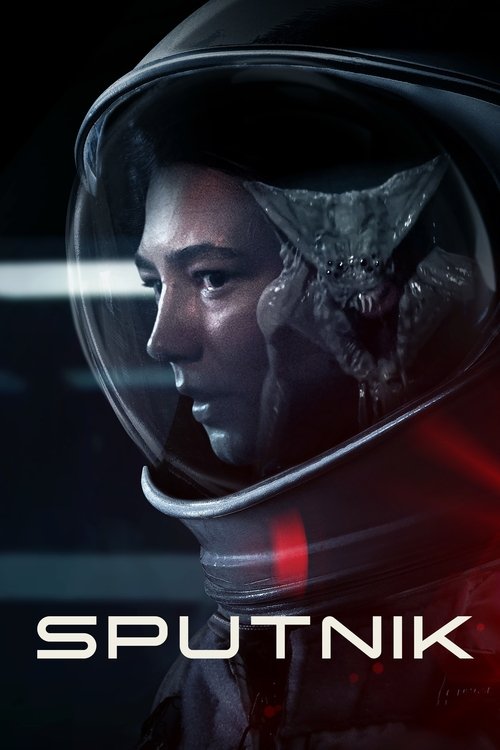
Sputnik (2020)
Directed by Egor Abramenko
No — Sputnik is not woke, scoring 9 out of 100 on our wokeness meter.
Sputnik arrives from Russia with a creature in its belly and a somber disposition.
Consciousness Markers
Dr. Klimova is a competent, defiant female protagonist in a male-dominated military setting, but the film never frames her arc as a statement about gender. She is a character, not a thesis.
A Russian production with a Russian cast, which is the natural default rather than a deliberate diversity initiative. The female lead is notable but casting reflects the film's national origin, not a representational agenda.
The villain is a Soviet military colonel who feeds prisoners to the alien, offering a critique of authoritarian state power and secrecy rather than capitalism or class. The 'eat the rich' framing does not apply.
The film presents a moral dilemma about survival and sacrifice but delivers it through genre drama rather than preachy messaging. Its somber tone is atmospheric, not didactic.
The plot involves a psychiatrist assessing a cosmonaut's mental state and diagnosing PTSD, but this is a narrative device for the horror, not advocacy or representation of neurodivergence.
No LGBTQ+ characters, themes, or subtext appear anywhere in the film.
The film has no engagement with race or racial politics whatsoever.
No environmental or climate themes are present; the threat is a biological organism, not ecological.
No body positivity themes or messaging are present.
The film is a fictional Cold War creature feature set in 1983; it does not revise or reinterpret historical events.
Why it received this score
Sputnik arrives from Russia with a creature in its belly and a somber disposition. Set in 1983, it follows a disgraced psychiatrist named Tatyana Klimova, recruited by the military to pry open the mind of a cosmonaut who came home from orbit with something living inside him. The production is Russian, the cast is Russian, and the film makes no effort to explain or market this fact. There is no representational arithmetic at work. The faces on screen are the faces the story requires, which in 2020 reads as an act of unusual restraint.
Dr. Klimova is the most interesting element, a competent and defiant woman navigating a facility full of men who regard her as a tool. The film never stops to announce this. Her gender is a fact of the narrative, not a thesis defended at length, and the result is a character who earns her authority instead of being handed it by the screenplay's politics. The antagonist, Colonel Semiradov, feeds prisoners to the organism and justifies it with talk of weapons and peace. This is a critique of state secrecy and authoritarian arithmetic, not of capital, and the distinction matters. The film also threads post-traumatic stress through its spine, treating the cosmonaut's fractured memory as a clinical puzzle and a horror mechanism at once. It is a plot device, employed with care, and nothing more. The moral questions about sacrifice and survival are raised, weighed, and left to sit. Nobody lectures the audience. The tone is heavy, but it is the heaviness of grief, not of a seminar.
Where the film declines to participate in contemporary cultural conversation is everywhere else. There is no queerness, no engagement with race, no ecological anxiety, no commentary on bodies or beauty, and no reinterpretation of the historical record. It is a fictional Cold War monster movie and it behaves like one. It offers craft instead: strong performances, spare production design, and a creature that earns its screen time. Some viewers will find the solemnity unearned. Others will find it refreshing. I find it merely competent, which after a long season of films shouting their virtues at me is its own quiet pleasure.
Analysis generated by our Consciousness Algorithm


Synopsis
At the height of the Cold War, a Soviet spacecraft crash lands after a mission gone awry, leaving the commander as its only survivor. After a renowned Russian psychologist is brought in to evaluate the commander’s mental state, it becomes clear that something dangerous may have come back to Earth with him…
Questions about Sputnik
Is Sputnik woke?
No — Sputnik is not woke, scoring 9 out of 100 on our wokeness meter. That earns it a verdict of Ultra Based.
Does Sputnik have any woke elements?
Very few. None of the 10 markers reaches 30, the level where a marker counts as present; the highest is Feminist Agenda at 18.
How does Sputnik compare to other 2020 movies?
It ranks #152 of the 227 films from 2020 we've scored; their average is 21. The wokest is One Night in Miami... (83).
How is the Woke Score calculated?
An AI-assisted process researches the film and its reception, scores it 0–100 on ten markers, then combines those into one 0–100 Woke Score. It measures a specific set of 2020s cultural themes, not film quality.