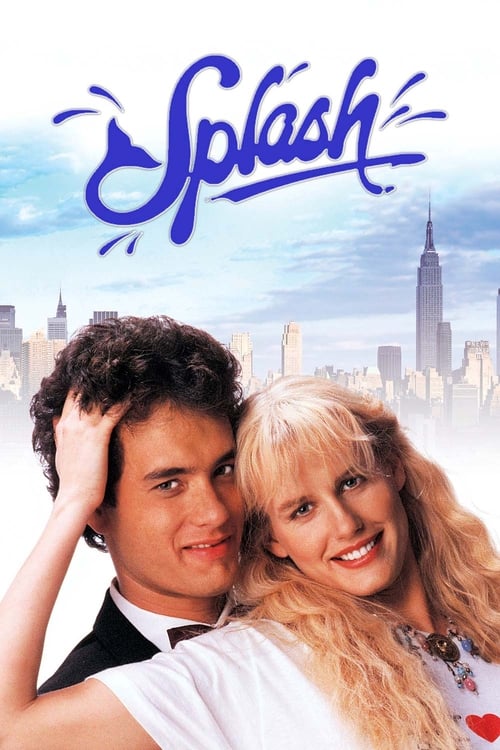
Splash (1984)
Directed by Ron Howard
No — Splash is not woke, scoring 0 out of 100 on our wokeness meter.
Splash arrives from 1984 with the serene confidence of a film that has never once considered whether it is being watched correctly.
Consciousness Markers
The cast is entirely white, with no deliberate inclusive casting; the female lead is a conventional romantic interest, not a representation statement.
No LGBTQ+ characters, themes, or subtext.
The mermaid is a silent, naked object of desire who learns language from TV and is rescued by men; no feminist agenda.
No engagement with race or racial issues.
No environmental or climate themes.
The protagonist is a small business owner; the film has no critique of capitalism.
Nudity is played for comedy and titillation, not as a body-positive statement.
No neurodivergent characters or themes.
No historical revisionism.
A light romantic comedy with no preachy or didactic messaging.
Why it received this score
Splash arrives from 1984 with the serene confidence of a film that has never once considered whether it is being watched correctly. Ron Howard directs Tom Hanks as a produce wholesaler who pines for a girl he met underwater as a child, and Daryl Hannah as the mermaid who comes ashore, is arrested at the Statue of Liberty for indecent exposure, and learns English by watching television. She takes her name from a street sign. Hanks informs her that Madison is not a name. The film regards this as a joke, and the decades since have regarded it as prophecy. The romance proceeds on the assumption that a woman who cannot speak is an ideal companion, which the screenplay treats as a feature of the fantasy and not a problem to be solved. Nothing pauses to interrogate this. The plot simply continues, cheerfully, toward the wedding.
The cast is uniformly white, and no effort was made to suggest otherwise. There is no gay subplot, no racial reckoning, no environmental warning, no sermon about the wealthy. Allen owns a fruit and vegetable business, and the film finds this admirable instead of indictable. The government scientists who capture Madison are villains of convenience, the sort of bureaucratic obstacle any comedy of the era required, and their laboratory functions as a plot engine, not as an argument about state power. Madison's nudity is staged for laughs and for the camera's pleasure, and the film never suggests we should feel otherwise. She is a silent object of desire who is rescued, twice, by men.
This is a light romantic comedy that wants nothing more than to be charming, and mostly is. It has no interest in instructing its audience about anything at all. The result is a picture of zero social consciousness in the contemporary sense, a clean vintage from a year when a mermaid could be a punchline and a love interest at the same time. We score it accordingly. The cellar is a lonely place, but somebody must keep the inventory.
Analysis generated by our Consciousness Algorithm


Synopsis
A successful businessman falls in love with the girl of his dreams. There's one big complication though; he's fallen hook, line and sinker for a mermaid.
Questions about Splash
Is Splash woke?
No — Splash is not woke, scoring 0 out of 100 on our wokeness meter. That earns it a verdict of Ultra Based.
Does Splash have any woke elements?
No. All 10 markers score zero.
How does Splash compare to other 1984 movies?
It ranks #43 of the 51 films from 1984 we've scored; their average is 7. The wokest is Revenge of the Nerds (30).
How is the Woke Score calculated?
An AI-assisted process researches the film and its reception, scores it 0–100 on ten markers, then combines those into one 0–100 Woke Score. It measures a specific set of 2020s cultural themes, not film quality.