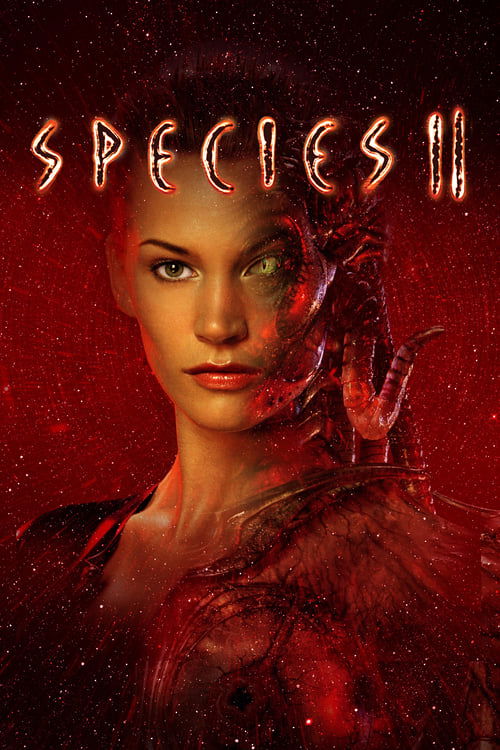
Species II (1998)
Directed by Peter Medak
No — Species II is not woke, scoring 5 out of 100 on our wokeness meter.
Species II arrives in 1998 as the second installment of a franchise that was never in danger of being mistaken for a moral project.
Consciousness Markers
The cast includes Mykelti Williamson as a Black military character, written as a stand-in for Forest Whitaker's role in the original, but his presence is unremarked and functional rather than a statement of representation.
No LGBTQ+ characters, themes, or subtext of any kind.
The film is aggressively exploitative, built around women being impregnated and killed by an alien predator and featuring copious nudity; it is the opposite of a feminist text.
No engagement with racial themes or social commentary; the diverse cast exists without any racial consciousness.
No environmental or climate themes whatsoever.
No critique of capitalism, wealth, or class structures.
No body-positivity themes; the film trades entirely on conventional sexualized imagery.
No neurodivergent characters or themes.
No historical revisionism; the film is pure genre fiction.
No preachy messaging or moral lecturing; the film is a straightforward creature-feature exploitation sequel.
Why it received this score
Species II arrives in 1998 as the second installment of a franchise that was never in danger of being mistaken for a moral project. Peter Medak takes the reins and delivers a creature feature in which an astronaut returns from Mars carrying alien DNA, impregnates women who die in the delivery room, and spawns a brood of hybrids in his father's shed. The film earned a nine percent approval rating and twenty-six million dollars worldwide. Audiences handed it a C. There is no mystery here to solve.
On the cultural ledger, the picture is a near-total blank. There is no romantic subtext between women, no climate anxiety, no critique of the wealthy, no celebration of bodies as they are, no neurodivergent interiority, no rewriting of the historical record, and no sermonizing of any kind. The film is not interested in instructing anyone. It is interested in prosthetics, gore, and the sight of Natasha Henstridge in a state of undress. Medak admitted discomfort with the nudity and defended it as necessary to the story, which is the sort of defense that has never once been offered in good faith.
The single faint flicker of contemporary sensibility is the casting of Mykelti Williamson as Dennis Gamble, a role written to replace Forest Whitaker's character from the original after Whitaker proved unavailable. Gamble is a competent military man who exists to be infected and then to donate his sickle cell trait as a weapon. His race is never mentioned. He is a plot device with a pulse. This is not representation in any meaningful sense; it is a staffing decision. The film closes with a pregnant Eve in an ambulance and a promise of more. Some legacies refuse to die, and the Species franchise is one of them.
Analysis generated by our Consciousness Algorithm


Synopsis
Having just returned from a mission to Mars, Commander Ross isn't exactly himself. He's slowly becoming a terrifying alien entity with one goal -- to procreate with human women! When countless women suffer gruesome deaths after bearing half-alien offspring, scientist Laura Baker and hired assassin Press Lennox use Eve, a more tempered alien clone, to find Ross and his brood. Before long Eve escapes to mate with Ross.
Questions about Species II
Is Species II woke?
No — Species II is not woke, scoring 5 out of 100 on our wokeness meter. That earns it a verdict of Ultra Based.
Does Species II have any woke elements?
Very few. None of the 10 markers reaches 30, the level where a marker counts as present; the highest is Representation Casting at 12.
How does Species II compare to other 1998 movies?
It ranks #82 of the 118 films from 1998 we've scored; their average is 12. The wokest is Show Me Love (60).
How is the Woke Score calculated?
An AI-assisted process researches the film and its reception, scores it 0–100 on ten markers, then combines those into one 0–100 Woke Score. It measures a specific set of 2020s cultural themes, not film quality.