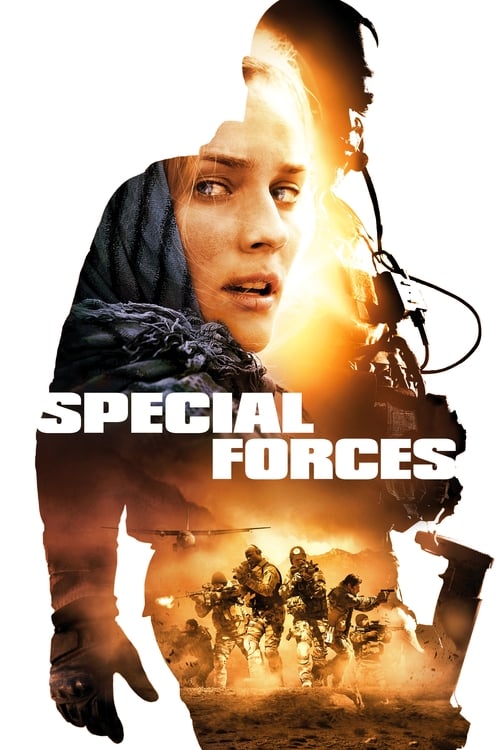
Special Forces (2011)
Directed by Stéphane Rybojad
No — Special Forces is not woke, scoring 10 out of 100 on our wokeness meter.
Stéphane Rybojad's Special Forces arrives from 2011 with the grim earnestness of a hostage-rescue procedural and very little else on its mind.
Consciousness Markers
The cast is internationally varied (Djimon Hounsou, Mehdi Nebbou, Morjana Alaoui, Raz Degan), but this reflects natural ensemble casting for a war film set in Afghanistan rather than any deliberate representational agenda.
Elsa Casanova is described as a 'strong, independent woman,' but her agency serves the survival-thriller plot rather than any explicit feminist thesis.
The film engages Afghanistan and the Taliban, but strictly through a Western military-rescue lens with no racial-consciousness commentary; critics even noted its one-dimensional portrayal of locals.
A straightforward action-war survival film with no preachy messaging or moralizing monologues.
No LGBTQ+ characters or themes appear anywhere in the film.
No environmental or climate themes are present.
No anti-capitalist or class-based economic critique appears in the film.
No body-positivity themes or messaging are present.
No neurodivergence themes or characters are present.
The film is a fictional narrative set against real geopolitical context, with no revisionist reframing of history.
Why it received this score
Stéphane Rybojad's Special Forces arrives from 2011 with the grim earnestness of a hostage-rescue procedural and very little else on its mind. Diane Kruger plays Elsa Casanova, a Kabul-based correspondent who names a warlord the butcher of Kabul and promptly pays for it. A French naval commando unit is dispatched across the Afghanistan-Pakistan border to retrieve her, and the film becomes a long, snowbound retreat through the mountains. The ensemble is drawn from several nations, which lends the unit a plausible cosmopolitan texture. This is casting that reflects the personnel such a mission would actually involve, not a thesis about who deserves screen time.
The promotional material calls Elsa a strong, independent woman, and the film does grant her a measure of grit. She survives, she walks, she refuses to be carried. Yet her resolve serves the machinery of the survival thriller and nothing beyond it. The Afghan setting is treated as hostile terrain and little more. Local characters exist to be imperiled or to menace, and the Taliban are rendered with a cartoonish cruelty that one reviewer likened to a video game. There is no racial reckoning here, no interrogation of the war being fought. The film wants a body count, not a conversation.
On matters of social messaging, the picture is nearly silent. No environmental sermon, no economic critique, no meditation on identity or the body or the mind. It is a chase through the Pamirs with rifles. The lone gesture toward moral instruction is the familiar military creed of leaving no one behind, delivered without a speech. What remains is a lean, occasionally effective genre exercise, the kind that asks nothing of an audience beyond endurance. It is not preachy. It is barely talking.
Analysis generated by our Consciousness Algorithm


Synopsis
Afghanistan. War correspondent Elsa Casanova is taken hostage by the Taliban. Faced with her imminent execution, a Special Forces unit is dispatched to free her. In some of the world’s most breathtaking yet hostile landscapes, a relentless pursuit begins between her kidnappers who have no intention of letting their prey escape them and a group of soldiers who risk their lives in pursuit of their single aim – to bring her home alive. This strong, independent woman and these men of duty are thrown together and forced to confront situations of great danger that inextricably bind them – emotionally, violently and intimately.
Questions about Special Forces
Is Special Forces woke?
No — Special Forces is not woke, scoring 10 out of 100 on our wokeness meter. That earns it a verdict of Ultra Based.
Does Special Forces have any woke elements?
Very few. None of the 10 markers reaches 30, the level where a marker counts as present; the highest is Feminist Agenda at 18.
How does Special Forces compare to other 2011 movies?
It ranks #88 of the 245 films from 2011 we've scored; their average is 11. The wokest is Paul (68).
How is the Woke Score calculated?
An AI-assisted process researches the film and its reception, scores it 0–100 on ten markers, then combines those into one 0–100 Woke Score. It measures a specific set of 2020s cultural themes, not film quality.