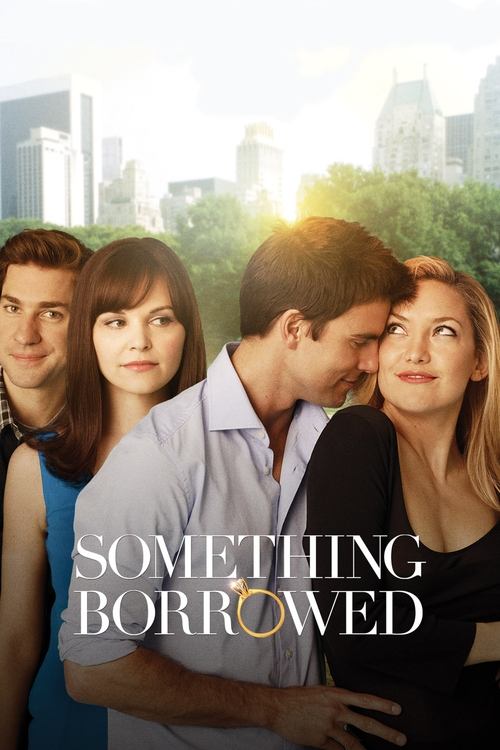
Something Borrowed (2011)
Directed by Luke Greenfield
No — Something Borrowed is not woke, scoring 6 out of 100 on our wokeness meter.
Something Borrowed arrives from 2011, an era when the romantic comedy still believed in the Hamptons wedding and the Chanel purse as a plot device.
Consciousness Markers
The film centers on female characters and a lifelong friendship, but it treats this as conventional romantic-comedy material rather than a feminist thesis.
The principal cast is entirely white, and the film does not engage with diverse casting as a theme.
There are no LGBTQ+ characters, relationships, or themes in the film.
The film does not address race, racial identity, or racial justice in any substantive way.
There is no environmental or climate-related content in the film.
Wealthy settings and luxury items appear as backdrop, but the film offers no critique of capitalism or class.
The film does not engage with body positivity, body image, or size representation as themes.
There is no depiction or discussion of neurodivergence in the film.
The film is a contemporary romantic comedy and does not revise or reinterpret historical events.
The film does not contain preachy or lecture-like messaging; it plays as a conventional relationship drama.
Why it received this score
Something Borrowed arrives from 2011, an era when the romantic comedy still believed in the Hamptons wedding and the Chanel purse as a plot device. It concerns Rachel, a Manhattan attorney of impeccable niceness, who sleeps with the fiance of her oldest friend and then spends two hours feeling bad about it in tastefully furnished apartments. The film is adapted from Emily Giffin's novel and carries all the moral weight of a seating chart. The reviews were unkind. The box office was indifferent. Both verdicts were fair.
We are told this is a story about female friendship, and technically it is. Two women orbit each other with affection and resentment in roughly equal measure, and the screenplay grants Rachel an interior life. But the interior life is mostly about a man with good hair. The friendship serves as scaffolding for a love triangle, not as a thesis. Any suggestion that the film holds a position on loyalty, or on the ethics of wanting things, dissolves the moment Dex removes his shirt. This is not a movie about arguments. It is a movie about weather.
On the matter of social consciousness, the ledger is bare. The cast is uniformly white and uniformly wealthy, and nobody in the frame seems to notice. There is no engagement with class despite the yachts, no engagement with race despite the city, no engagement with anything except the question of who will end up with whom. Nobody lectures. Nobody learns. The film proceeds to its conclusion like a caterer clearing plates. That absence of messaging is, in its own way, a kind of integrity. Here is a modest picture about attractive people making poor decisions, with no agenda beyond the box office, and it did not find one there either.
Analysis generated by our Consciousness Algorithm
Part of


Synopsis
Though Rachel is a successful attorney and a loyal, generous friend, she is still single. After one drink too many at her 30th-birthday celebration, Rachel unexpectedly falls into bed with her longtime crush, Dex -- who happens to be engaged to her best friend, Darcy. Ramifications of the liaison threaten to destroy the women's lifelong friendship, while Ethan, Rachel's confidant, harbors a potentially explosive secret of his own.
Questions about Something Borrowed
Is Something Borrowed woke?
No — Something Borrowed is not woke, scoring 6 out of 100 on our wokeness meter. That earns it a verdict of Ultra Based.
Does Something Borrowed have any woke elements?
Very few. None of the 10 markers reaches 30, the level where a marker counts as present; the highest is Feminist Agenda at 10.
How does Something Borrowed compare to other 2011 movies?
It ranks #148 of the 245 films from 2011 we've scored; their average is 11. The wokest is Paul (68).
How is the Woke Score calculated?
An AI-assisted process researches the film and its reception, scores it 0–100 on ten markers, then combines those into one 0–100 Woke Score. It measures a specific set of 2020s cultural themes, not film quality.