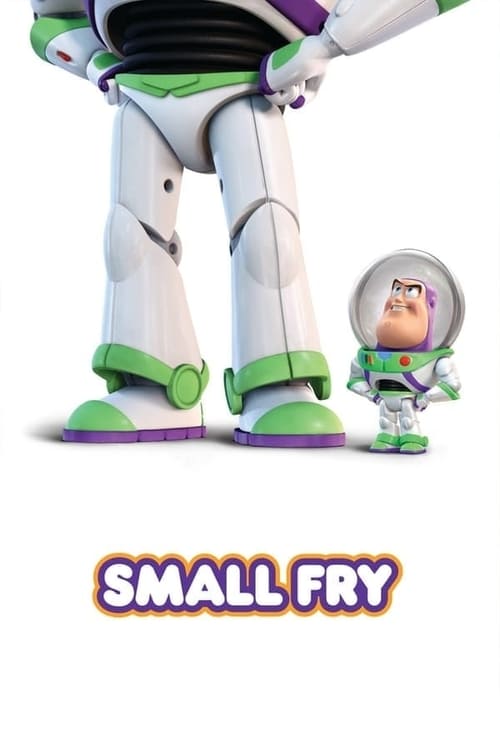
Small Fry (2011)
Directed by Angus MacLane
No — Small Fry is not woke, scoring 5 out of 100 on our wokeness meter.
Small Fry arrives as a footnote to the Toy Story enterprise, a short that ran before The Muppets in 2011 and has since settled into the Pixar Short Films Collection like a stray sock behind the dryer.
Consciousness Markers
The support group for discarded kids' meal toys carries a faint whiff of commentary on consumer disposability, but it is played purely for comedy and never framed as a critique of capitalism.
The voice cast is the standard Pixar ensemble of predominantly white actors; no deliberate diverse or inclusive casting choices are evident.
There are no LGBTQ+ characters, themes, or subtext anywhere in this short.
No feminist themes or commentary; the female characters (Jessie, Neptuna, Bonnie) exist as plot functionaries without any gender-driven message.
No racial consciousness or commentary of any kind; the film is entirely about plastic toys.
No environmental or climate themes present.
No body positivity themes; the toys' body types are not a subject of the film.
No neurodivergence themes or characters.
No historical revisionism; the film has no historical subject matter.
The short is a light comedic caper with no preachy or didactic messaging directed at the audience.
Why it received this score
Small Fry arrives as a footnote to the Toy Story enterprise, a short that ran before The Muppets in 2011 and has since settled into the Pixar Short Films Collection like a stray sock behind the dryer. The plot concerns a miniature Buzz Lightyear, a promotional giveaway trapped behind the glass of a Poultry Palace display case, who seizes his chance at relevance by dragging the genuine Buzz into a ball pit and assuming his identity. The genuine Buzz is left behind after closing time. The film then becomes a caper of mistaken identity, a rescue mission, and a reunion, executed with the brisk competence the studio has long since perfected.
The most interesting passage finds Buzz in a storage room, attending a support group for abandoned fast food toys. A mermaid named Neptuna presides. A grappling hook named Gary shares his pain. Here the short brushes against a genuine idea, the disposability of the cheap plastic trinkets that accompany a chicken sandwich, the brief and inglorious life of a promotional object. It is a real observation. It is also a joke, staged for a laugh and abandoned before anyone could mistake it for a thesis. The film has no interest in indicting the system that produced these toys. It simply finds them funny, and moves on.
The rest is standard Pixar house style. The voice cast is the usual repertory company. The themes are friendship, belonging, and the quiet dignity of being played with. There is no social program here, no sermon, no instruction for the audience on how to live. A weary classifier can only record the findings and file the short under harmless. A faint trace of consumer critique, played for comedy. Otherwise, nothing to report.
Analysis generated by our Consciousness Algorithm
Part of

Synopsis
A fast food restaurant mini variant of Buzz forcibly switches places with the real Buzz and his friends have to deal with the obnoxious impostor.
Questions about Small Fry
Is Small Fry woke?
No — Small Fry is not woke, scoring 5 out of 100 on our wokeness meter. That earns it a verdict of Ultra Based.
Does Small Fry have any woke elements?
Very few. None of the 10 markers reaches 30, the level where a marker counts as present; the highest is Eat the Rich at 8.
How does Small Fry compare to other 2011 movies?
It ranks #165 of the 245 films from 2011 we've scored; their average is 11. The wokest is Paul (68).
How is the Woke Score calculated?
An AI-assisted process researches the film and its reception, scores it 0–100 on ten markers, then combines those into one 0–100 Woke Score. It measures a specific set of 2020s cultural themes, not film quality.