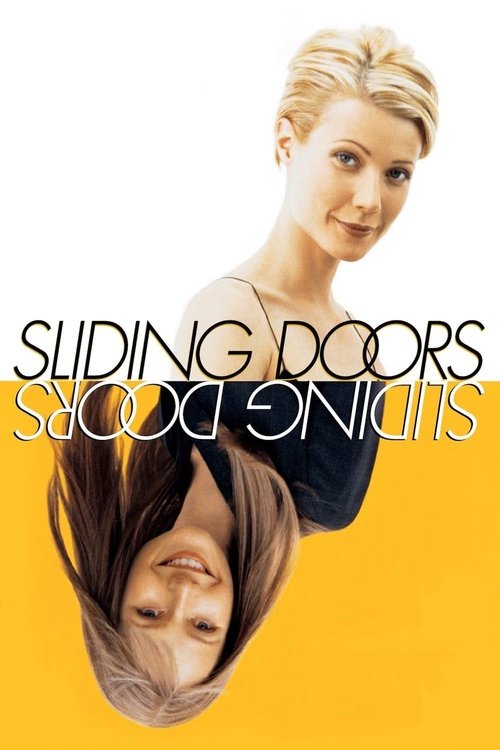
Sliding Doors (1998)
Directed by Peter Howitt
No — Sliding Doors is not woke, scoring 12 out of 100 on our wokeness meter.
Sliding Doors arrives from 1998, a year when a London publicist could be sacked, catch or miss a train, and have her fate hinge on the sliding doors of the Underground.
Consciousness Markers
Helen is the protagonist and there is light empowerment-adjacent material (leaving a cheating partner, cutting her hair, starting her own PR firm), but this is standard romantic-comedy agency rather than a feminist thesis.
The cast is uniformly white British and American performers with no meaningful racial diversity in principal or supporting roles, and the film makes no comment on representation.
There are no LGBTQ+ characters, themes, or subtext anywhere in either timeline; the romantic conflicts are entirely heterosexual.
No engagement with race, racial identity, or systemic racial themes; the film is a white London relationship dramedy.
No environmental or climate content of any kind.
Being fired and taking part-time jobs is a plot mechanism for relationship drama, not a critique of capitalism or wealth inequality.
No body-positivity themes or commentary on body image or appearance standards.
No neurodivergent characters or themes are present.
No historical reimagining or revisionist framing; the film is a contemporary-set fictional romance.
The film is a gimmick-driven romantic comedy that never pauses to instruct the audience on social or political lessons.
Why it received this score
Sliding Doors arrives from 1998, a year when a London publicist could be sacked, catch or miss a train, and have her fate hinge on the sliding doors of the Underground. Peter Howitt's gimmick is elegant enough: two Helens, one life split down the middle, Gwyneth Paltrow in a bob and then in a bleached crop. The film is a romantic comedy with a structural conceit, and it never pretends to be anything else. That restraint is its saving grace. There is no sermon waiting in the wings, no pause to instruct us on the moral failings of the age. It simply wants us to watch a woman be unlucky in two directions at once.
The social consciousness here is mild and mostly incidental. Helen leaves a cheating boyfriend, cuts her hair, starts her own small PR firm, and declines to be defined by the men who let her down. That is standard romantic-comedy agency, the sort of thing the genre had been offering since the 1930s. It registers as empowerment only because the bar has always been low. The cast is uniformly white and comfortably middle-class, the romantic conflicts entirely heterosexual, and the film has no interest in race, class grievance, climate, or the body as a political site. London exists as a backdrop of tube stations and pubs, not as contested social terrain.
What remains is craft. John Hannah is charming, the dual timelines converge with a clean emotional logic, and the whole thing runs on a joke about the Spanish Inquisition. It is a modest film that knows its own scale. We are left with a pleasant artifact of late-nineties British cinema, unserious about everything except the ache of bad timing.
Analysis generated by our Consciousness Algorithm


Synopsis
Helen, a London ad executive, is fired from her job and rushes out to catch a train, but, as she runs down, her life suddenly splits off. In one version she catches the train; in the second, she misses it. Her whole life changes in that one second, and the rest of the film depicts what happens in each scenario.
Questions about Sliding Doors
Is Sliding Doors woke?
No — Sliding Doors is not woke, scoring 12 out of 100 on our wokeness meter. That earns it a verdict of Ultra Based.
Does Sliding Doors have any woke elements?
Very few. None of the 10 markers reaches 30, the level where a marker counts as present; the highest is Feminist Agenda at 20.
How does Sliding Doors compare to other 1998 movies?
It ranks #38 of the 118 films from 1998 we've scored; their average is 12. The wokest is Show Me Love (60).
How is the Woke Score calculated?
An AI-assisted process researches the film and its reception, scores it 0–100 on ten markers, then combines those into one 0–100 Woke Score. It measures a specific set of 2020s cultural themes, not film quality.