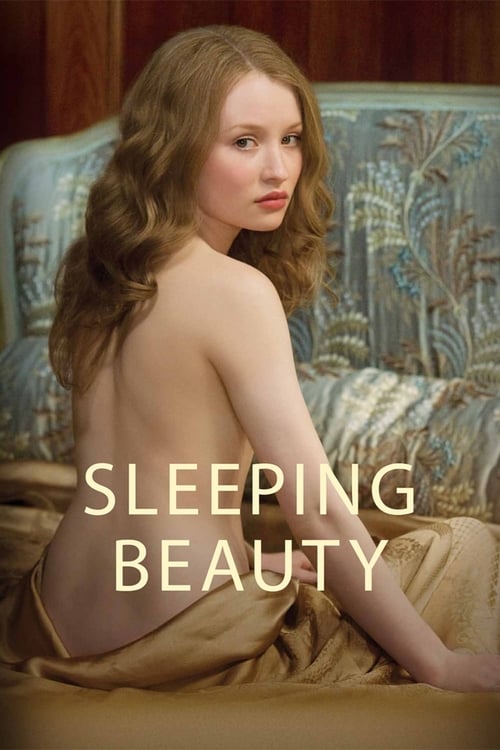
Sleeping Beauty (2011)
Directed by Julia Leigh
No — Sleeping Beauty is not woke, scoring 9 out of 100 on our wokeness meter.
Julia Leigh's debut concerns Lucy, a university student who funds her tuition through office work, restaurant shifts, and eventually a private service in which wealthy clients pay to lie beside her while she sleeps, sedated and compliant.
Consciousness Markers
A female director and protagonist engage with bodily autonomy and exploitation, but the film is ambiguous and non-didactic rather than a modern feminist manifesto.
The plot critiques wealthy clients commodifying a young woman's body and the economic desperation that drives her, but it is not an explicit eat-the-rich polemic.
The cast is entirely white Australian; no meaningful racial or ethnic representation is present.
No LGBTQ+ characters, themes, or subtext.
No racial themes, commentary, or consciousness.
No climate or environmental themes.
Nudity and body inspection are presented as objectification and unease, not body-positive celebration.
No neurodivergence themes or representation.
No historical revisionism or reimagining of historical events.
The film is clinical, elliptical, and refuses didactic messaging.
Why it received this score
Julia Leigh's debut concerns Lucy, a university student who funds her tuition through office work, restaurant shifts, and eventually a private service in which wealthy clients pay to lie beside her while she sleeps, sedated and compliant. The title borrows from Perrault and the Brothers Grimm, though the film's castle is a country mansion and its spindle is a cup of tea. It premiered at Cannes, ran a limited American release, and grossed roughly enough to cover a modest used car. Critics split down the middle, which is the correct place for a film this deliberately withholding.
The cultural ledger here is thin, and the film seems to want it that way. A female director and a female protagonist circle questions of consent, bodily autonomy, and the price attached to a young woman's unconsciousness, which registers as a faint progressive pulse, though the treatment is ambiguous and refuses instruction. The same goes for the economic critique: rich men purchase access to a body, and Lucy's rent determines her choices, but Leigh never mounts a podium. The nudity is clinical inventory, not celebration, so body positivity finds no foothold. The cast is uniformly white Australian, and the film places no racial, queer, environmental, or neurological concerns on the table. Its gaze is fixed on money, sleep, and the menace of voluntary oblivion.
A picture can be severe, unsettling, and morally serious without carrying the specific ideological freight of its decade. This one is a cold chamber piece about commodification, decorated with art-house discomfort and almost no sermonizing. The temperature registers low. That is not a fault. It is simply a reading, and the thermometer does not care about our feelings.
Analysis generated by our Consciousness Algorithm


Synopsis
A haunting erotic fairytale about Lucy, a young University student drawn into a mysterious hidden world of beauty and desire.
Questions about Sleeping Beauty
Is Sleeping Beauty woke?
No — Sleeping Beauty is not woke, scoring 9 out of 100 on our wokeness meter. That earns it a verdict of Ultra Based.
Does Sleeping Beauty have any woke elements?
Very few. None of the 10 markers reaches 30, the level where a marker counts as present; the highest is Eat the Rich at 15.
How does Sleeping Beauty compare to other 2011 movies?
It ranks #96 of the 245 films from 2011 we've scored; their average is 11. The wokest is Paul (68).
How is the Woke Score calculated?
An AI-assisted process researches the film and its reception, scores it 0–100 on ten markers, then combines those into one 0–100 Woke Score. It measures a specific set of 2020s cultural themes, not film quality.