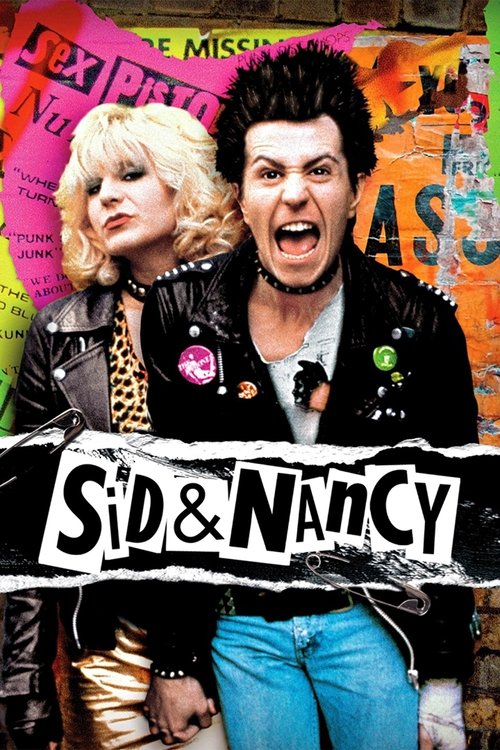
Sid and Nancy (1986)
Directed by Alex Cox
No — Sid and Nancy is not woke, scoring 4 out of 100 on our wokeness meter.
Sid and Nancy arrives from 1986, a period when a film could examine two heroin-addled punk rockers without pausing to audit the demographic composition of the Chelsea Hotel.
Consciousness Markers
Cox explicitly framed the film as an 'anti-drugs statement,' and its relentless slide into degradation carries a moralizing cautionary tone, though it preaches about addiction rather than social justice.
Punk's reflexive anti-establishment posture and the music industry's dismissal of Sid as a has-been carry faint anti-industry sentiment, but the film treats this as personal tragedy rather than systemic critique.
The cast is overwhelmingly white, reflecting the actual London/New York punk milieu of the late 1970s; a few minority performers appear in minor roles but the film makes no effort at deliberate diverse casting.
Nancy Spungen is given substantial screen time and complexity, but she is framed largely as a destructive groupie and catalyst for Sid's decline rather than through any feminist lens.
No LGBTQ+ themes or characters of any significance; Nancy's dominatrix friend Linda is a peripheral figure and the film's focus is entirely on the heterosexual central couple.
The film engages no racial themes whatsoever; its subject matter is the white punk subculture and a doomed white couple.
No environmental or climate content of any kind.
The film depicts emaciation and drug-wasted bodies as horror, not affirmation; no body-positivity themes are present.
No neurodivergence themes; the characters' dysfunction is attributed to heroin and self-destruction, not neurotype.
While the stabbing scene is admittedly conjectural, the film is a conventional dramatized biography rather than a revisionist reframing of history in the modern ideological sense.
Why it received this score
Sid and Nancy arrives from 1986, a period when a film could examine two heroin-addled punk rockers without pausing to audit the demographic composition of the Chelsea Hotel. Alex Cox's camera lingers on Gary Oldman's emaciated frame and Chloe Webb's fraying voice, and the result is a portrait of mutual destruction that owes nothing to the contemporary impulse toward representation. The cast is white because the London and New York punk scenes were white. A few minority faces drift through the margins, unremarked and uncelebrated. No racial argument is made, and none is attempted.
Nancy Spungen receives generous screen time and a certain chaotic complexity, yet the film positions her as the groupie who arrives, introduces the needle, and hastens the decline. This is a tragedy about a woman, not a film interested in women. The couple's devotion is exclusively heterosexual, and the peripheral dominatrix Linda exists to decorate the margins. The wasted bodies on display are offered as a warning, not as an affirmation. Emaciation here reads as horror. The characters' ruin is chemically induced, not neurological, and the film never reaches for a diagnosis beyond the spoon.
Punk's reflexive sneer at the establishment gives the proceedings a faint anti-industry hum, and the music business discarding Sid as a has-been lands with some bite. Cox treats it as personal tragedy, though, not as evidence of a system to be dismantled. He described the project as an anti-drugs statement, and the film's long slide into squalor does carry a cautionary, sermonizing weight. That sermon concerns addiction, not social justice. The stabbing is conjectural, invented from improvisation and hearsay, but conjecture in service of melodrama is not revisionism. The film simply tells a grim story grimly, and asks nothing of us but our discomfort.
Analysis generated by our Consciousness Algorithm

Synopsis
January 1978. After their success in England, the punk rock band Sex Pistols venture out on their tour of the southern United States. Temperamental bassist Sid Vicious is forced by his band mates to travel without his troubled girlfriend, Nancy Spungen, who will meet him in New York. When the band breaks up and Sid begins his solo career in a hostile city, the turbulent couple definitely falls into the depths of drug addiction.
Questions about Sid and Nancy
Is Sid and Nancy woke?
No — Sid and Nancy is not woke, scoring 4 out of 100 on our wokeness meter. That earns it a verdict of Ultra Based.
Does Sid and Nancy have any woke elements?
Very few. None of the 10 markers reaches 30, the level where a marker counts as present; the highest is Lecture Energy at 15.
How does Sid and Nancy compare to other 1986 movies?
It ranks #28 of the 62 films from 1986 we've scored; their average is 7. The wokest is Star Trek IV: The Voyage Home (42).
How is the Woke Score calculated?
An AI-assisted process researches the film and its reception, scores it 0–100 on ten markers, then combines those into one 0–100 Woke Score. It measures a specific set of 2020s cultural themes, not film quality.