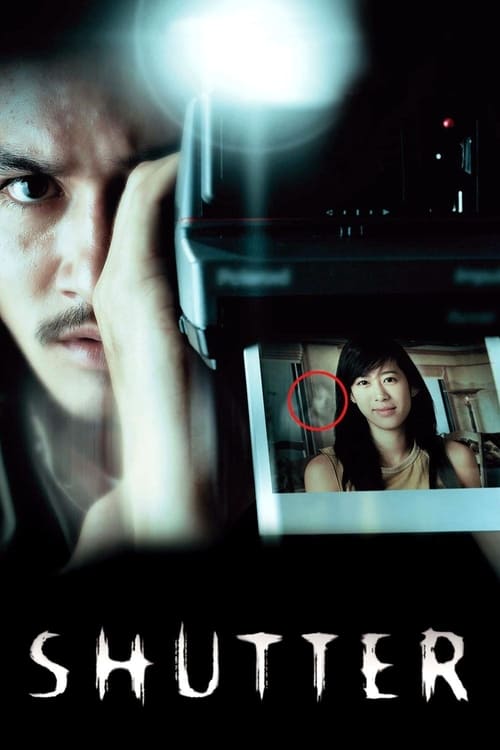
Shutter (2004)
Directed by Banjong Pisanthanakun
No — Shutter is not woke, scoring 5 out of 100 on our wokeness meter.
A photographer and his girlfriend run over a young woman on a Bangkok road and drive on.
Consciousness Markers
The film centers on a woman's posthumous revenge against her rapists and the boyfriend who photographed the assault, but this is a horror revenge trope rather than a feminist thesis.
The cast is entirely Thai, which is simply the film's native context rather than a deliberate diversity-casting initiative. No comment is made on representation.
No LGBTQ+ characters, themes, or subtext appear anywhere in the film.
No engagement with racial identity, systemic racism, or racial justice themes.
No environmental or climate themes whatsoever.
No critique of capitalism, wealth, or class structures.
No body-positivity themes; the protagonist's weight gain is a horror device (the ghost on his shoulders), not a body-image message.
No neurodivergence themes or characters.
No historical revisionism; the film is a contemporary supernatural thriller.
The film delivers scares rather than moral instruction; it never pauses to lecture the audience on social issues.
Why it received this score
A photographer and his girlfriend run over a young woman on a Bangkok road and drive on. The dead woman, it turns out, had history with the photographer, and she has opinions about how that history ended. Banjong Pisanthanakun and Parkpoom Wongpoom build their 2004 thriller out of white smears on Polaroid film, a creeping neck ache, and the slow arithmetic of guilt. It is a tidy machine for delivering dread, and it delivers. The cast is entirely Thai because the film is Thai. Nobody pauses to explain this, and nobody needs to.
Viewers hunting for contemporary social messaging will leave hungry. The film has no interest in racial politics, no environmental sermon, no class critique, no meditation on body image despite a plot point about the protagonist's sudden weight. His heaviness is a ghost sitting on his shoulders, which is a scare, not a statement. There is a woman at the center of the revenge, and her violation is treated with genuine horror, but the machinery is the old machinery: the wronged spirit, the guilty men, the reckoning. Calling this a feminist thesis would require ignoring every ghost story that came before it. The film wants to frighten us, not instruct us, and it never breaks from that purpose to deliver a lesson.
Twenty years on, it remains a competent piece of craft, remade repeatedly and still studied. It is the sort of film that achieves exactly what it sets out to do and asks for nothing more. We can respect that. We can even admire the restraint.
{"thematic_tags": []}
Analysis generated by our Consciousness Algorithm
Synopsis
When Jane and Tun run over a girl in a car accident, they speed away immediately from the crime scene. However, Tun, a photographer, soon discovers strange shadows in his photos, which unsettles them.
Questions about Shutter
Is Shutter woke?
No — Shutter is not woke, scoring 5 out of 100 on our wokeness meter. That earns it a verdict of Ultra Based.
Does Shutter have any woke elements?
Very few. None of the 10 markers reaches 30, the level where a marker counts as present; the highest is Feminist Agenda at 8.
How does Shutter compare to other 2004 movies?
It ranks #116 of the 178 films from 2004 we've scored; their average is 12. The wokest is Tropical Malady (62).
How is the Woke Score calculated?
An AI-assisted process researches the film and its reception, scores it 0–100 on ten markers, then combines those into one 0–100 Woke Score. It measures a specific set of 2020s cultural themes, not film quality.