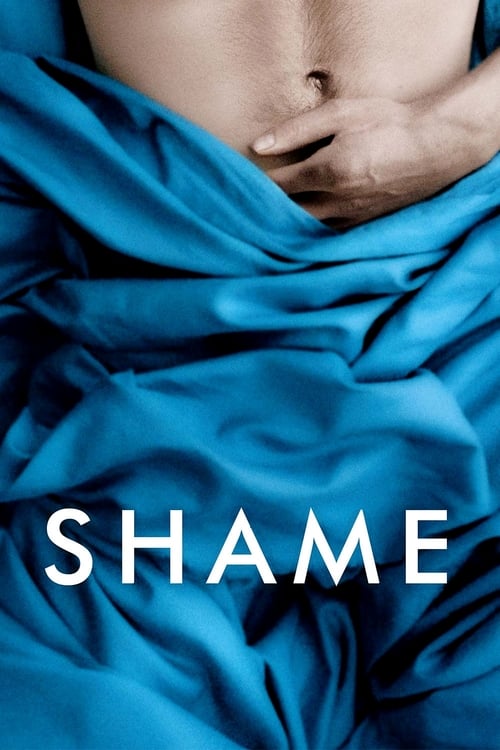
Shame (2011)
Directed by Steve McQueen
No — Shame is not woke, scoring 7 out of 100 on our wokeness meter.
Steve McQueen's Shame arrives as a case study in compulsion, presented without a thesis.
Consciousness Markers
The cast is led by white actors with Nicole Beharie as the co-worker love interest and other actresses of varied backgrounds in small roles, but this is natural casting rather than a diversity-driven ensemble.
A brief gay-bar encounter appears late in the film, but it is framed as part of the protagonist's self-destructive spiral rather than as LGBTQ+ identity or affirmation.
McQueen is observational and ambiguous rather than didactic; the film offers no explicit thesis or moralizing monologue.
The film centers a male sex addict and treats his sister largely as a mirror to his pathology; there is no feminist critique or gender-politics framing.
The corporate Manhattan setting and an adulterous boss provide a faintly hollow professional backdrop, but the film makes no economic or class argument.
Race is never a thematic concern; Beharie's character exists as an ordinary romantic interest with no commentary on racial dynamics.
Sex addiction and borderline-style self-harm are depicted clinically, but the film frames them as pathology and suffering rather than neurodivergent identity or acceptance.
No environmental or climate content whatsoever.
Explicit nudity is present, but it is used to convey compulsion and alienation, not body-acceptance messaging.
A contemporary fictional drama with no historical subject matter to revise.
Why it received this score
Steve McQueen's Shame arrives as a case study in compulsion, presented without a thesis. Brandon, a Manhattan executive with a hard drive full of pornography and an appetite that has swallowed his capacity for intimacy, is played by Michael Fassbender with a physical commitment that borders on the medical. The camera watches. It does not explain, and it does not scold. McQueen and Abi Morgan have built a film about a man drowning in a city that holds no opinion about his drowning, and the result is a chilly, exacting piece of work that declines the comfort of a moral.
The picture's social footprint is faint. Nicole Beharie appears as a co-worker and possible romantic exit, and her presence is treated as ordinary fact, which is its own quiet virtue and also not a program. A late scene in a gay bar registers as one more station on Brandon's descent, not an affirmation of anything. The corporate offices and the adulterous boss supply a hollow professional texture, though the film never converts that texture into an argument about money or class. Sissy's self-harm is rendered with a clinical accuracy that psychiatrists have praised, and it functions as suffering to be witnessed, not as identity to be celebrated. There is no environmental conscience here, no body-acceptance messaging, no historical revisionism, because there is no history at all. The wounds are contemporary and personal.
What keeps the film from sermonizing is McQueen's refusal to speak. He observes, and he lets the silence carry the weight. That restraint is admirable and also limiting. The film's cultural awareness amounts to casting a few faces without comment and letting a sad encounter stand as sad. It is a portrait, not a pamphlet. We are left with a man staring at a woman on a train, and with the distinct sense that nothing has been resolved, which is presumably the point.
Analysis generated by our Consciousness Algorithm


Synopsis
Brandon, a thirty-something man living in New York, eludes intimacy with women but feeds his deepest desires with a compulsive addiction to sex. When his younger sister temporarily moves into his apartment, stirring up bitter memories of their shared painful past, Brandon's life, like his fragile mind, gets out of control.
Questions about Shame
Is Shame woke?
No — Shame is not woke, scoring 7 out of 100 on our wokeness meter. That earns it a verdict of Ultra Based.
Does Shame have any woke elements?
Very few. None of the 10 markers reaches 30, the level where a marker counts as present; the highest is Representation Casting at 15.
How does Shame compare to other 2011 movies?
It ranks #133 of the 245 films from 2011 we've scored; their average is 11. The wokest is Paul (68).
How is the Woke Score calculated?
An AI-assisted process researches the film and its reception, scores it 0–100 on ten markers, then combines those into one 0–100 Woke Score. It measures a specific set of 2020s cultural themes, not film quality.