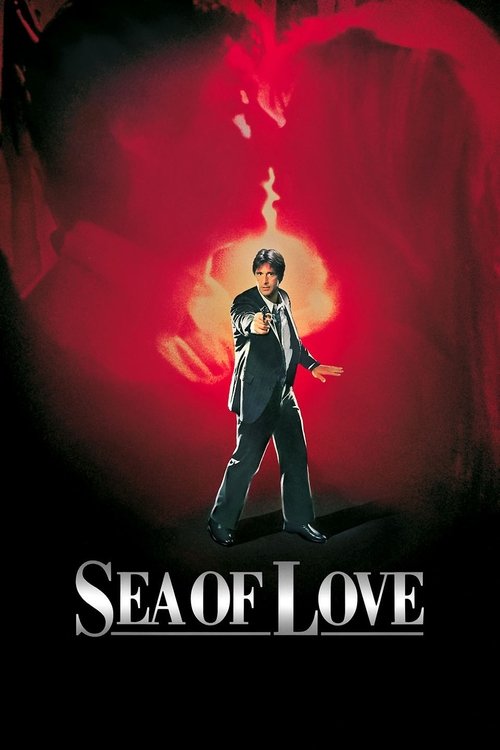
Sea of Love (1989)
Directed by Harold Becker
No — Sea of Love is not woke, scoring 4 out of 100 on our wokeness meter.
Sea of Love is a 1989 neo-noir about a burned-out New York detective, a lonely hearts column, and a serial killer who shoots men while they listen to old records.
Consciousness Markers
Ellen Barkin's Helen is a financially independent divorcée with sexual agency, but she functions primarily as a classic noir femme fatale/suspect rather than a vehicle for any feminist argument.
The cast is overwhelmingly white, with Samuel L. Jackson relegated to a minor, uncredited-by-name role literally listed as 'Black Guy.' No meaningful diverse casting.
No engagement with race whatsoever; the lone Black performer exists as background color in a predominantly white New York procedural.
No LGBTQ+ characters, themes, or subtext of any kind.
No environmental themes present.
No critique of wealth, class, or capitalism; the film is a straightforward genre thriller.
Nudity and sexuality are present but framed through erotic noir convention, not body-positivity messaging.
Frank's alcoholism and burnout are depicted as personal dysfunction, not neurodivergence or a neurodiversity theme.
No historical revisionism; the film is a contemporary-set crime story.
A moody neo-noir that aims to seduce and unsettle rather than preach; no didactic messaging.
Why it received this score
Sea of Love is a 1989 neo-noir about a burned-out New York detective, a lonely hearts column, and a serial killer who shoots men while they listen to old records. Harold Becker directs Al Pacino and Ellen Barkin through a fog of whiskey, sweat, and bad decisions. The film's cultural inventory is sparse. Its New York is a white procedural with one Black performer, Samuel L. Jackson, credited as Black Guy. There are no LGBTQ themes, no climate concerns, no anti-capitalist anger, no body-positive messaging, no neurodivergence narrative, no historical revision, and no sermonizing. It wants to seduce and unsettle. Instruction is not on the agenda.
Ellen Barkin's Helen has a job, a shoe store, a divorce, and a frank appetite for sex. That gives her a flicker of independence. But the film positions her as a classic femme fatale and prime suspect. Her agency serves the mystery, not an argument. Frank's alcoholism and burnout are treated as personal ruin, not a condition to be understood through a modern diagnostic lens. Race never becomes a subject. The lone Black character exists as background color in a genre that has no interest in him. The film is not hostile to social concerns. It simply has none of the ones that matter to current discourse.
The result is a moody, well-acted genre piece that remains watchable for its stars and its atmosphere. It is also a dry vintage. The romantic chemistry between Pacino and Barkin carries the film further than its plot, which cheats in the final act by revealing a killer from left field. There is no lecture here, no uplift, no call to reform. Just lonely people, a newspaper ad, and a gun in a purse. As a cultural artifact, it scores low on contemporary social consciousness. As a thriller, it gets by on smoke and appetite. The cellar is cool. The bottle is dusty. We drink it anyway.
Analysis generated by our Consciousness Algorithm
Part of


Synopsis
Seen-it-all New York detective Frank Keller is unsettled - he has done twenty years on the force and could retire, and he hasn't come to terms with his wife leaving him for a colleague. Joining up with an officer from another part of town to investigate a series of murders linked by the lonely hearts columns he finds he is getting seriously and possibly dangerously involved with Helen, one of the main suspects.
Questions about Sea of Love
Is Sea of Love woke?
No — Sea of Love is not woke, scoring 4 out of 100 on our wokeness meter. That earns it a verdict of Ultra Based.
Does Sea of Love have any woke elements?
Very few. None of the 10 markers reaches 30, the level where a marker counts as present; the highest is Feminist Agenda at 12.
How does Sea of Love compare to other 1989 movies?
It ranks #43 of the 68 films from 1989 we've scored; their average is 10. The wokest is Do the Right Thing (72).
How is the Woke Score calculated?
An AI-assisted process researches the film and its reception, scores it 0–100 on ten markers, then combines those into one 0–100 Woke Score. It measures a specific set of 2020s cultural themes, not film quality.