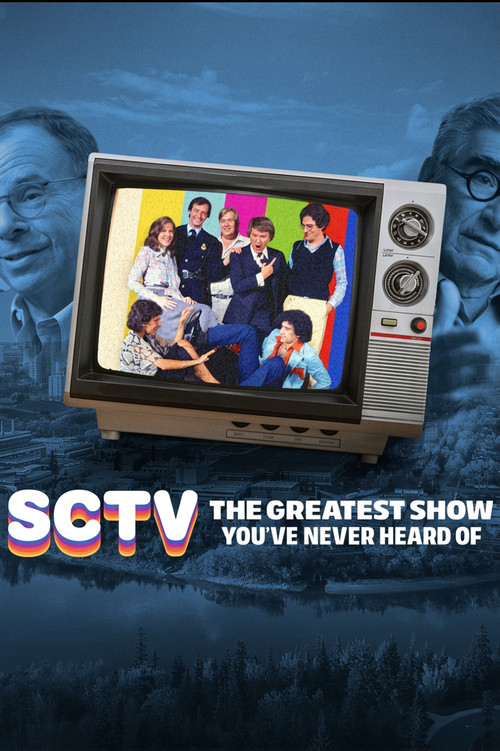
SCTV: The Greatest Show You've Never Heard Of (2026)
Directed by Jason Hehir
No — SCTV: The Greatest Show You've Never Heard Of is not woke, scoring 0 out of 100 on our wokeness meter.
Documentaries about comedy follow a standard shape.
Consciousness Markers
No evidence of deliberate modern representation casting; the documentary features the original SCTV cast, who are predominantly white Canadian comedians.
No LGBTQ+ themes or content are indicated in the documentary about a 1970s-80s sketch comedy show.
No feminist agenda or gender-focused commentary is present; the film celebrates the show's comedy legacy without modern feminist framing.
No racial consciousness or racial justice themes are evident in this retrospective on a Canadian sketch comedy troupe.
No climate change or environmental themes appear in the documentary.
No anti-capitalist or eat-the-rich messaging is present; the film is a straightforward celebration of a comedy show.
No body positivity themes or commentary on body image are indicated.
No neurodivergence themes or representation are evident in the documentary.
The documentary presents a historical retrospective of SCTV without revisionist historical framing or reinterpretation.
No lecture energy or preachy social justice messaging is present; the film is a humorous and heartfelt tribute.
Why it received this score
Documentaries about comedy follow a standard shape. The rise, the friction, the reunion, the tears, the montage set to a song the audience already liked. SCTV: The Greatest Show You've Never Heard Of follows that shape with the diligence of a man assembling a bookcase. Jason Hehir gathers Martin Short, Eugene Levy, Catherine O'Hara, Rick Moranis, Andrea Martin, Dave Thomas and the surviving members of the Second City Television troupe to reminisce about a Canadian sketch program that produced more comic talent per square foot than any American network of its era. John Candy appears in archival footage, which lends the proceedings a quiet weight. The title carries its own complaint. The show was adored by people who mattered and missed by nearly everyone else.
The film declines to retrofit its subject. There is no effort to read the sketches as prophecy about contemporary manners, no accounting of who was absent from a 1970s Canadian soundstage, no sermon about the politics of the material. Instead we get the wigs, the fake commercials, the sets held together by paint and nerve, and the specific pleasure of watching performers who trusted each other. The documentary treats all of this as craft. It is a reunion, and reunions are sentimental by design, but the sentiment is aimed at the work and at colleagues who died too young, not at an argument.
This leaves the ledger unusually blank, and that is the honest result. A tribute to a comedy troupe does not owe us a thesis about the culture that produced it. Hehir keeps the camera on the anecdotes, and the anecdotes are good. Bob Odenkirk and Tom Hanks turn up to explain, in the manner of people who were in the audience, why the thing mattered. Their affection is contagious and uncomplicated. We are left with a documentary that trusts us to find the jokes funny without being told why they count. It is a modest pleasure, and it is enough.
Analysis generated by our Consciousness Algorithm


Synopsis
Legendary "SCTV" cast members reunite in this documentary for a funny and heartfelt celebration of how a scrappy Canadian sketch show made comedy history.
Critic Reviews
“Ultimately, SCTV: The Greatest Show You’ve Never Heard Of is more than a celebration of an enormously influential comedy series. It’s a deeply affectionate portrait of friendships that have outlasted the show, the careers it launched, and, in some cases, the people themselves. For Canadians who grew up with these comedians, whose faces and voices have been familiar for practically their entire lives, there’s something almost overwhelming about seeing them together again, like being reunited with a collection of beloved aunts and uncles, some of whom are no longer around. Watching them in their youthful prime, and then seeing them fifty years later, still laughing at the same jokes, is a reminder of how much time has passed, how much has been lost, and how much of that joy somehow remains.”
“This is a no-frills film, relying on those golden-old clips, the warm, witty, and insightful memories of comic giants, and the sharp observations of modern-day talents. That’s more than enough.”
“Some nights you’re Johnny LaRue, a “big star” on a roll. Some nights you’re Bobby Bittman (Levy), maybe “the worst comic in the world.” But most of the time you’re just praying it “blowed up good,” you’re just Bob and Doug, fryin’ up some back bacon, slurping your way through “two-fours” of Molson’s and affably waiting for what comes next and hoping somebody’s watching. Eh?”
“As “The Greatest Show You’ve Never Heard Of” asserts, affectionately and convincingly, “SCTV” altered the orbit of humor, partly by making television that made fun of television, while unleashing a galaxy of talent into the comedy universe.”
Questions about SCTV: The Greatest Show You've Never Heard Of
Is SCTV: The Greatest Show You've Never Heard Of woke?
No — SCTV: The Greatest Show You've Never Heard Of is not woke, scoring 0 out of 100 on our wokeness meter. That earns it a verdict of Ultra Based.
Does SCTV: The Greatest Show You've Never Heard Of have any woke elements?
No. All 10 markers score zero.
How does SCTV: The Greatest Show You've Never Heard Of compare to other 2026 movies?
It ranks #732 of the 800 films from 2026 we've scored; their average is 23. The wokest is Between Us (89).
How is the Woke Score calculated?
An AI-assisted process researches the film and its reception, scores it 0–100 on ten markers, then combines those into one 0–100 Woke Score. It measures a specific set of 2020s cultural themes, not film quality.