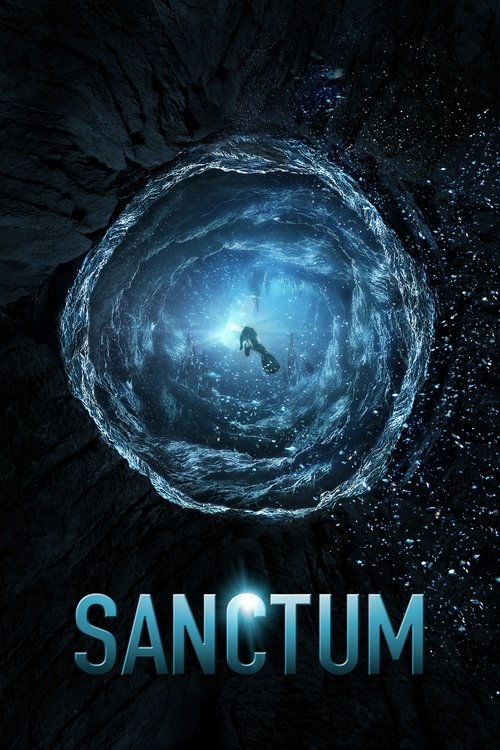
Sanctum (2011)
Directed by Alister Grierson
No — Sanctum is not woke, scoring 0 out of 100 on our wokeness meter.
Sanctum arrives in 2011 with a James Cameron imprimatur, a 3D rig salvaged from Avatar, and a screenplay about people drowning in a flooded cave system beneath Papua New Guinea.
Consciousness Markers
The cast is overwhelmingly white and the Papua New Guinea setting is treated as an exotic backdrop rather than a site for deliberate inclusive casting.
There are no LGBTQ+ characters, themes, or subtext in the film.
Female characters exist mainly as victims or supporting figures, and the film offers no feminist critique or agenda.
Despite being set in Papua New Guinea, the film does not engage with racial identity, colonialism, or racial justice.
The cyclone and flooding are survival-plot devices, not a climate-change parable or environmental warning.
The financier Carl is unlikeable, but the film does not mount a systemic critique of wealth or capitalism.
There is no body-positivity theme or challenge to conventional body standards.
No neurodivergent characters or themes are present.
The film is inspired by a real cave-diving incident but does not revise or reinterpret history for ideological ends.
Sanctum is a survival thriller with no preachy or didactic messaging.
Why it received this score
Sanctum arrives in 2011 with a James Cameron imprimatur, a 3D rig salvaged from Avatar, and a screenplay about people drowning in a flooded cave system beneath Papua New Guinea. It is a survival thriller of the old school, and it has no interest whatsoever in the moral instruction of its audience. The setting is a real place with a real colonial history and a real indigenous population. The film uses it as a wet, dark room. Local characters appear as guides and bearers, given names like Luko, and then they are killed by rocks. No comment is offered. None is sought.
The cast is a wall of white Australian faces, and the women exist to suffer hypothermia in a wet suit they declined to wear, or to hang by their hair above a chasm until the hair gives out. Victoria's death is staged as a cautionary tale about vanity in the cold. The film does not pause to interrogate this. It simply moves to the next corpse. Frank drowns his own son's friend out of mercy and later asks his son to return the favor. Carl, the financier, is unlikeable in the way that men with money are unlikeable in disaster movies, which is to say the film notices his wealth and declines to build a theory around it.
There is a cyclone, and it is weather, not a warning. There is a real 1988 expedition behind the story, and the film does not revise a single fact of it for ideological convenience. The result is a lean, grim, competently photographed exercise in drowning, and in the current taxonomy it registers as a zero across every available axis. This is not a criticism. It is a classification. The film wants nothing from us but our attention, and it barely gets that.
Analysis generated by our Consciousness Algorithm
Part of


Synopsis
Master diver Frank McGuire has explored the South Pacific's Esa-ala Caves for months. But when his exit is cut off in a flash flood, Frank's team—including 17-year-old son Josh and financier Carl Hurley are forced to radically alter plans. With dwindling supplies, the crew must navigate an underwater labyrinth to make it out.
Questions about Sanctum
Is Sanctum woke?
No — Sanctum is not woke, scoring 0 out of 100 on our wokeness meter. That earns it a verdict of Ultra Based.
Does Sanctum have any woke elements?
No. All 10 markers score zero.
How does Sanctum compare to other 2011 movies?
It ranks #216 of the 245 films from 2011 we've scored; their average is 11. The wokest is Paul (68).
How is the Woke Score calculated?
An AI-assisted process researches the film and its reception, scores it 0–100 on ten markers, then combines those into one 0–100 Woke Score. It measures a specific set of 2020s cultural themes, not film quality.