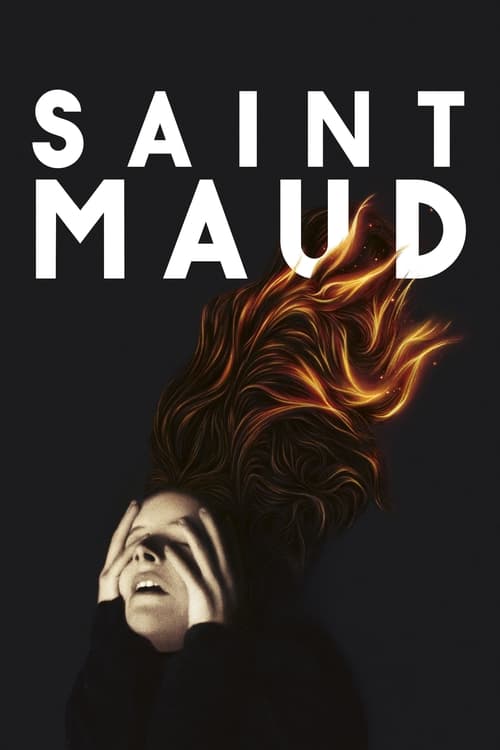
Saint Maud (2020)
Directed by Rose Glass
No — Saint Maud is not woke, scoring 17 out of 100 on our wokeness meter.
Rose Glass arrives with a debut that treats spiritual delusion the way a sommelier treats a difficult Burgundy: slowly, with reverence, and with an awareness that most people will not enjoy the finish.
Consciousness Markers
A same-sex relationship between Amanda and Carol is present, and Maud's homophobia is explicitly named, though queerness is not the film's central thesis.
A female director and female protagonists explore bodily autonomy, religious repression, and sexual violence, but without an overt feminist program.
Female-led cast and director, but the ensemble is overwhelmingly white; representation is primarily gender-based rather than broadly inclusive.
The film is atmospheric and character-driven rather than preachy, with only implicit thematic commentary.
No engagement with racial themes or racial identity.
No climate or environmental themes.
Class contrast between Maud and Amanda exists but is not framed as an anti-capitalist critique.
The film uses body horror and mortification, not body-positive representation.
Maud's psychosis is depicted as horror and religious delusion, not as neurodivergent identity or advocacy.
No historical revisionism.
Why it received this score
Rose Glass arrives with a debut that treats spiritual delusion the way a sommelier treats a difficult Burgundy: slowly, with reverence, and with an awareness that most people will not enjoy the finish. Morfydd Clark plays Maud, a private carer who has recently found God and now intends to save the soul of her dying employer, a chain-smoking American dancer named Amanda. The film is patient, cold, and immaculately shot. It builds toward an ending that briefly offers transcendence and then, in a single frame, withdraws it. That cut is the whole thesis. Grace is a story we tell ourselves. The beach knows otherwise.
On the matter of social consciousness, the film keeps its cards close. It is a female-led production with a female director, and its concerns are bodily autonomy, religious repression, and the violence men do to women who have no one to call. Yet none of this is arranged into a program. The queerness arrives through Amanda's relationship with Carol, and Maud's discomfort with it is named aloud by Carol, who calls her a homophobe to her face. Maud insists she would feel the same about a man, which is either a defense or a confession, depending on the viewer's patience. The cast is almost entirely white, so the representation on offer is gendered, not broad. Class difference between the carer and the cared-for is present but never framed as a structural indictment.
The film declines to lecture. It prefers atmosphere, mortification of the flesh, and a spugna assembled with quiet care. Maud's psychosis is rendered as horror, not as identity, and the movie has no interest in redeeming her or diagnosing her on her behalf. What remains is loneliness, and the terrible things it builds when left alone in a seaside flat. A restrained entry. Recommended for those who find ecstasy suspicious.
Analysis generated by our Consciousness Algorithm


Synopsis
Having recently found God, self-effacing young nurse Maud arrives at a plush home to care for Amanda, a hedonistic dancer left frail from a chronic illness. When a chance encounter with a former colleague throws up hints of a dark past, it becomes clear there is more to sweet Maud than meets the eye.
Questions about Saint Maud
Is Saint Maud woke?
No — Saint Maud is not woke, scoring 17 out of 100 on our wokeness meter. That earns it a verdict of Ultra Based.
Does Saint Maud have any woke elements?
2 of the 10 markers register at 30 or above, led by Feminist Agenda (35) and LGBTQ+ Themes (35). On Feminist Agenda: A female director and female protagonists explore bodily autonomy, religious repression, and sexual violence, but without an overt feminist program.
How does Saint Maud compare to other 2020 movies?
It ranks #94 of the 227 films from 2020 we've scored; their average is 21. The wokest is One Night in Miami... (83).
How is the Woke Score calculated?
An AI-assisted process researches the film and its reception, scores it 0–100 on ten markers, then combines those into one 0–100 Woke Score. It measures a specific set of 2020s cultural themes, not film quality.