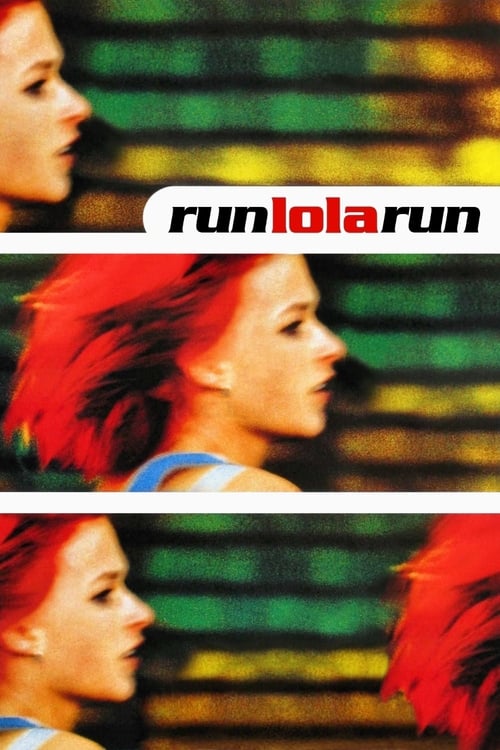
Run Lola Run (1998)
Directed by Tom Tykwer
No — Run Lola Run is not woke, scoring 16 out of 100 on our wokeness meter.
Run Lola Run arrives from 1998 with a spiked red haircut, a pounding techno score, and twenty minutes on the clock.
Consciousness Markers
Lola is an active, resourceful female protagonist who drives the action, but the film does not advance an explicit feminist agenda or critique.
The cast is almost entirely white German actors, with a female lead but no modern inclusive casting pattern. The score only reflects the notable female protagonist.
The prologue and structure gesture at free will, determinism, and chaos theory, but these ideas are dramatized rather than delivered as a social-issue lecture.
There are no LGBTQ+ characters, themes, or subtext in the film.
The film does not engage with race or racial politics in any substantive way.
There are no environmental or climate-related themes.
Money drives the plot, but it is treated as a thriller device rather than an anti-capitalist critique of wealth or class.
The film contains no body-positive themes or messaging.
There is no depiction or discussion of neurodivergence.
The film is a fictional present-day thriller and does not revise or reinterpret historical events.
Why it received this score
Run Lola Run arrives from 1998 with a spiked red haircut, a pounding techno score, and twenty minutes on the clock. Tom Tykwer's thriller runs its heroine through three iterations of the same afternoon, each one diverging on a trip, a dog, a split second. We approach such a film the way a sommelier approaches a difficult vintage: with patience, and with a clipboard.
On the ledger of contemporary social consciousness, the bottle is nearly empty. The cast is uniformly white German, which registers as an absence of any deliberate inclusive design. Lola herself is the one live wire: she runs, she negotiates, she robs a bank, she screams a roulette ball into place. That is a woman driving the action with force and ingenuity, and it counts for something modest. It is not an argument about anything. The film has no interest in making one.
Money moves the plot and critiques nothing. Race, climate, capital, bodies, neurodivergence: absent, all of them, without even the courtesy of a gesture. The prologue asks its rhetorical questions about free will and determinism, and the film answers them with imagery, a blind woman, a glass shattering, a ball landing on twenty. Ideas are staged, not preached. That restraint, more than anything, dates the thing. It belongs to an era when a thriller could be about metaphysics and nothing else, and nobody in the room demanded a thesis statement. We note the vintage, mark the low cellar score, and set it back on the shelf with a small nod of respect.
Analysis generated by our Consciousness Algorithm


Synopsis
Lola receives a phone call from her boyfriend Manni. He lost 100,000 DM in a subway train that belongs to a very bad guy. She has 20 minutes to raise this amount and meet Manni. Otherwise, he will rob a store to get the money. Three different alternatives may happen depending on some minor event along Lola's run.
Questions about Run Lola Run
Is Run Lola Run woke?
No — Run Lola Run is not woke, scoring 16 out of 100 on our wokeness meter. That earns it a verdict of Ultra Based.
Does Run Lola Run have any woke elements?
1 of the 10 markers register at 30 or above, led by Feminist Agenda (35). On Feminist Agenda: Lola is an active, resourceful female protagonist who drives the action, but the film does not advance an explicit feminist agenda or critique.
How does Run Lola Run compare to other 1998 movies?
It ranks #27 of the 118 films from 1998 we've scored; their average is 12. The wokest is Show Me Love (60).
How is the Woke Score calculated?
An AI-assisted process researches the film and its reception, scores it 0–100 on ten markers, then combines those into one 0–100 Woke Score. It measures a specific set of 2020s cultural themes, not film quality.