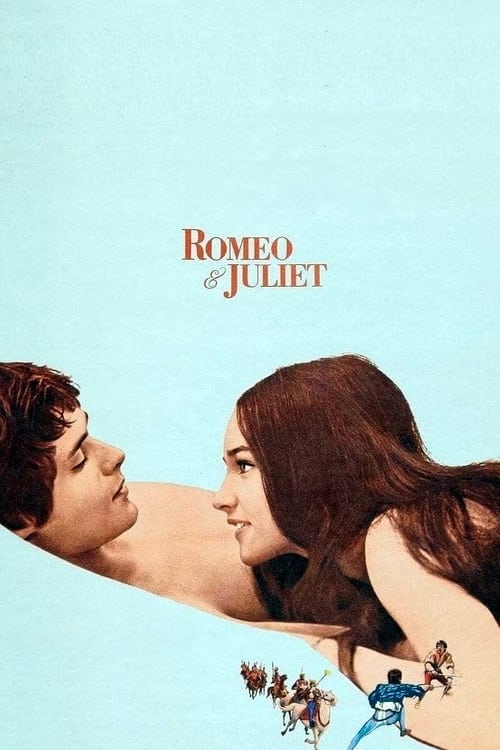
Romeo and Juliet (1968)
Directed by Franco Zeffirelli
No — Romeo and Juliet is not woke, scoring 4 out of 100 on our wokeness meter.
Franco Zeffirelli's 1968 adaptation of Romeo and Juliet operates with the high baroque aesthetic of a grand operatic production, which certainly commands attention.
Consciousness Markers
Juliet is willful and defies her parents' arranged marriage, but this is Shakespeare's own characterization rather than a modern feminist statement imposed on the material.
Zeffirelli's worldwide search for unknown teenage actors to play the lovers was a notable casting choice, but it was driven by age-accuracy and chemistry rather than any modern identity-representation agenda; the cast is entirely white.
The film delivers Shakespeare's themes of love and fate earnestly, but offers no modern moralizing or preachy messaging to the audience.
No LGBTQ+ characters, themes, or subtext appear in this faithful Shakespeare adaptation.
The film features an all-white cast and engages no racial themes whatsoever.
No environmental or climate content of any kind.
The feuding Montagues and Capulets are aristocratic families, but the play offers no economic critique or eat-the-rich messaging.
The film's brief nudity was a source of later legal controversy, not a body-positivity statement.
No neurodivergent characters or themes are present.
A straightforward period adaptation of Shakespeare's play, with no historical revisionism.
Why it received this score
Franco Zeffirelli's 1968 adaptation of Romeo and Juliet operates with the high baroque aesthetic of a grand operatic production, which certainly commands attention. The film is a visually arresting piece of cultural heritage, having won multiple Academy Awards for its craftsmanship. However, when viewed through the lens of contemporary cultural awareness, the production remains remarkably traditional. The ambitious casting effort to find genuine young talent speaks to a commitment to performance authenticity, but the resulting all-white ensemble provides little in the way of modern representation. The narrative trajectory is entirely focused on passionate, inevitable tragedy, offering no substantive critique of existing power structures beyond the immediate, personal feuding of the aristocratic families.
Feminist agency exists in the form of Juliet's fierce opposition to her parents' expectations. Her decision to pursue a forbidden love against the dictates of her family is a powerful act of personal defiance. This assertion of self is perhaps the most progressive element of the entire work. Yet, that isolated spark of rebellion does not translate into a broader commentary on social issues. The film engages neither with climate concerns nor any specific economic critique of the ruling class. The characters exist within a beautifully lit, gilded cage, and their melodrama remains firmly rooted in the romantic conventions of the era.
We find that this iteration of Shakespeare prioritizes emotional resonance over thematic expansion. The portrayal of love and destiny is earnest, but it stops short of offering any modern social consciousness. It is a masterful piece of period drama that functions perfectly as a classic tragedy, but it lacks the specific cultural markers of the current progressive sensibilities. It is a profoundly beautiful, deeply dramatic object that refuses to be preachy, which is its saving grace in a landscape of ceaseless modern moralizing.
Analysis generated by our Consciousness Algorithm
Part of


Synopsis
Romeo Montague and Juliet Capulet fall in love against the wishes of their feuding families. Driven by their passion, the young lovers defy their destiny and elope, only to suffer the ultimate tragedy.
Questions about Romeo and Juliet
Is Romeo and Juliet woke?
No — Romeo and Juliet is not woke, scoring 4 out of 100 on our wokeness meter. That earns it a verdict of Ultra Based.
Does Romeo and Juliet have any woke elements?
Very few. None of the 10 markers reaches 30, the level where a marker counts as present; the highest is Feminist Agenda at 10.
How does Romeo and Juliet compare to other 1968 movies?
It ranks #13 of the 23 films from 1968 we've scored; their average is 7. The wokest is Night of the Living Dead (27).
How is the Woke Score calculated?
An AI-assisted process researches the film and its reception, scores it 0–100 on ten markers, then combines those into one 0–100 Woke Score. It measures a specific set of 2020s cultural themes, not film quality.