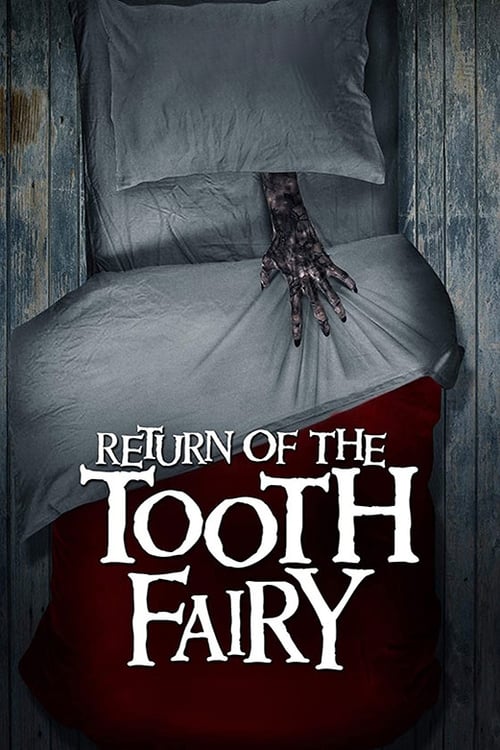
Return of the Tooth Fairy (2020)
Directed by Louisa Warren
No — Return of the Tooth Fairy is not woke, scoring 0 out of 100 on our wokeness meter.
"Return of the Tooth Fairy" is a British horror sequel that resumes a franchise fifteen years after its inaugural installment, which is a long time to wait for a monster whose entire mythology rests on dental hygiene.
Consciousness Markers
The cast appears to be assembled for a low-budget horror sequel without any evident representational agenda or commentary.
There is no indication of LGBTQ+ themes, characters, or subtext in the metadata or research.
The film does not appear to engage with feminist themes or gender politics beyond standard horror tropes.
No evidence suggests the film addresses race, racial identity, or racial justice.
The premise concerns a killer Tooth Fairy, not environmental themes or climate advocacy.
There is no apparent critique of capitalism, wealth inequality, or class structures.
The film does not appear to promote body positivity or challenge conventional beauty standards.
While the protagonist is described as mentally scarred, this is a horror trope rather than a neurodivergence-focused theme.
The film is a fictional horror sequel and does not reinterpret historical events or figures.
No evidence indicates the film contains preachy or didactic messaging on social issues.
Why it received this score
"Return of the Tooth Fairy" is a British horror sequel that resumes a franchise fifteen years after its inaugural installment, which is a long time to wait for a monster whose entire mythology rests on dental hygiene. The premise is simple and admirably committed: Corey, scarred by the events of the first film, attends a class reunion, and the Tooth Fairy returns to enforce flossing compliance. The film has no interest in anything beyond this. It is, in the most literal sense, a movie about a winged creature with a grudge and a set of expectations regarding oral care. We have seen this before. We will see it again.
For the purposes of cultural classification, the picture offers almost nothing to work with. The cast is assembled for a low-budget genre exercise, with no representational agenda in evidence. There are no inquiries into gender politics, no engagement with race or class, no environmental sermonizing, no advocacy of any kind. The protagonist's psychological damage is a standard horror device, the sort of trauma that exists to explain why a grown man is afraid of the dark, not to illuminate anything about mental health. The film's attitude toward wealth is that wealthy people also have teeth. That is the extent of its economic thought.
This is not a criticism. A film may simply wish to show a tooth fairy killing people, and this one wishes it with single-minded devotion. The result is a work of near-total cultural insulation, untouched by the preoccupations of its own decade, indifferent to the conversations happening around it. The classification comes back uniform, and the sweep is clean. We respect the focus. We note, with some fatigue, that there is nothing here to argue about, and so we move on to the next title in the queue.
Analysis generated by our Consciousness Algorithm
Synopsis
The Tooth Fairy is back. 15 years after the events of the first movie, Corey, now grown up but mentally scarred has gone to a class reunion. However, the Tooth Fairy is back, and this time - You better have flossed properly.
Questions about Return of the Tooth Fairy
Is Return of the Tooth Fairy woke?
No — Return of the Tooth Fairy is not woke, scoring 0 out of 100 on our wokeness meter. That earns it a verdict of Ultra Based.
Does Return of the Tooth Fairy have any woke elements?
No. All 10 markers score zero.
How does Return of the Tooth Fairy compare to other 2020 movies?
It ranks #210 of the 227 films from 2020 we've scored; their average is 21. The wokest is One Night in Miami... (83).
How is the Woke Score calculated?
An AI-assisted process researches the film and its reception, scores it 0–100 on ten markers, then combines those into one 0–100 Woke Score. It measures a specific set of 2020s cultural themes, not film quality.