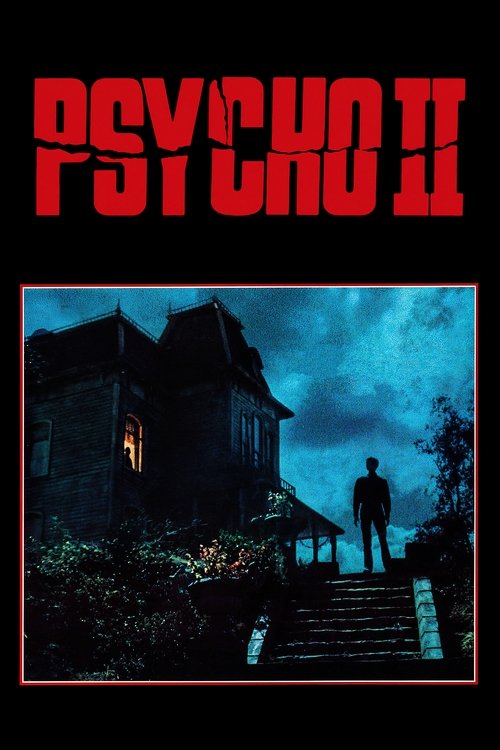
Psycho II (1983)
Directed by Richard Franklin
No — Psycho II is not woke, scoring 0 out of 100 on our wokeness meter.
Psycho II arrives twenty-two years after the original, with Anthony Perkins returning to the role that defined him and Richard Franklin directing as a devoted student of Hitchcock.
Consciousness Markers
The principal cast is entirely white, with no meaningful racial, ethnic, or disability representation as a deliberate feature.
There are no LGBTQ+ characters, themes, or subtext in the film.
Female characters exist in the plot, but the film does not advance a feminist agenda or critique patriarchal structures.
Race is not a theme, and the film contains no racial consciousness or commentary.
There is no environmental or climate-related messaging in the film.
The film has no anti-capitalist critique or eat-the-rich themes.
Body positivity is not addressed or represented in the film.
Mental illness is used as a horror trope, not framed through a modern neurodiversity or neurodivergence advocacy lens.
The film is a fictional horror sequel and does not engage in historical revisionism.
The film does not contain didactic social or political lecturing.
Why it received this score
Psycho II arrives twenty-two years after the original, with Anthony Perkins returning to the role that defined him and Richard Franklin directing as a devoted student of Hitchcock. The premise is a small, mean joke dressed as a psychological thriller: Norman Bates is declared sane, released, and handed a job at a diner, where the world promptly begins conspiring to prove the diagnosis wrong. It grossed thirty-four million dollars on a five million dollar budget and opened second behind Return of the Jedi, which tells us something about the summer of 1983 and nothing whatsoever about social consciousness.
The film's treatment of mental illness deserves cataloguing, though not in the way a contemporary audience might anticipate. Insanity here is a slasher mechanism, a switch flipped for suspense, and Norman's torment is played for sympathy and dread in equal measure. There is no advocacy, no reframing, no impulse to educate. Lila Loomis returns as a woman bent on revenge, and the screenplay dispatches her with a cruelty the Washington Post found revolting at the time. Race, sexuality, class, and the environment do not enter the frame. The cast is uniformly white. Nobody lectures anybody about anything.
This is a studio horror sequel from the early Reagan years, made by craftsmen who wanted to honor a dead master and sell tickets. It carries no agenda beyond the box office. Every category of modern cultural instruction we apply to films of this vintage returns a clean zero, and I record that without disappointment. The movie is what it is: a competent, melancholy little thriller about a man the world has already convicted.
Analysis generated by our Consciousness Algorithm
Part of


Synopsis
Norman Bates is declared sane and released from the facility in which he was being held, despite the complaints of Lila Loomis, sister of his most famous victim. Is he really cured, or will he kill again?
Questions about Psycho II
Is Psycho II woke?
No — Psycho II is not woke, scoring 0 out of 100 on our wokeness meter. That earns it a verdict of Ultra Based.
Does Psycho II have any woke elements?
No. All 10 markers score zero.
How does Psycho II compare to other 1983 movies?
It ranks #31 of the 38 films from 1983 we've scored; their average is 10. The wokest is Sans Soleil (68).
How is the Woke Score calculated?
An AI-assisted process researches the film and its reception, scores it 0–100 on ten markers, then combines those into one 0–100 Woke Score. It measures a specific set of 2020s cultural themes, not film quality.