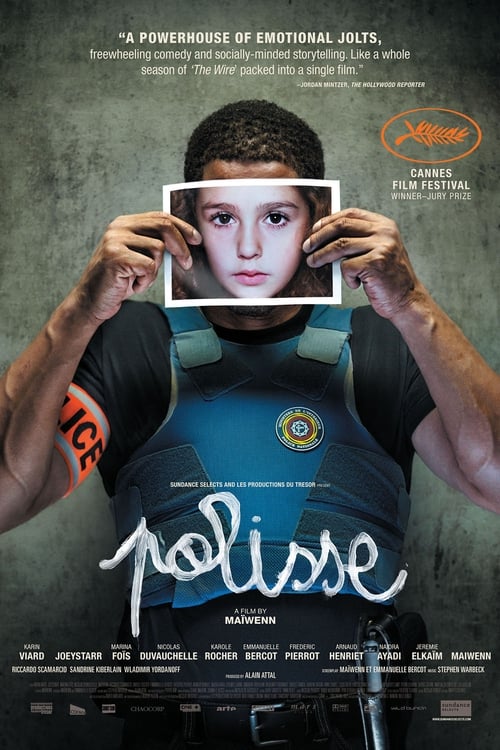
Polisse (2011)
Directed by Maïwenn
No — Polisse is not woke, scoring 12 out of 100 on our wokeness meter.
Polisse arrives from 2011 with the confidence of a film that has done its homework.
Consciousness Markers
The cast includes Black and North African actors in prominent police roles, reflecting a diverse Paris, but this appears as natural ensemble casting rather than a deliberate modern representation agenda.
A woman director and several strong female police officers are central, but the film does not advance an explicit feminist critique or agenda.
The film is a social-issue drama about child protection and overburdened police, but it presents cases without overt preaching or modern activist lecturing.
No LGBTQ+ characters, themes, or subtext are present in the film.
The film features a multiethnic cast but does not engage with racial identity, racism, or racial justice as themes.
No environmental or climate-related themes appear.
The film critiques police bureaucracy and political pressure, not capitalism or economic inequality.
No body positivity themes or narratives are present.
No neurodivergent characters or themes are depicted.
The film is a contemporary procedural and does not revise historical narratives.
Why it received this score
Polisse arrives from 2011 with the confidence of a film that has done its homework. Maïwenn, who writes, directs, and plants herself in the frame as a photographer assigned to document the Child Protection Unit of the Paris police, spent time embedded with the real thing, and it shows in the accumulation of petty cruelties, bureaucratic shrugs, and exhausted gallows humor. The camera stays close. The scenes run long. Cases arrive without verdicts, because the officers rarely learn them either. It took the Jury Prize at Cannes and thirteen César nominations, which tells you the industry recognized a serious object when it saw one.
The cultural ledger here is thinner than the film's reputation might suggest. The squad is multiethnic in the unremarkable way that a Paris police unit would be, with Black and North African officers folded into the ensemble without a word of commentary. A woman directs, and women hold several of the sharpest roles, but the film has no thesis about gender to advance. It simply watches. The abuse cases are grim and relentless, yet the film declines to turn them into a sermon. A social conscience is at work, the old kind, rooted in observation instead of instruction.
What lingers is the exhaustion. The unit does police work and social work and absorbs the cost of both, and the film lets that cost sit there unmanaged. No lesson is extracted. No category is named. For a contemporary viewer trained to scan for the argument, the absence can feel almost negligent. It is not. This is a film from a moment when showing was still considered sufficient, and it trusts the audience to do the rest.
Analysis generated by our Consciousness Algorithm


Synopsis
Paris, France. Fred and his colleagues, members of the BPM, the Police Child Protection Unit, dedicated to pursuing all sorts of offenses committed against the weakest, must endure the scrutiny of Melissa, a photographer commissioned to graphically document the daily routine of the team.
Questions about Polisse
Is Polisse woke?
No — Polisse is not woke, scoring 12 out of 100 on our wokeness meter. That earns it a verdict of Ultra Based.
Does Polisse have any woke elements?
Very few. None of the 10 markers reaches 30, the level where a marker counts as present; the highest is Feminist Agenda at 20.
How does Polisse compare to other 2011 movies?
It ranks #71 of the 245 films from 2011 we've scored; their average is 11. The wokest is Paul (68).
How is the Woke Score calculated?
An AI-assisted process researches the film and its reception, scores it 0–100 on ten markers, then combines those into one 0–100 Woke Score. It measures a specific set of 2020s cultural themes, not film quality.