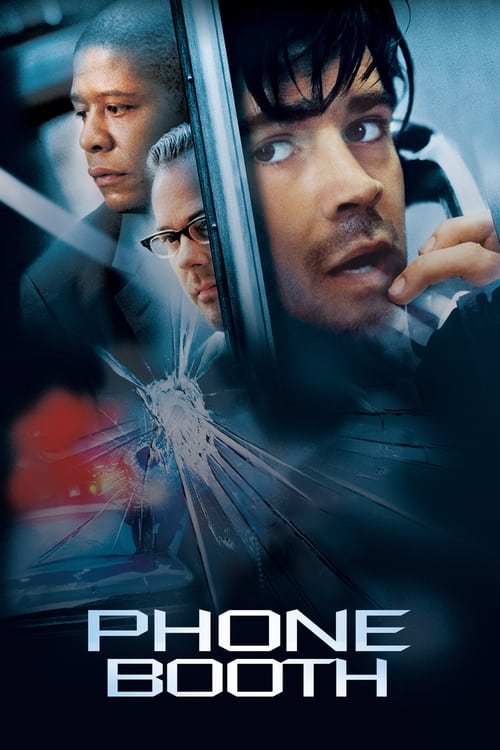
Phone Booth (2003)
Directed by Joel Schumacher
No — Phone Booth is not woke, scoring 7 out of 100 on our wokeness meter.
Phone Booth arrives from 2002, pushed into 2003 by a real sniper's coincidence too grim to function as marketing, and it remains a tidy machine: one man, one booth, one voice on the line, eighty-one minutes of real time in Times Square.
Consciousness Markers
The cast includes Forest Whitaker as a police captain and several minority actors in supporting roles, but their presence is unremarked and natural to the story rather than a statement of representation.
The caller functions as a moral vigilante forcing the protagonist to confess his lies, giving the film a mild sermonizing streak, though it is delivered through suspense rather than explicit preaching.
The caller mentions having previously punished a corporate-corruption figure, and the protagonist is a slick publicist, but the film's target is personal dishonesty rather than capitalism itself.
The two female leads exist primarily as the wife and mistress in the protagonist's deception; there is no feminist framing or commentary.
No LGBTQ+ characters, themes, or subtext appear anywhere in the film.
Race is never addressed or thematized; the diverse supporting cast carries no racial consciousness.
No environmental or climate themes are present.
No body-positivity themes or messaging appear.
No neurodivergent characters or themes are present.
The film is a fictional thriller with no historical revisionism.
Why it received this score
Phone Booth arrives from 2002, pushed into 2003 by a real sniper's coincidence too grim to function as marketing, and it remains a tidy machine: one man, one booth, one voice on the line, eighty-one minutes of real time in Times Square. Joel Schumacher shot it in ten days on French hours and a Dolce & Gabbana suit, and the efficiency shows in the best way. Colin Farrell's publicist is a liar, and the film's whole interest lies in watching a liar get squeezed until the truth comes out. It is a thriller about the mechanics of confession, and it holds up.
The caller, voiced with silken menace by Kiefer Sutherland, is a moral vigilante with a list. He has already tested a pedophile and a corporate swindler. That mention of corporate corruption is the film's lone gesture toward institutional critique, and it lasts about a sentence before the story returns to what it actually cares about: one man's private dishonesty, his wife, his mistress, his vanity. A mild sermonizing streak runs through the proceedings, though it arrives via suspense instead of speeches. Nobody stands up to explain the thesis. The gun does the talking.
The supporting cast is notably varied. Forest Whitaker commands the police cordon, Richard T. Jones backs him up, Paula Jai Parker and Tia Texada work the corner, and the film never once remarks on any of it. That silence is its own kind of restraint. The two women in the lead's life are defined entirely by their relationship to him, one wife and one mistress, with no framing that suggests the film gave the arrangement any thought. The rest of the cultural ledger is bare: no queer subtext, no climate anxiety, no body politics, no neurodivergent coding, no revision of any history. What remains is a lean, well-oiled genre piece, indifferent to the concerns of a later decade and content to be exactly what it is.
Analysis generated by our Consciousness Algorithm


Synopsis
A slick New York publicist who picks up a ringing receiver in a phone booth is told that if he hangs up, he'll be killed... and the little red light from a laser rifle sight is proof that the caller isn't kidding.
Questions about Phone Booth
Is Phone Booth woke?
No — Phone Booth is not woke, scoring 7 out of 100 on our wokeness meter. That earns it a verdict of Ultra Based.
Does Phone Booth have any woke elements?
Very few. None of the 10 markers reaches 30, the level where a marker counts as present; the highest is Representation Casting at 25.
How does Phone Booth compare to other 2003 movies?
It ranks #88 of the 150 films from 2003 we've scored; their average is 12. The wokest is Mona Lisa Smile (60).
How is the Woke Score calculated?
An AI-assisted process researches the film and its reception, scores it 0–100 on ten markers, then combines those into one 0–100 Woke Score. It measures a specific set of 2020s cultural themes, not film quality.