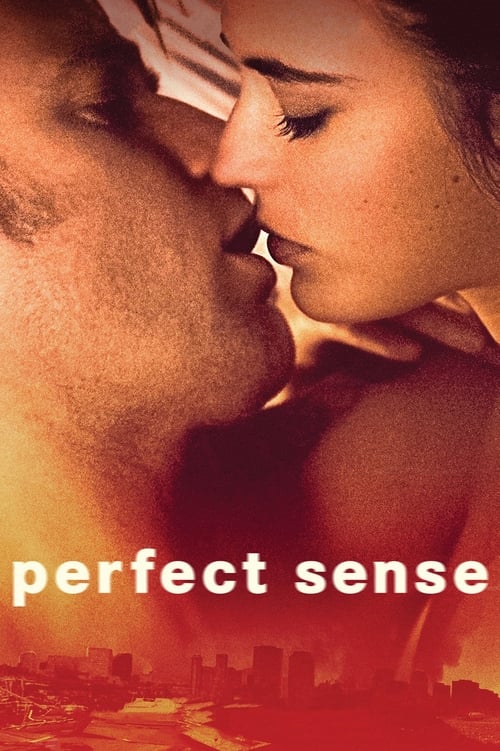
Perfect Sense (2011)
Directed by David Mackenzie
No — Perfect Sense is not woke, scoring 7 out of 100 on our wokeness meter.
Perfect Sense arrives with a premise that any number of contemporary filmmakers would have seized upon as an allegory: a plague that strips humanity of smell, taste, hearing, and finally sight, spreading across a globalized world.
Consciousness Markers
An unseen narrator delivers pseudo-biblical reflections on 'the meaning of it all' and the primacy of love, which critics found preachy, though the sermonizing is existential rather than social-justice oriented.
The cast is overwhelmingly white, with only a single South Asian performer (Shabana Akhtar Bakhsh) in a minor role; no deliberate diverse casting agenda is evident.
Eva Green plays a competent female epidemiologist, but the film treats this as ordinary character detail rather than advancing any feminist thesis.
No LGBTQ+ characters, relationships, or themes appear anywhere in the film.
Race is never a subject of the film; the pandemic and romance are depicted without any racial commentary.
The mysterious sensory plague is never framed as an environmental or climate parable.
No critique of capitalism, wealth, or class structures is present; the restaurant setting is incidental.
The film contains no body-positivity messaging or commentary on body image.
No neurodivergent characters or themes are depicted.
The film is a fictional near-future parable with no historical subject matter to revise.
Why it received this score
Perfect Sense arrives with a premise that any number of contemporary filmmakers would have seized upon as an allegory: a plague that strips humanity of smell, taste, hearing, and finally sight, spreading across a globalized world. David Mackenzie declines the invitation. The film is a love story between a chef and an epidemiologist in Glasgow, and it stays that way. The cast is white to a degree that reads as an accident of British financing rather than a statement, with a single South Asian performer in a minor role and no visible effort to assemble a diverse ensemble. Eva Green's Susan is a capable scientist, but her competence is character detail, not a thesis. There is no LGBTQ presence, no racial commentary, no environmental reading of the contagion. The disease is not the planet's revenge. It is simply a condition.
The restaurant setting, which might have invited some critique of labor or wealth, remains a workplace. Nobody eats the rich here; the kitchen staff cook for customers who can no longer taste. The body is treated as a site of loss, not of affirmation, and no character is marked as neurodivergent. In place of social messaging, the film offers a narrator. An unseen voice intones about the meaning of things and the primacy of love, and critics were right to find it preachy. The sermonizing is existential, however, aimed at the human condition in general. It lectures us about grief and connection, not about politics.
The result is an unusually old-fashioned apocalypse, closer to a somber romance than to any cultural argument. That may be to its credit as drama. As a document of contemporary progressive sensibilities, it is nearly blank. The film asks what we would keep when the senses go, and answers: each other. This is a lovely sentiment and a thoroughly un-modern one.
Analysis generated by our Consciousness Algorithm


Synopsis
In Glasgow, Scotland, while a mysterious pandemic begins to spread around the world, Susan, a brilliant epidemiologist, falls in love with Michael, a skillful cook.
Questions about Perfect Sense
Is Perfect Sense woke?
No — Perfect Sense is not woke, scoring 7 out of 100 on our wokeness meter. That earns it a verdict of Ultra Based.
Does Perfect Sense have any woke elements?
Very few. None of the 10 markers reaches 30, the level where a marker counts as present; the highest is Lecture Energy at 20.
How does Perfect Sense compare to other 2011 movies?
It ranks #133 of the 245 films from 2011 we've scored; their average is 11. The wokest is Paul (68).
How is the Woke Score calculated?
An AI-assisted process researches the film and its reception, scores it 0–100 on ten markers, then combines those into one 0–100 Woke Score. It measures a specific set of 2020s cultural themes, not film quality.