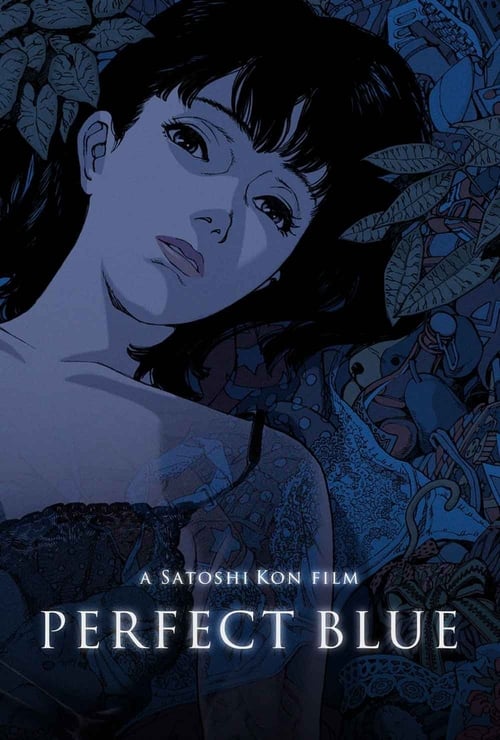
Perfect Blue (1998)
Directed by Satoshi Kon
No — Perfect Blue is not woke, scoring 19 out of 100 on our wokeness meter.
Perfect Blue arrived in 1998 as the first feature from Satoshi Kon, a director who would spend the remainder of his short career probing the border between what we remember and what we invent.
Consciousness Markers
The film centers a female protagonist and critiques the idol industry's commodification of women and the predatory male gaze, but it frames this through psychological horror rather than a modern feminist program.
Mental illness, psychosis, and dissociative identity disorder are central plot mechanics, but they are rendered as sources of horror and madness rather than affirming neurodivergent representation.
Critics note a critique of contemporary Japan's consumer and celebrity culture and the exploitative entertainment industry, though it is a media-culture critique rather than an explicit economic one.
Kon deliberately shows rather than tells, using ambiguity and unreliable perspective; any social critique of media culture is embedded in the drama rather than delivered as a sermon.
A Japanese production with an entirely Japanese cast voicing Japanese characters; the ethnic makeup is natural to the story and carries no diversity-casting agenda.
There are no LGBTQ+ characters, themes, or subtext present in the film.
Race and racial identity play no role in the narrative or its themes.
There is no environmental or climate-related content in the film.
No body-positivity themes; the film's nudity and assault scenes serve psychological horror, not body-acceptance messaging.
The film is a contemporary fictional thriller with no historical subject matter to revise.
Why it received this score
Perfect Blue arrived in 1998 as the first feature from Satoshi Kon, a director who would spend the remainder of his short career probing the border between what we remember and what we invent. The setup is modest. Mima Kirigoe leaves the pop trio CHAM! for a television acting career, and the transition costs her more than she anticipated: a degrading rape scene, a stalker called Me-Mania, a fan website that narrates her private life in unsettling detail, and a string of murders touching nearly everyone involved in her career. Kon keeps the camera close and the logic slippery, so we lose our footing alongside his heroine. The film refuses to confirm which scenes actually happened.
The social consciousness here is genuine but restrained. Mima's handlers sell her body as product, the industry discards her the moment she stops being profitable, and the men around her treat her image as communal property. That is a critique of media and celebrity culture more than of capital itself, and Kon buries it inside the drama instead of announcing it. He shows the exploitation. He does not lecture about it. Mima's psychosis and her fractured sense of self function as machinery for dread, not as an invitation to celebrate neurodivergence, and the film's sympathy for her sits inside a horror framework that treats her own mind as a trap. The feminist reading is available, but Kon never files the paperwork.
The film's omissions are equally instructive. The cast is entirely Japanese, voicing Japanese characters, with no diversity agenda attached. There is no LGBTQ content, no environmental lament, no body-acceptance messaging, no rewriting of history, and no racial framing of any kind. For a 1998 Japanese production this is unremarkable, and the catalog of absences reads as an artifact of its moment. Perfect Blue endures because of its craft and its refusal to explain itself, not because it arrived carrying a program.
Analysis generated by our Consciousness Algorithm


Synopsis
Rising pop star Mima Kirigoe quits singing to pursue a career as an actress. After she takes up a role on a popular detective show, her handlers and collaborators begin turning up murdered. Harboring feelings of guilt and haunted by visions of her former self, Mima's reality and fantasy meld into a frenzied paranoia.
Questions about Perfect Blue
Is Perfect Blue woke?
No — Perfect Blue is not woke, scoring 19 out of 100 on our wokeness meter. That earns it a verdict of Ultra Based.
Does Perfect Blue have any woke elements?
1 of the 10 markers register at 30 or above, led by Feminist Agenda (35). On Feminist Agenda: The film centers a female protagonist and critiques the idol industry's commodification of women and the predatory male gaze, but it frames this through psychological horror rather than a modern feminist program.
How does Perfect Blue compare to other 1998 movies?
It ranks #19 of the 118 films from 1998 we've scored; their average is 12. The wokest is Show Me Love (60).
How is the Woke Score calculated?
An AI-assisted process researches the film and its reception, scores it 0–100 on ten markers, then combines those into one 0–100 Woke Score. It measures a specific set of 2020s cultural themes, not film quality.