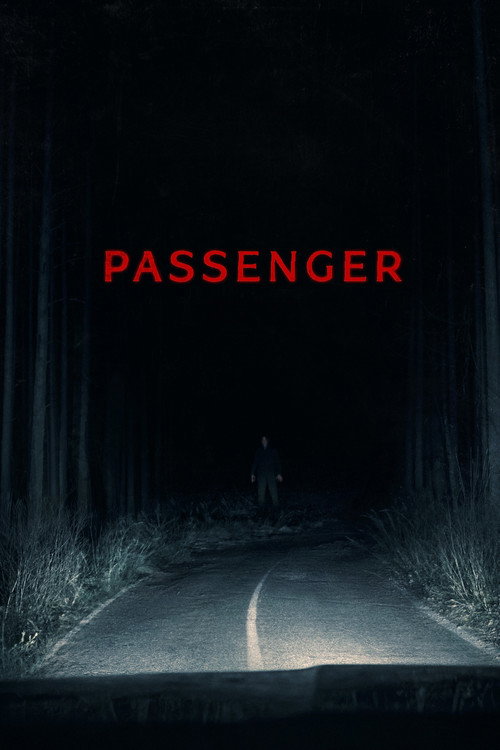
Passenger (2026)
Directed by André Øvredal
No — Passenger is not woke, scoring 8 out of 100 on our wokeness meter.
André Øvredal's "Passenger" arrives as a 2026 supernatural horror film that follows a young couple, Maddie and Tyler, whose van life adventure is interrupted by a demonic entity known as the Passenger.
Consciousness Markers
The cast includes Lou Llobell and Jacob Scipio in the lead roles alongside Melissa Leo, but this is ordinary ensemble casting with no commentary or stated representational intent.
Maddie functions as a capable final-girl protagonist who ultimately destroys the Passenger, but this is standard horror convention rather than a feminist thesis.
No LGBTQ+ characters, relationships, or themes appear anywhere in the film.
The film engages no racial themes, commentary, or social dynamics whatsoever.
No environmental or climate themes are present; the van-life setting is incidental to the horror premise.
The couple's decision to leave their jobs for van life is a lifestyle backdrop, not a critique of capitalism or wealth.
No body-positivity themes or messaging appear in the film.
No neurodivergent characters or themes are depicted.
The film is a contemporary supernatural horror story with no historical subject matter to revise.
The film is a straightforward creature-feature horror with no preachy or didactic messaging.
Why it received this score
André Øvredal's "Passenger" arrives as a 2026 supernatural horror film that follows a young couple, Maddie and Tyler, whose van life adventure is interrupted by a demonic entity known as the Passenger. The premise is familiar: a road trip, a mysterious crash, a relentless stalker, and a final confrontation in an abandoned church. The film stars Lou Llobell, Jacob Scipio, and Melissa Leo, a cast that is diverse on paper but deployed without any stated representational agenda. This is ordinary ensemble casting, the kind that has become standard in contemporary Hollywood without demanding attention. The couple's decision to leave their jobs for a life on the road serves as a lifestyle backdrop, not a critique of capitalism or an endorsement of alternative economies. It is simply where the horror happens.
The film's social consciousness is remarkably restrained. There are no LGBTQ+ characters or themes, no racial commentary, no environmental crusade, no body-positivity messaging, and no exploration of neurodivergence. The narrative is a straightforward creature feature, and its only faint gestures toward progressive sensibilities are conventional. Maddie functions as a capable final girl who ultimately destroys the Passenger, but this is the genre's default setting, not a feminist thesis. The casting of Llobell and Scipio in the lead roles could be read as representation, yet the film never comments on it. The demon does not care about identity, only about claiming its victims. There is no lecture energy here, no sermonizing, no preachy detours. The film is content to be a horror movie, and that is its most radical quality in an era of heavy-handed messaging.
This is a throwback. A film that trusts its audience to enjoy a demonic hitchhiker without needing to be taught anything. It received mixed reviews, which is unsurprising for a film that refuses to engage with the cultural conversation. But perhaps that is its quiet virtue. It does not pander, it does not preach, and it does not pretend that a van life couple is a metaphor for economic precarity. It is just a monster movie, and sometimes that is enough.
Analysis generated by our Consciousness Algorithm
Part of


Synopsis
After a young couple witnesses a gruesome highway accident, they soon realize they did not leave the crash scene alone, as a demonic presence called the Passenger that won't stop until it claims them both turns their van life adventure into a nightmare.
Questions about Passenger
Is Passenger woke?
No — Passenger is not woke, scoring 8 out of 100 on our wokeness meter. That earns it a verdict of Ultra Based.
Does Passenger have any woke elements?
Very few. None of the 10 markers reaches 30, the level where a marker counts as present; the highest is Representation Casting at 15.
How does Passenger compare to other 2026 movies?
It ranks #442 of the 800 films from 2026 we've scored; their average is 23. The wokest is Between Us (89).
How is the Woke Score calculated?
An AI-assisted process researches the film and its reception, scores it 0–100 on ten markers, then combines those into one 0–100 Woke Score. It measures a specific set of 2020s cultural themes, not film quality.