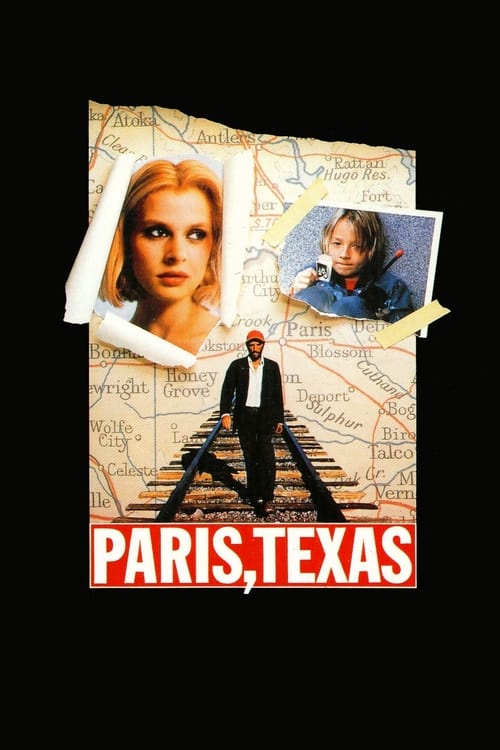
Paris, Texas (1984)
Directed by Wim Wenders
No — Paris, Texas is not woke, scoring 6 out of 100 on our wokeness meter.
Paris, Texas is a 1984 road film by Wim Wenders, and it arrives at the modern cultural audit with very little to declare.
Consciousness Markers
Jane's story of marital entrapment and her yearning to escape is given genuine emotional weight, but the film remains a male-authored, male-centered narrative of one man's redemption, not a feminist statement.
The cast is overwhelmingly white and European, with only minor background roles for Latino and Black performers (a cleaning woman, a peepshow worker) who exist without comment. No deliberate diverse casting agenda.
Travis's muteness and fugue state are depicted, but as trauma-induced psychological collapse rather than a neurodivergence-affirming narrative.
The film is quiet, elliptical, and contemplative, with no preachy messaging; the climactic monologue is emotional confession, not sermon.
No LGBTQ+ characters, themes, or subtext of any kind.
No engagement with race or racial themes whatsoever.
The Texas desert is a visual and spiritual landscape, not an environmentalist argument.
No critique of capitalism or wealth; the film is concerned with personal memory and family rupture.
No body-positivity themes present.
No historical revisionism; the film is a contemporary (1980s) personal drama.
Why it received this score
Paris, Texas is a 1984 road film by Wim Wenders, and it arrives at the modern cultural audit with very little to declare. Travis Henderson walks out of the desert, mute and sunburned, and the film follows the slow recovery of memory, family, and regret. The cast is overwhelmingly white and European. A cleaning woman and a peepshow worker drift through the margins, played by Latina performers, but the film does not pause to comment on them. There is no racial consciousness here, no LGBTQ subtext, no climate crusade, and no eat-the-rich ire. The Texas desert is a spiritual and visual expanse, not an environmental argument. The vacant lot in Paris, Texas, is a private symbol of lost domestic hope, not a critique of land speculation. The film is concerned with personal rupture, and that is all.
The women's story receives more weight than many films of its era would allow. Jane's entrapment, her longing to escape, and her muffled cowbell flight are rendered with genuine pain. Yet the narrative remains male-authored and male-centered. Her suffering becomes a station on Travis's road to confession and withdrawal. The camera watches her through glass, and the emotional climax belongs to his voice. This is not a feminist statement, only a sad and well-observed portrait of a marriage's wreckage. Body positivity has no purchase in this landscape. Travis's muteness and fugue state are presented as trauma-induced collapse, not as a neurodivergent identity to be celebrated. History is contemporary and personal, with no revisionist project in sight.
The film's lecture energy is close to zero. It is quiet, elliptical, and content to let silence do the talking. The famous peepshow monologue is a confession, not a sermon. There are no lessons about society, no preachy asides, no moments where a character turns to the audience and explains the correct politics of the day. There remains a pre-2015 humanism, melancholy and restrained. It has earned its place in the canon through formal control and emotional patience, not through a checklist of social concerns. Travis drives away, Jane and Hunter reunite, and the road keeps its counsel. We are left with a beautiful, haunted film that asks for nothing except our attention. It gives very little back in the way of contemporary cultural markers, and it seems entirely at peace with that.
Analysis generated by our Consciousness Algorithm


Synopsis
A man wanders out of the desert not knowing who he is. His brother finds him, and helps to pull his memory back of the life he led before he walked out on his family and disappeared four years earlier.
Questions about Paris, Texas
Is Paris, Texas woke?
No — Paris, Texas is not woke, scoring 6 out of 100 on our wokeness meter. That earns it a verdict of Ultra Based.
Does Paris, Texas have any woke elements?
Very few. None of the 10 markers reaches 30, the level where a marker counts as present; the highest is Feminist Agenda at 15.
How does Paris, Texas compare to other 1984 movies?
It ranks #21 of the 51 films from 1984 we've scored; their average is 7. The wokest is Revenge of the Nerds (30).
How is the Woke Score calculated?
An AI-assisted process researches the film and its reception, scores it 0–100 on ten markers, then combines those into one 0–100 Woke Score. It measures a specific set of 2020s cultural themes, not film quality.