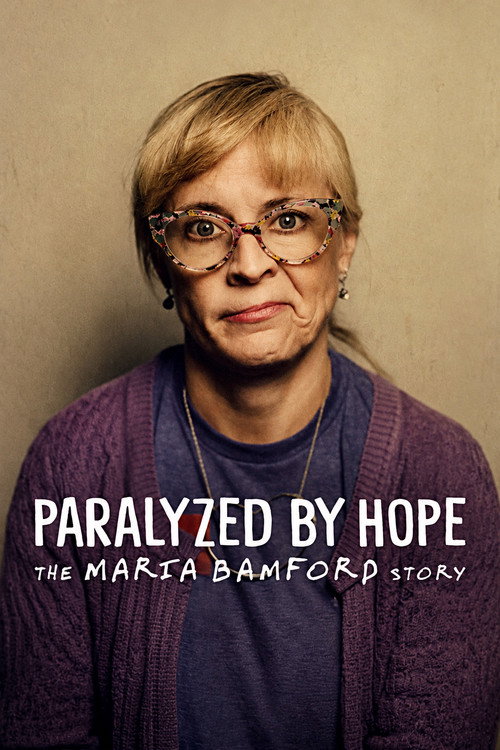
Paralyzed by Hope: The Maria Bamford Story (2026)
Directed by Judd Apatow
No — Paralyzed by Hope: The Maria Bamford Story is not especially woke, scoring 37 out of 100 on our wokeness meter.
Judd Apatow and Neil Berkeley have assembled a documentary about Maria Bamford that functions as a guided tour of a comedian's nervous system.
Consciousness Markers
The film is explicitly built around Maria Bamford's mental health journey, including bipolar disorder and OCD, making neurodivergence a central and celebrated theme.
The documentary has an inspirational, message-driven tone about vulnerability and mental health, but it remains a personal portrait rather than a preachy polemic.
The film centers a female comedian's life and career, which offers some feminist resonance, but it does not explicitly engage with feminist analysis or activism.
The documentary features a predominantly white cast of comedians, with some women and one openly LGBTQ+ performer (Tig Notaro), but casting is incidental to the subject rather than a deliberate diversity push.
No LGBTQ+ themes or storylines are present; Tig Notaro's presence is not explored in a queer context.
The subject and cast are overwhelmingly white, and the film does not address racial issues or systemic racism.
No environmental or climate-related content.
No critique of capitalism or wealth inequality; the film focuses on personal mental health and comedy.
No exploration of body image, size acceptance, or related themes.
No historical revisionism; it is a contemporary biographical documentary.
Why it received this score
Judd Apatow and Neil Berkeley have assembled a documentary about Maria Bamford that functions as a guided tour of a comedian's nervous system. The film blurs performance and personal crisis, as the marketing materials promise, and spends most of its runtime on Bamford's bipolar disorder, her OCD, and the various ways she has folded both into a stage act. This is the film's engine. Neurodivergence here is not a subplot or a seasoning; it is the subject, the structure, and the argument. The result is sincere, occasionally harrowing, and frequently funny in the way Bamford has always been funny, which is to say in a register that makes audiences unsure whether to laugh or check on her.
The surrounding apparatus is thinner. Bamford is a woman, and the film takes her seriously as an artist. That carries a mild charge in a comedy landscape that has not always done so. The cast of talking heads is largely white and largely familiar, composed of people who know her. Tig Notaro appears, though the film has no interest in her queerness or anyone else's. Race, class, climate, and the general question of who profits from all this remain unexamined. Ted Sarandos shows up, which is its own kind of statement, though the film declines to make it.
The film settles into a portrait of vulnerability as creative method, and it is not shy about that message. It wants us to feel that honesty is a form of strength, and it says so with the gentle persistence of a well-meaning friend. That is not a polemic, but it is a sermon, delivered softly and with good lighting. The comedy is real. The uplift is mandatory. We have seen this documentary before, though rarely with a subject this genuinely strange at its center.
Analysis generated by our Consciousness Algorithm


Synopsis
Blurring the line between performance and personal crisis, comedian Maria Bamford turns her mental health journey into material that’s riotously funny and ultimately inspiring. What emerges is a portrait of an artist transforming vulnerability into creative strength through honesty.
Critic Reviews
“This exceptionally thoughtful and often hilarious documentary about Bamford explores the way she uses humor to filter her experiences and performance to temper her anxiety, depression, and intrusive thoughts. ”
“Compassionate, insightful, and often unexpectedly touching, “Paralyzed By Hope” ultimately shows an artist who has found a way to make something worthwhile out of experiences that can be painful, humiliating, and frightening.”
“Like the titular woman herself, the film from co-directors Judd Apatow and Neil Berkeley is equally hilarious and unafraid to be very, very real, beckoning viewers in like a close friend and rewarding them with laughs and profound insight.”
“Bamford seems remarkably at home in her unsettled state, to such a degree that her self-awareness feels downright aspirational.”
Questions about Paralyzed by Hope: The Maria Bamford Story
Is Paralyzed by Hope: The Maria Bamford Story woke?
No — Paralyzed by Hope: The Maria Bamford Story is not especially woke, scoring 37 out of 100 on our wokeness meter. That earns it a verdict of Based.
Does Paralyzed by Hope: The Maria Bamford Story have any woke elements?
2 of the 10 markers register at 30 or above, led by Neurodivergence (90) and Lecture Energy (35). On Neurodivergence: The film is explicitly built around Maria Bamford's mental health journey, including bipolar disorder and OCD, making neurodivergence a central and celebrated theme.
How does Paralyzed by Hope: The Maria Bamford Story compare to other 2026 movies?
It ranks #213 of the 800 films from 2026 we've scored; their average is 23. The wokest is Between Us (89).
How is the Woke Score calculated?
An AI-assisted process researches the film and its reception, scores it 0–100 on ten markers, then combines those into one 0–100 Woke Score. It measures a specific set of 2020s cultural themes, not film quality.