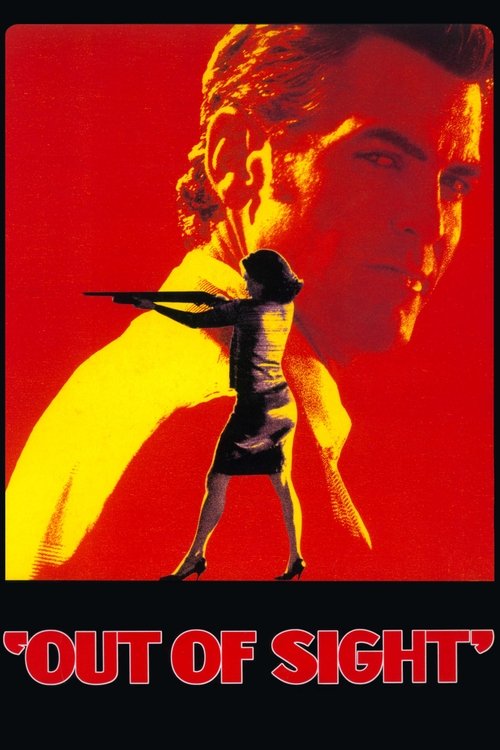
Out of Sight (1998)
Directed by Steven Soderbergh
No — Out of Sight is not woke, scoring 9 out of 100 on our wokeness meter.
Out of Sight arrives from 1998, a year when a crime comedy could still simply be a crime comedy.
Consciousness Markers
A notably diverse cast for 1998, with Jennifer Lopez as the female lead and Ving Rhames, Don Cheadle, Isaiah Washington, and Luis Guzmán in significant roles, but these characters exist naturally in the story without commentary or box-ticking intent.
Karen Sisco is a competent, pistol-packing U.S. Marshal who holds her own against the male fugitives, but the film treats this as character rather than a feminist thesis, and her arc is ultimately romantic.
There is faint class friction between the working-class bank robber Foley and the disdainful white-collar criminal Ripley, but the film is a stylish caper, not an eat-the-rich polemic.
No LGBTQ+ characters, themes, or subtext of any kind.
Black characters appear in major roles, including Don Cheadle as a villain, but the film engages in no racial commentary or consciousness whatsoever.
No environmental or climate themes present.
No body-positivity themes; the film leans on conventional glamour and star attractiveness.
No neurodivergent characters or themes.
A contemporary crime story with no historical revisionism.
The film is a witty, cool-headed Elmore Leonard adaptation that entertains rather than preaches; it delivers no moral lectures.
Why it received this score
Out of Sight arrives from 1998, a year when a crime comedy could still simply be a crime comedy. Steven Soderbergh adapts Elmore Leonard with a cool hand and no visible interest in instructing anybody. George Clooney plays Jack Foley, a bank robber of the old school, and Jennifer Lopez plays Karen Sisco, a federal marshal who ends up sharing a car trunk with him. The picture is stylish, funny, and content to be those things. The cast, notably varied for its era, includes Ving Rhames, Don Cheadle, Isaiah Washington, and Luis Guzman in substantial parts. None of them announce a thesis. They exist as people do, which now reads as a small act of restraint.
Ms. Sisco carries a shotgun, holds her own against armed men, and pursues her fugitive with genuine competence. The film treats this as ordinary. Her story bends toward romance, and the movie never apologizes for that either. There is a whiff of class friction between Foley, the working robber, and Albert Brooks as Ripley, a white-collar criminal who sneers at him, but the sneer is a plot device, not a manifesto. The film wants to entertain. It succeeds.
Nothing here lectures. No character pauses to explain the moral architecture of the world. The wit is dry, the pacing immaculate, the romance genuinely charged. For a viewer accustomed to contemporary films that arrive with a reading list attached, the quiet is almost disorienting. Out of Sight has no interest in being important. It is interested in being good, and it is. We are left to classify it, and the classification is thin: a few points for a diverse ensemble, a few for a marshal who can shoot, and the remainder is craft. The remainder, honestly, is enough.
Analysis generated by our Consciousness Algorithm
Part of


Synopsis
Meet Jack Foley, a smooth criminal who bends the law and is determined to make one last heist. Karen Sisco is a federal marshal who chooses all the right moves … and all the wrong guys. Now they're willing to risk it all to find out if there's more between them than just the law.
Questions about Out of Sight
Is Out of Sight woke?
No — Out of Sight is not woke, scoring 9 out of 100 on our wokeness meter. That earns it a verdict of Ultra Based.
Does Out of Sight have any woke elements?
Very few. None of the 10 markers reaches 30, the level where a marker counts as present; the highest is Feminist Agenda at 20.
How does Out of Sight compare to other 1998 movies?
It ranks #51 of the 118 films from 1998 we've scored; their average is 12. The wokest is Show Me Love (60).
How is the Woke Score calculated?
An AI-assisted process researches the film and its reception, scores it 0–100 on ten markers, then combines those into one 0–100 Woke Score. It measures a specific set of 2020s cultural themes, not film quality.