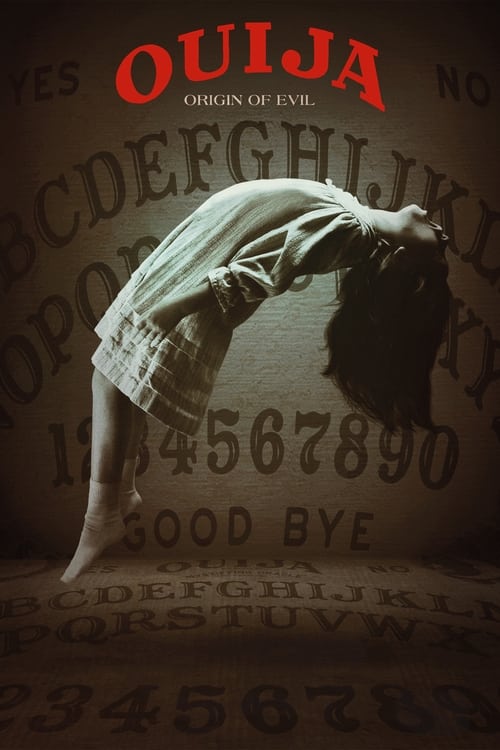
Ouija: Origin of Evil (2016)
Directed by Mike Flanagan
No — Ouija: Origin of Evil is not woke, scoring 6 out of 100 on our wokeness meter.
Mike Flanagan's Ouija: Origin of Evil arrives as a prequel to a film few demanded a prequel for, and against all odds, it is a competent and occasionally chilling piece of period horror.
Consciousness Markers
A widowed mother and her two daughters drive the story, but the film is a straightforward possession horror with no feminist thesis or messaging.
Female-led ensemble in a genre usually dominated by male protagonists, but the cast is otherwise uniformly white with no meaningful ethnic diversity.
The family's foreclosure and money-grubbing seance scams provide mild economic desperation as a plot engine, but there is no critique of capitalism or class warfare.
No LGBTQ+ characters, themes, or subtext whatsoever.
No engagement with racial identity or racial justice; the Polish immigrant backstory concerns WWII atrocity, not modern racial consciousness.
No environmental themes or climate content.
No body positivity themes or messaging.
Lina is institutionalized in a mental hospital, but this is a plot device rather than neurodivergent representation.
The 1967 setting and Nazi-experiment backstory are period flavor and horror mythology, not historical revisionism.
The film aims to scare and move rather than lecture; no preachy messaging or moralizing.
Why it received this score
Mike Flanagan's Ouija: Origin of Evil arrives as a prequel to a film few demanded a prequel for, and against all odds, it is a competent and occasionally chilling piece of period horror. Set in 1967 Los Angeles, it follows a widowed mother and her two daughters as they peddle phony seances to the grieving, only to stumble upon genuine supernatural malevolence. The film is a female-led ensemble in a genre that often defaults to male protagonists, yet the cast remains uniformly white. This is not a failing of the film, merely a description. The economic desperation of the family, facing foreclosure and scraping by on con artistry, provides narrative momentum but never congeals into a critique of capitalism. It is a plot engine, not a manifesto.
The feminist elements are similarly incidental. A mother and her daughters drive the story, but the film offers no thesis on gender politics. It is a possession horror, content to terrify rather than enlighten. There is no LGBTQ representation, no engagement with racial identity, no climate anxiety, no body positivity, no neurodivergent advocacy. The institutionalization of one daughter is a plot device, not a statement. The 1967 setting and the Nazi experiment backstory are period flavor and horror mythology, not historical revisionism. The film has no interest in lecturing its audience. It aims to scare, and it often succeeds.
What we have, then, is a well-crafted horror film that prioritizes atmosphere and family drama over social messaging. It is a relic of a time when genre films could simply be genre films, without the burden of contemporary cultural expectations. The lack of preachy energy is not a deficiency but a choice. Flanagan understands that a ghost story works best when it focuses on the ghosts. The result is a film that will not satisfy those seeking progressive validation, but it will satisfy those seeking a good scare. In the grand taxonomy of cultural awareness, this one sits quietly in the corner, clutching its planchette, saying nothing of import.
Analysis generated by our Consciousness Algorithm
Part of


Synopsis
In 1967 Los Angeles, a widowed mother and her two daughters add a new stunt to bolster their séance scam business and unwittingly invite authentic evil into their home. When the youngest daughter is overtaken by the merciless spirit, this small family confronts unthinkable fears to save her and send her possessor back to the other side.
Questions about Ouija: Origin of Evil
Is Ouija: Origin of Evil woke?
No — Ouija: Origin of Evil is not woke, scoring 6 out of 100 on our wokeness meter. That earns it a verdict of Ultra Based.
Does Ouija: Origin of Evil have any woke elements?
Very few. None of the 10 markers reaches 30, the level where a marker counts as present; the highest is Feminist Agenda at 12.
How does Ouija: Origin of Evil compare to other 2016 movies?
It ranks #202 of the 285 films from 2016 we've scored; their average is 16. The wokest is 13th (92).
How is the Woke Score calculated?
An AI-assisted process researches the film and its reception, scores it 0–100 on ten markers, then combines those into one 0–100 Woke Score. It measures a specific set of 2020s cultural themes, not film quality.