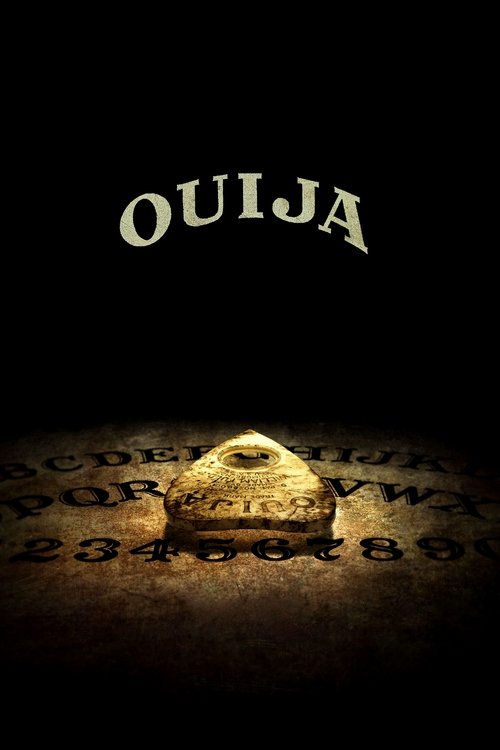
Ouija (2014)
Directed by Stiles White
No — Ouija is not woke, scoring 3 out of 100 on our wokeness meter.
The 2014 supernatural horror film Ouija arrives as an adaptation of a Hasbro board game, a proposition that history has treated with the disdain it generally reserves for films named after toys.
Consciousness Markers
The film features a standard ensemble of young, predominantly white actors, offering no significant challenge to traditional casting norms.
The female characters are primarily victims or participants in a supernatural plot, lacking any overt feminist agenda or challenge to patriarchal structures.
There is no evidence of LGBTQ+ themes, characters, or positive representation within the film's narrative or cast.
The film does not address systemic racism, racial injustice, or promote diverse racial perspectives.
There is no thematic focus on environmental issues or a 'Climate Crusade' within the horror narrative.
The film operates within the standard commercial horror industry framework and does not critique corporate greed or wealth disparity.
The film does not engage with body image, beauty standards, or promote diverse body types.
There are no characters or plot points that explore neurodivergence or related topics.
As a supernatural horror film, it does not engage in challenging or revising established historical narratives.
The film relies on jump scares and supernatural events rather than didactic speeches about social issues.
Why it received this score
The 2014 supernatural horror film Ouija arrives as an adaptation of a Hasbro board game, a proposition that history has treated with the disdain it generally reserves for films named after toys. A group of teenagers summon a spirit, the spirit kills them one by one, and the survivors burn the board in a furnace. The film earned one hundred million dollars on a five million dollar budget. Critics gave it six percent on the aggregate sites. These two facts coexist without contradiction, and together they describe the commercial horror economy of the mid-2010s with uncomfortable precision.
On the matter of social consciousness, the film is a near vacuum. The cast is young, attractive, and overwhelmingly white, a configuration that reflects the demographic habits of the genre without interrogating them. The female characters exist to be possessed, drowned, or sewn at the mouth. The film lets women occupy the screen, but in service of screaming, not argument. There is no racial commentary, no environmental subtext, no critique of the corporate machinery that assembled the thing. The Ouija board itself, a product of a toy conglomerate, is treated as a genuine occult object instead of a satirical one. Nobody eats the rich. Nobody mentions the rich.
The film's deepest ideological commitment is to the jump scare, a form with no politics and no thesis. Its ghosts are not metaphors for grief, trauma, or the housing market. They are ghosts. A search of the runtime for a lesson about body image, neurodivergence, or the revision of the historical record yields nothing, which is its own kind of honesty. The result is a brisk, forgettable exercise in the supernatural, competently lit and entirely silent on the questions of the age. The planchette points nowhere in particular. It never does.
Analysis generated by our Consciousness Algorithm
Part of


Synopsis
A group of friends must confront their most terrifying fears when they awaken the dark powers of an ancient spirit board.
Questions about Ouija
Is Ouija woke?
No — Ouija is not woke, scoring 3 out of 100 on our wokeness meter. That earns it a verdict of Ultra Based.
Does Ouija have any woke elements?
Very few. None of the 10 markers reaches 30, the level where a marker counts as present; the highest is Feminist Agenda at 5.
How does Ouija compare to other 2014 movies?
It ranks #256 of the 303 films from 2014 we've scored; their average is 13. The wokest is Selma (68).
How is the Woke Score calculated?
An AI-assisted process researches the film and its reception, scores it 0–100 on ten markers, then combines those into one 0–100 Woke Score. It measures a specific set of 2020s cultural themes, not film quality.