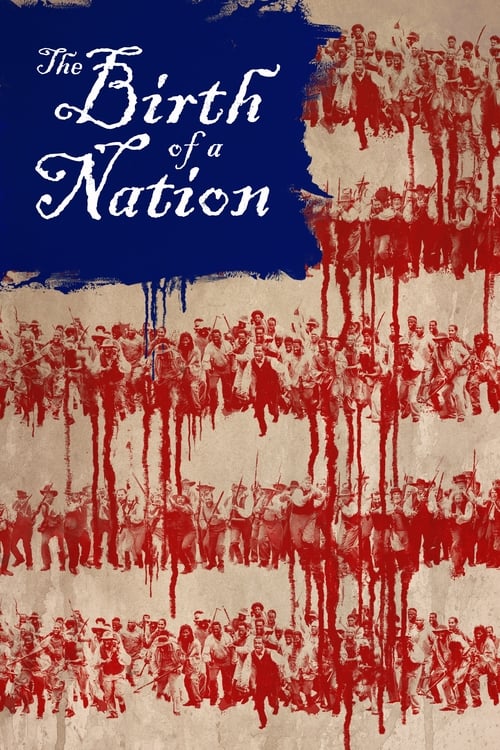
The Birth of a Nation (2016)
Directed by Nate Parker
Yes — The Birth of a Nation is very woke, scoring 87 out of 100 on our wokeness meter.
Nat Turner receives the full treatment here, a reverent historical drama that arrives with its moral ledger already balanced.
Consciousness Markers
Predominantly Black cast and Black director telling a Black historical liberation story, with Nate Parker starring as Nat Turner.
The entire film centers on slavery, racial oppression, and Nat Turner's rebellion against white supremacy.
The film deliberately reclaims the title of D. W. Griffith's 1915 white-supremacist epic to offer a corrective, Black-revolutionary account of Nat Turner.
The film carries a heavy moral and historical message, with sermons and speeches that explicitly denounce injustice, though it remains a narrative drama.
Cherry is a significant character and Nat seeks her approval, but the film's focus is racial liberation rather than a feminist agenda.
Slavery is depicted as an economic system, but the film does not advance a modern anti-capitalist or eat-the-rich message.
No LGBTQ+ characters or themes are present.
No environmental or climate themes.
No body positivity themes.
No neurodivergence themes.
Why it received this score
Nat Turner receives the full treatment here, a reverent historical drama that arrives with its moral ledger already balanced. Nate Parker writes, directs, and stars, which is the kind of triple duty that usually signals either supreme confidence or a scheduling problem. The cast is largely Black, the director is Black, and the subject is a slave rebellion in 1831 Virginia, so the film's representational bona fides are not in question. Neither is its seriousness. Every frame announces that this matters.
The title is lifted from D. W. Griffith's 1915 epic and repurposed with intent, a corrective aimed at the founding propaganda of American cinema. That gesture carries real weight, though the film is less interested in subtlety than in testimony. Nat preaches, and then he preaches some more, and the sermons land with the force of a closing argument. The film wants us to watch scripture turn from a tool of pacification into a warrant for revolt, and it makes that turn legible. Cherry, Nat's wife, gets a meaningful role and a voice in his decision, which nudges the film toward something like a feminist register without ever committing to it.
Slavery is rendered as an economic machine, one that starves its workers and sells its daughters, but the film never reaches for a modern indictment of capital as such. Its target is older and larger. The remaining categories simply have no purchase here. No climate, no body positivity, no neurodivergence, no queer subtext, and the film would be insulted by the suggestion. What it offers instead is a reckoning with the American past, delivered with a straight face and a raised fist, and it does not apologize for the volume.
Analysis generated by our Consciousness Algorithm


Synopsis
Nat Turner, a former slave in America, leads a liberation movement in 1831 to free African-Americans in Virginia that results in a violent retaliation from whites.
Questions about The Birth of a Nation
Is The Birth of a Nation woke?
Yes — The Birth of a Nation is very woke, scoring 87 out of 100 on our wokeness meter. That earns it a verdict of Peak Woke.
What makes The Birth of a Nation woke?
4 of the 10 markers register at 30 or above, led by Racial Consciousness (95), Representation Casting (95) and Revisionist History (75). On Racial Consciousness: The entire film centers on slavery, racial oppression, and Nat Turner's rebellion against white supremacy.
How does The Birth of a Nation compare to other 2016 movies?
It ranks #2 of the 285 films from 2016 we've scored; their average is 16. The wokest is 13th (92).
How is the Woke Score calculated?
An AI-assisted process researches the film and its reception, scores it 0–100 on ten markers, then combines those into one 0–100 Woke Score. It measures a specific set of 2020s cultural themes, not film quality.