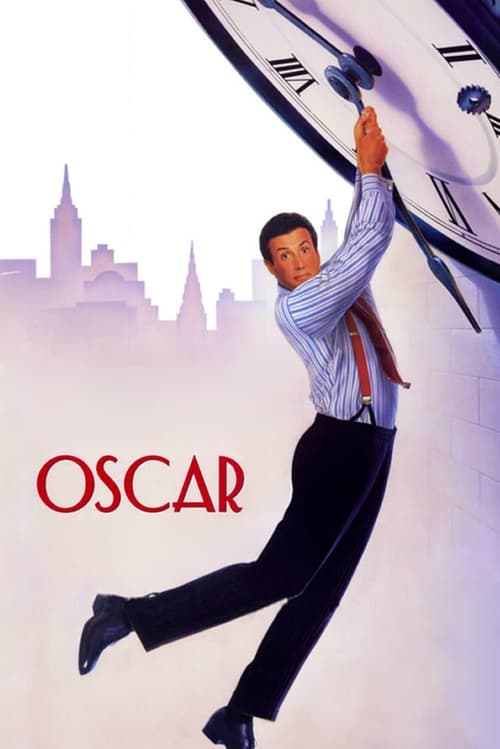
Oscar (1991)
Directed by John Landis
No — Oscar is not woke, scoring 11 out of 100 on our wokeness meter.
Oscar is a 1991 John Landis farce with Sylvester Stallone as a mob boss trying to go straight in Depression-era New York.
Consciousness Markers
Snaps' arc ends with him rejecting the 'respectable' bankers who tried to swindle him out of real influence, preferring honest gangsters over crooked financiers — a mild jab at respectable capitalism.
Female characters are largely defined by screwball-comedy roles (the spoiled daughter, the scheming maid, the romantic interests) rather than any feminist statement, though Lisa and Theresa show mild independence.
This is a light screwball comedy designed for laughs, not moral instruction; any social commentary is incidental and unserious.
The cast is an almost entirely white ensemble of Italian-American and supporting character actors; no deliberate diverse or inclusive casting is present.
There are no LGBTQ+ characters, relationships, or thematic elements anywhere in this 1930s-set gangster farce.
The film is a Depression-era mob comedy with no engagement with race or racial politics whatsoever.
No environmental or climate themes appear in the film.
No body-positive themes or messaging are present; the physical comedy revolves around mistaken bags and farcical misunderstandings.
No neurodivergent characters or themes are depicted.
The film is a straightforward adaptation of a stage farce and makes no attempt to revise or reinterpret historical events.
Why it received this score
Oscar is a 1991 John Landis farce with Sylvester Stallone as a mob boss trying to go straight in Depression-era New York. It is based on a stage play and a French film, and it strains toward the look and rhythm of 1930s screwball comedy. The cultural inventory is thin. The cast is an almost entirely white ensemble of Italian-American character actors and supporting players; no inclusive casting agenda is visible. There is no LGBTQ content. The women are the spoiled daughter, the scheming maid, the wife, the old flame, and they are defined by the machinery of farce. Lisa and Theresa show flickers of independence, but no feminist program is mounted.
Race does not enter the frame. Climate does not enter the frame. Neurodivergence does not enter the frame. Body positivity does not enter the frame; the physical comedy turns on identical bags, one full of jewels and one full of underwear. Historical revision is absent. This is a period farce in hats, not a reinterpretation of the past. The one social note is the banker meeting. Snaps discovers that respectable financiers want his money without giving him influence, and he chooses the honest crooks over the crooked bank. That is a mild jab at respectable capitalism, delivered with a shrug. The film has no interest in lecturing us. It wants laughs.
Oscar has aged into a curiosity. It is a Stallone comedy that nobody asked for, directed by a man who had already defined the modern comedy soundtrack and now wanted to stage a Feydeau romp in 1931. The result is a vehicle for mugging, mistaken bags, and a double wedding. Its social consciousness is minimal. Its lecture energy is almost nonexistent. It is not preachy. It is not diverse. It is not revised. It is a 1931-set farce made in 1991 with the default casting of its moment and the comic gender roles of its setting. We file it accordingly, with the fatigue such an assignment demands.
Analysis generated by our Consciousness Algorithm


Synopsis
Angelo "Snaps" Provolone made his dying father a promise on his deathbed: he would leave the world of crime and become an honest businessman. Despite having no experience in making money in a legal fashion, Snaps sets about to keep his promise.
Questions about Oscar
Is Oscar woke?
No — Oscar is not woke, scoring 11 out of 100 on our wokeness meter. That earns it a verdict of Ultra Based.
Does Oscar have any woke elements?
Very few. None of the 10 markers reaches 30, the level where a marker counts as present; the highest is Eat the Rich at 25.
How does Oscar compare to other 1991 movies?
It ranks #25 of the 68 films from 1991 we've scored; their average is 14. The wokest is Paris Is Burning (77).
How is the Woke Score calculated?
An AI-assisted process researches the film and its reception, scores it 0–100 on ten markers, then combines those into one 0–100 Woke Score. It measures a specific set of 2020s cultural themes, not film quality.