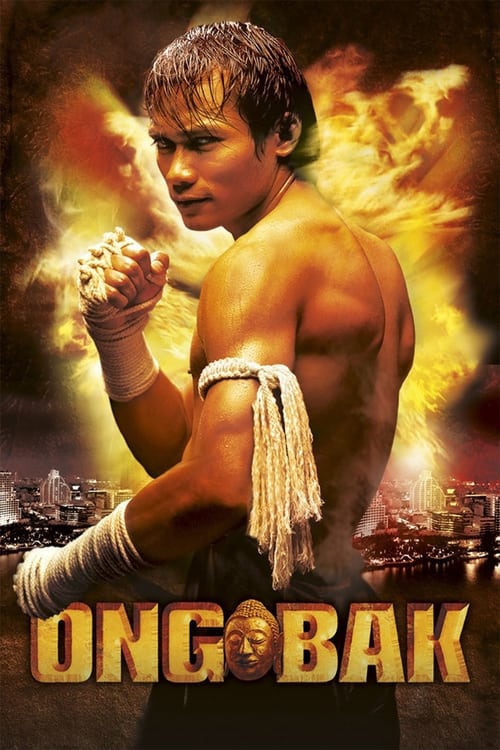
Ong-Bak (2003)
Directed by Prachya Pinkaew
No — Ong-Bak is not woke, scoring 0 out of 100 on our wokeness meter.
Ong-Bak arrives from 2003 with a single thesis: Tony Jaa can vault over a moving vehicle and land on his feet.
Consciousness Markers
The cast is entirely Thai, which is the natural demographic for a Thai production rather than a deliberate diversity-casting initiative. No conscious representation agenda is present.
No LGBTQ+ characters, themes, or subtext appear at any point in the film.
The film offers no feminist messaging; female characters are peripheral and the narrative is driven entirely by male martial-arts protagonists.
While set in Thailand with Thai characters, the film engages in no racial-justice commentary or consciousness-raising about race.
Environmental themes are entirely absent from this martial-arts revenge narrative.
The crime lord antagonist and drug dealers are conventional action-movie villains, not vehicles for an anti-capitalist 'eat the rich' message.
No body-positivity themes or messaging regarding body image appear in the film.
No neurodivergent characters or themes are present.
The film is a straightforward fictional narrative with no engagement in historical revisionism.
The film prioritizes action choreography over sermonizing; it has no preachy or issue-driven messaging of any kind.
Why it received this score
Ong-Bak arrives from 2003 with a single thesis: Tony Jaa can vault over a moving vehicle and land on his feet. Everything else in the film, the stolen Buddha head, the rural village, the cousin who dyes his hair blond and renames himself George, exists to arrange the next physical feat. Prachya Pinkaew directs with the patience of a man who understands the audience came for elbows and knees, and he is correct about that. The plot is a clothesline. The clothes are collisions.
What the film declines to do is instructive. Its antagonist is a wheelchair-using crime lord who speaks through an electrolarynx, a figure of menace drawn from pulp instead of from any commentary on wealth, and the dealers and gamblers who populate Bangkok's underworld are villains in the oldest sense. No sermon about markets interrupts the chase. No lesson about the body arrives. The Buddhist framework is devotional, not argumentative, and Ting's closing ordination is an inheritance, not a message. The women hover at the margins with nothing to advocate for, and the film does not notice or care.
This is pure genre filmmaking from a moment before the modern cultural accounting took hold, and there is something bracing in its single-mindedness. It wants to make you wince, then make you cheer. It has no interest in your politics, your diet, or your conscience. Jack Slack called it perhaps the finest martial arts movie of its generation, and that verdict rests entirely on the choreography, which is the only argument the film bothers to make. We are left with a clean ledger and a bruised shin.
Analysis generated by our Consciousness Algorithm


Synopsis
When the head of a statue sacred to a village is stolen, a young martial artist goes to the big city and finds himself taking on the underworld to retrieve it.
Questions about Ong-Bak
Is Ong-Bak woke?
No — Ong-Bak is not woke, scoring 0 out of 100 on our wokeness meter. That earns it a verdict of Ultra Based.
Does Ong-Bak have any woke elements?
No. All 10 markers score zero.
How does Ong-Bak compare to other 2003 movies?
It ranks #131 of the 150 films from 2003 we've scored; their average is 12. The wokest is Mona Lisa Smile (60).
How is the Woke Score calculated?
An AI-assisted process researches the film and its reception, scores it 0–100 on ten markers, then combines those into one 0–100 Woke Score. It measures a specific set of 2020s cultural themes, not film quality.