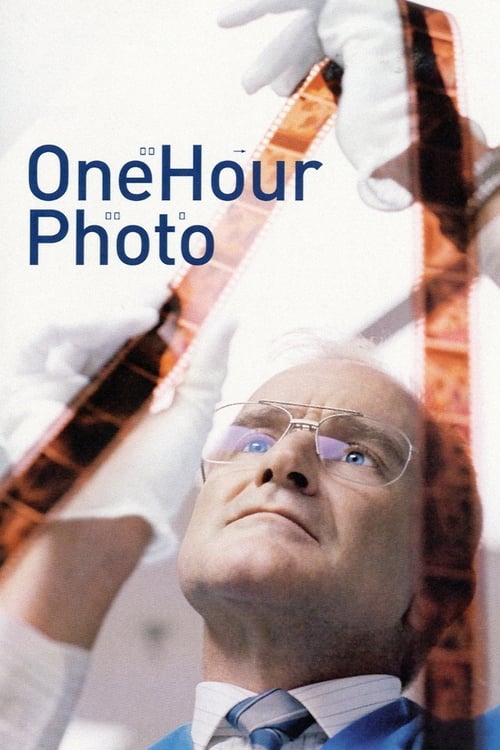
One Hour Photo (2002)
Directed by Mark Romanek
No — One Hour Photo is not woke, scoring 6 out of 100 on our wokeness meter.
Mark Romanek's One Hour Photo is a 2002 psychological thriller with Robin Williams as Sy Parrish, a photo technician whose loneliness curdles into obsession.
Consciousness Markers
The SavMart big-box setting carries a faint critique of soulless corporate retail and the dehumanizing treatment of a loyal worker, but it is atmospheric backdrop rather than an economic polemic.
The cast is overwhelmingly white, with Eriq La Salle and Paul Kim Jr. in minor supporting roles and no commentary on their presence. Casting reflects standard 2002 Hollywood practice rather than any deliberate representational agenda.
The film is a moody character study that shows rather than tells, offering no moralizing speeches or social messaging to the audience.
No LGBTQ+ characters, themes, or subtext appear anywhere in the film.
Nina Yorkin is defined entirely through her marriage and her husband's infidelity; the film offers no feminist framing or critique of gender dynamics.
Race is never addressed or thematized; the story is a psychological thriller about obsession with no racial dimension.
No environmental or climate themes are present.
No body-positivity themes or messaging appear in the film.
Sy is portrayed as a lonely, obsessive, and disturbed stalker, but the film frames this as pathology and menace rather than neurodivergence to be understood or celebrated.
The film is a contemporary psychological thriller with no historical subject matter to revise.
Why it received this score
Mark Romanek's One Hour Photo is a 2002 psychological thriller with Robin Williams as Sy Parrish, a photo technician whose loneliness curdles into obsession. It is not a film with a modern progressive agenda. The cast is overwhelmingly white, which reflects standard 2002 Hollywood practice. Eriq La Salle and Paul Kim Jr. appear in minor supporting roles, and the film makes no comment on their presence. There are no LGBTQ themes, no feminist critique, and no racial consciousness. Nina Yorkin is defined through her marriage and her husband's infidelity. Race is never addressed. Climate concerns do not appear. Body positivity does not appear.
The film carries a faint anti-capitalist texture. SavMart is a big-box retail environment, soulless and corporate, and Sy is a loyal worker discarded after an audit. That remains atmospheric backdrop, not an economic polemic. The story is about obsession, loneliness, and violence. Sy's condition is framed as pathology and menace, not neurodivergence to be understood or celebrated. There is no historical subject to revise; this is a contemporary thriller. Lecture energy is minimal. The film is a moody character study that shows instead of tells, with no moralizing speeches or social messaging.
As a cultural artifact, One Hour Photo belongs to the pre-2010 psychological drama. Its social consciousness is incidental, mostly the dehumanizing retail backdrop. The film does not sermonize. It observes a broken man and a broken family. The result is creepy, well-shot, and resistant to any checklist of contemporary virtue. It earns its small measure of economic unease and almost nothing else on the modern social ledger.
Analysis generated by our Consciousness Algorithm
Part of


Synopsis
Sy Parrish has lovingly developed photographs for the Yorkin family since their son was a baby. But as the Yorkins' lives become fuller, Sy's only seems lonelier, until he eventually convinces himself he's part of their family. When Sy's picture-perfect fantasy collides with an ugly dose of reality, a bizarre and thrilling confrontation ensues.
Questions about One Hour Photo
Is One Hour Photo woke?
No — One Hour Photo is not woke, scoring 6 out of 100 on our wokeness meter. That earns it a verdict of Ultra Based.
Does One Hour Photo have any woke elements?
Very few. None of the 10 markers reaches 30, the level where a marker counts as present; the highest is Eat the Rich at 12.
How does One Hour Photo compare to other 2002 movies?
It ranks #97 of the 150 films from 2002 we've scored; their average is 12. The wokest is Far from Heaven (78).
How is the Woke Score calculated?
An AI-assisted process researches the film and its reception, scores it 0–100 on ten markers, then combines those into one 0–100 Woke Score. It measures a specific set of 2020s cultural themes, not film quality.